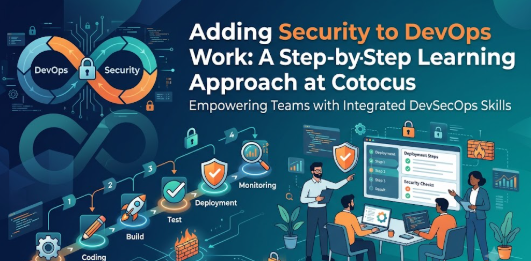
Software delivery has become a core operational capability for modern organizations. Businesses across every sector depend on software applications to interact with customers, manage core operations, automate routine processes, and deliver services. As technical systems expand, maintaining fast delivery alongside system stability, security, and cloud scalability presents significant operational challenges.
To meet these demands, organizations frequently need specialized support spanning infrastructure automation, deployment pipelines, cloud architecture, security controls, and site reliability practices. Adopting these capabilities individually often leads to fragmented environments. Cotocus addresses these challenges by offering an integrated approach to software delivery, cloud infrastructure, reliability engineering, and technical training.
What Is Cotocus?
Cotocus is a specialized technology consulting and engineering services provider focused on helping organizations modernize software development, cloud operations, infrastructure management, and engineering capabilities. The organization works with businesses at various stages of technical maturity—from growth-stage companies establishing cloud infrastructure to established enterprises updating legacy environments.
Cotocus focuses on several core practice areas:
- DevOps Consulting Services to assess, design, and optimize software delivery pipelines, CI/CD automation, and infrastructure engineering.
- Managed DevOps Services to provide continuous operational management, pipeline upkeep, cloud monitoring, and production support.
- Cloud Consulting Services covering architecture design, scalability planning, security controls, and infrastructure cost optimization across AWS, Azure, and Google Cloud.
- Cloud Migration Services to guide the transition of legacy applications, databases, and operational workloads into modern cloud platforms.
- Kubernetes Consulting Services for designing, securing, and operating containerized application platforms using Amazon EKS, Azure AKS, and Google Kubernetes Engine.
- DevSecOps Consulting Services to integrate automated security scanning, compliance controls, vulnerability management, and secrets administration directly into delivery workflows.
- SRE Consulting Services to improve system availability, observability practices, incident management, and Service Level Objectives (SLOs).
- Platform Engineering Consulting Services to construct internal developer platforms, reusable deployment paths, and self-service infrastructure.
- DevOps Outsourcing Services to supply dedicated engineering capacity for cloud, container, platform, and reliability initiatives.
- Corporate DevOps Training to upskill internal engineering teams in modern automation tools, cloud architectures, and operational practices.
By addressing both immediate implementation tasks and long-term operational capabilities, Cotocus assists organizations in establishing resilient, scalable engineering environments.
What Services Does Cotocus Provide?
Cotocus delivers a targeted portfolio of technical services designed to support the complete software delivery lifecycle:
- DevOps Consulting: Evaluates existing development processes, build systems, deployment pipelines, and infrastructure to implement automated, reliable delivery workflows.
- Managed DevOps Support: Provides ongoing operational management, pipeline support, cloud infrastructure monitoring, and routine system maintenance.
- Cloud Consulting: Delivers architectural guidance, cost management strategies, security planning, and cloud-native design across major cloud providers.
- Cloud Migration: Plans and executes structured transitions of applications, infrastructure, and data workloads from legacy environments to cloud platforms.
- Kubernetes Consulting: Focuses on cluster deployment, container security, platform scaling, and operational management for managed Kubernetes environments.
- DevSecOps Consulting: Embeds automated security checks, access management, vulnerability scans, and compliance guardrails throughout delivery pipelines.
- SRE Consulting: Enhances production stability through observability tools, incident management processes, capacity planning, and reliability metrics.
- Platform Engineering: Builds internal developer platforms and standardized self-service environments to streamline developer workflows and reduce cognitive load.
- DevOps Outsourcing: Offers specialized engineering talent to assist teams with temporary capacity gaps or specialized project executions.
- Corporate DevOps Training: Delivers practical, skill-focused training programs covering modern DevOps tools, cloud engineering, security practices, and SRE concepts.
Why Modern Organizations Need DevOps and Cloud Engineering Support
As software applications become more complex, traditional methods of managing infrastructure and releases often introduce significant operational friction. Organizations frequently face compounding challenges that hinder productivity and system stability:
- Slow Release Cycles: Manual testing, approval delays, and handoffs between development and operations teams slow down feature deployment.
- Configuration Drift and Inconsistency: Environments configured manually tend to diverge over time, leading to bugs that appear only in production.
- Production Outages and High Recovery Times: Lack of standardized deployment practices and monitoring leads to frequent service disruptions and slow incident resolution.
- Complex Cloud Migration and Management: Expanding into the cloud without proper architecture often results in high operational costs, security vulnerabilities, and unorganized resources.
- Developer Fatigue: Developers spend substantial time managing deployment scripts, provisioning infrastructure, and fixing pipeline failures instead of writing core application logic.
Resolving these issues requires viewing DevOps as more than a collection of software tools. Effective engineering operations rely on aligning organizational processes, automation, collaborative workflows, security standards, and reliability practices. Specialized external consulting helps organizations establish these operational foundations without interrupting daily operations.
Who Should Use Cotocus?
Cotocus supports diverse business models and operational environments.
Startups and Growing Technology Companies
Early-stage and expanding tech companies must build scalable infrastructure foundations without overextending internal engineering teams. Cotocus helps growing teams establish automated CI/CD pipelines, cloud environments, container orchestration, and basic monitoring systems early in their operational development.
Enterprises Modernizing Legacy Systems
Established enterprises operating legacy infrastructure often struggle with monolithic codebases, manual deployment steps, and outdated hardware systems. Cotocus assists enterprise teams in planning structured cloud migrations, introducing infrastructure automation, adopting container platforms, and modernizing legacy release processes.
SaaS and Product Engineering Companies
Software-as-a-Service providers depend on high service availability, regular feature updates, and seamless scaling. Cotocus supports SaaS organizations by implementing SRE practices, enhancing observability, automating deployment workflows, and ensuring cloud infrastructure scales dynamically with user demand.
Cloud and Kubernetes Teams
Organizations utilizing AWS, Azure, Google Cloud, or managed Kubernetes platforms like Amazon EKS, Azure AKS, and Google Kubernetes Engine often require deep architectural expertise. Cotocus provides technical support to optimize cluster configurations, secure container networks, resolve performance bottlenecks, and standardize deployment practices.
Organizations Needing Ongoing DevOps Support
Companies lacking dedicated in-house infrastructure operations teams can struggle to manage ongoing pipeline maintenance, cloud monitoring, and deployment support. Cotocus provides Managed DevOps Services and DevOps Outsourcing Services to handle day-to-day operational tasks, allowing internal development teams to remain focused on application features.
Enterprises Building Internal Engineering Capabilities
Large engineering organizations seeking to standardize infrastructure workflows across multiple software teams often require dedicated platform engineering support. Cotocus helps build internal developer platforms, establish self-service infrastructure, define “golden paths” for deployment, and upskill internal staff through Corporate DevOps Training.
Understanding Cotocus: Services, Engineering Expertise, and Support
DevOps Consulting and Managed DevOps Services
Cotocus approaches software delivery by establishing streamlined deployment pipelines and automated infrastructure workflows. Through DevOps Consulting Services, engineering teams analyze existing delivery pipelines, build systems, deployment processes, and environment configurations to remove operational bottlenecks.
For organizations requiring continuous operational oversight, Cotocus offers Managed DevOps Services. This service handles day-to-day pipeline administration, cloud monitoring, deployment support, and operational troubleshooting, ensuring delivery systems remain reliable and up to date over time.
Cloud Consulting and Cloud Migration Services
Modernizing software environments requires robust cloud foundations. Through Cloud Consulting Services, Cotocus helps organizations plan, architect, and optimize environments across AWS, Azure, and Google Cloud. The focus remains on building scalable, cost-aware architectures tailored to operational needs.
Moving legacy workloads into cloud platforms requires careful execution to avoid service interruptions. Cotocus delivers structured Cloud Migration Services that assess application dependencies, prioritize workloads, design secure cloud landing zones, and manage cutover steps cleanly.
Kubernetes Consulting Services
Container platforms offer application portability and efficient resource management, but running them in production introduces operational complexity. Cotocus offers Kubernetes Consulting Services to guide organizations through designing, deploying, and managing container environments across Amazon EKS, Azure AKS, and Google Kubernetes Engine.
Key focus areas include cluster network security, multi-environment scaling, resource optimization, monitoring, and automated deployment pipelines tailored specifically for microservice architectures.
DevSecOps and SRE Consulting Services
Security must be integrated into the delivery pipeline rather than addressed as a final inspection step. Through DevSecOps Consulting Services, Cotocus embeds automated security controls, compliance validation, vulnerability scanning, access policies, and secrets management into automated deployment pipelines.
System stability is addressed through SRE Consulting Services. Cotocus assists teams in defining realistic Service Level Objectives (SLOs), establishing clear incident management workflows, implementing comprehensive observability stacks, and engineering automated recovery responses to protect system availability.
Platform Engineering Consulting Services
As engineering organizations scale, managing individual infrastructure components for every application team creates operational overhead. Cotocus provides Platform Engineering Consulting Services to design and build internal developer platforms (IDPs).
These platforms provide self-service infrastructure capabilities and standardized deployment templates—often called “golden paths”—allowing developers to deploy microservices independently while maintaining organizational security and governance standards.
DevOps Outsourcing and Corporate DevOps Training
Organizations facing resource constraints or specialized skills shortages can leverage DevOps Outsourcing Services. Cotocus supplies experienced cloud, Kubernetes, reliability, and platform engineers to support temporary project requirements or long-term infrastructure maintenance.
To build sustainable internal capabilities, Cotocus offers Corporate DevOps Training. These practical educational programs equip internal engineering teams with real-world skills across cloud automation, container management, DevSecOps principles, SRE practices, and platform engineering workflows.
What Are DevOps Consulting Services?
DevOps consulting helps organizations transition from fragmented, manual development workflows to automated, unified delivery practices. Rather than simply introducing new tools, consulting focuses on understanding real-world operational bottlenecks across code integration, testing, infrastructure provisioning, release management, and monitoring.
An effective consulting process includes:
- Pipeline Assessment: Evaluating manual handoffs, build failures, and delivery delays in current release paths.
- Infrastructure Automation: Transitioning manual environment setups to codified, version-controlled Infrastructure as Code (IaC).
- Workflow Integration: Aligning development, quality assurance, security, and operations teams around clear release protocols.
- Quality and Test Automation: Integrating continuous testing into build processes to catch bugs prior to production deployment.
By evaluating existing practices before making technical changes, consulting ensures that automation efforts directly address practical business needs.
Managed DevOps Services: When Ongoing Support Matters
While project-based consulting establishes initial automated environments, managing production systems requires continuous effort. Cloud environments evolve, application requirements change, and deployment pipelines need regular maintenance.
Managed DevOps Services provide ongoing engineering support for critical infrastructure areas:
- Pipeline Maintenance: Updating build scripts, fixing broken deployment integration points, and managing build agents.
- Infrastructure Monitoring: Maintaining monitoring tools, alert configurations, and performance logging systems.
- Incident Response Support: Assisting internal teams with operational troubleshooting during system disruptions.
- Routine Maintenance: Applying system patches, managing cloud configurations, and updating automation scripts.
Partnering with a managed service provider allows businesses to maintain stable, modern delivery environments without taking attention away from core product development.
Cloud Consulting Services and Cloud Modernization
Cloud platforms offer elasticity and advanced infrastructure tools, but exploiting these benefits requires deliberate architecture planning. Cloud Consulting Services guide organizations in designing public, private, or multi-cloud environments that align with their operational and budget goals.
Cloud strategy focuses on several core areas:
- Architectural Design: Designing secure, fault-tolerant networks across major providers like AWS, Azure, and Google Cloud.
- Resource Governance: Establishing access policies, resource tagging, and compliance controls across accounts.
- Cost Management: Designing systems to avoid over-provisioning and managing ongoing infrastructure expenditure.
- Scalability and Performance: Utilizing auto-scaling, load balancing, and managed platform services to handle changing traffic.
Neutral cloud architectural guidance ensures organizations select platforms and configurations based on technical requirements rather than industry trends.
Cloud Migration Services: From Legacy Environments to Modern Cloud Platforms
Migrating applications and infrastructure to the cloud requires systematic planning to avoid downtime, data loss, or performance regressions. Professional Cloud Migration Services follow a structured methodology to ensure smooth transitions.
+---------------------------+     +---------------------------+
| 1. Discovery & Assessment | --> |  2. Architecture & Design |
+---------------------------+     +---------------------------+
                                                |
                                                v
+---------------------------+     +---------------------------+
|   4. Testing & Cutover    | <-- |   3. Execution & Migration|
+---------------------------+     +---------------------------+
- Discovery and Dependency Mapping: Cataloging legacy applications, server configurations, database dependencies, and network requirements.
- Migration Strategy Definition: Deciding whether specific workloads should be rehosted (lift-and-shift), replatformed, or fully re-architected.
- Target Architecture Setup: Preparing landing zones, identity access management controls, and secure network connections.
- Data and Application Migration: Executing dry runs, syncing databases, and migrating application components systematically.
- Testing, Cutover, and Optimization: Validating system performance under load, executing final domain cutovers, and optimizing post-migration resources.
Treating cloud migration as a structured engineering project reduces operational risk and limits business disruptions.
Kubernetes Consulting for Modern Container Platforms
Container technology allows applications to run reliably across different environments, but managing hundreds of containers manually is unmanageable. Kubernetes has become the standard platform for container orchestration, managing container placement, scaling, self-healing, and networking automatically.
However, operating production Kubernetes clusters presents a steep learning curve. Consulting services assist organizations in establishing production-ready container environments across managed platforms like Amazon EKS, Azure AKS, and Google Kubernetes Engine (GKE).
Key architectural focus areas include:
- Cluster Networking: Establishing secure pod communication policies and ingress routing.
- Storage Management: Provisioning persistent storage volumes for stateful applications.
- Container Security: Enforcing image scanning, least-privilege service accounts, and runtime defense rules.
- Platform Observability: Implementing centralized logging and metric tracking tailored for dynamic container environments.
With structured guidance, teams can leverage container orchestration without falling prey to complex deployment configurations.
DevSecOps: Building Security into Software Delivery
Historically, security checks were performed right before software releases, creating friction between security teams and software engineers. DevSecOps shifts security responsibilities earlier in the development process (“shifting left”), integrating security checks into everyday developer workflows.
[Code Development] --> [Automated SAST & Secret Scanning]
                             |
                             v
[Deployment Pipeline] <-- [Container & Vulnerability Audit]
        |
        v
[Production Environment] --> [Continuous Compliance Monitoring]
Key DevSecOps integrations include:
- Static and Dynamic Scanning: Running automated static code analysis (SAST) and dynamic testing (DAST) during build steps.
- Dependency Auditing: Scanning software libraries for known security vulnerabilities automatically.
- Secrets Management: Replacing hardcoded passwords and API keys with secure, central vaults.
- Automated Compliance Controls: Ensuring infrastructure configurations meet industry frameworks automatically prior to deployment.
Integrating security into the delivery process enables teams to release software frequently while maintaining strong defense postures.
SRE Consulting and Software Reliability
Site Reliability Engineering (SRE) applies software engineering principles to infrastructure operations problems. SRE focuses on ensuring systems remain available, scalable, and resilient as application changes occur.
SRE practices extend far beyond basic system monitoring:
- SLIs and SLOs: Defining Service Level Indicators (SLIs) to measure system performance and setting Service Level Objectives (SLOs) to define acceptable error margins.
- Observability: Building logging, tracing, and metrics systems that allow teams to understand internal system health from external outputs.
- Incident Response: Establishing structured post-incident reviews (post-mortems) focused on process improvements rather than personal blame.
- Toil Reduction: Writing code to automate repetitive operational tasks, ensuring engineers spend significant time on system enhancements.
SRE practices help organizations balance the desire for rapid feature delivery with the necessity of maintaining production stability.
DevOps vs SRE vs Platform Engineering
While DevOps, SRE, and Platform Engineering share goals regarding software quality and release velocity, their primary operational focus areas differ.
Table 1: Engineering Practice Comparison
| Area | Main Focus | Typical Practices | Common Business Need |
| DevOps | Collaboration, automation, and delivery velocity | CI/CD pipelines, Infrastructure as Code, continuous integration | Eliminating handoffs between development and operations teams |
| SRE | Production reliability, availability, and incident handling | SLO management, observability, toil reduction, blameless post-mortems | Preventing downtime and managing production incidents systematically |
| Platform Engineering | Developer productivity and internal self-service | Internal Developer Platforms, golden paths, reusable templates | Reducing cognitive load on developers in complex environments |
Platform Engineering and Internal Developer Platforms
As cloud architectures expand, developers are often expected to understand cloud networking, container manifests, security policies, and deployment pipeline syntax. This excessive cognitive load slows down feature development.
Platform engineering solves this problem by building Internal Developer Platforms (IDPs). An IDP acts as an internal product designed for a company’s software developers.
+-------------------------------------------------------------+
|                 Software Developers                        |
+-------------------------------------------------------------+
                               |
                               v (Self-Service Interface)
+-------------------------------------------------------------+
|                Internal Developer Platform                  |
|  - Standardized Templates    - Self-Service Provisioning     |
|  - Automated CI/CD Workflows - Security & Policy Guardrails |
+-------------------------------------------------------------+
                               |
                               v (Automated Provisioning)
+-------------------------------------------------------------+
|            Cloud, Containers, & Infrastructure              |
+-------------------------------------------------------------+
Key components of platform engineering include:
- Self-Service Provisioning: Allowing developers to create databases, testing environments, or deployment pipelines independently through simple portals or APIs.
- Golden Paths: Providing pre-configured, secure deployment templates that follow company best practices automatically.
- Standardized Workflows: Ensuring every application team builds, tests, and deploys code using consistent, verified patterns.
By abstracting underlying infrastructure complexity, platform engineering enables developers to focus on writing application code safely and productively.
How Cotocus Services Can Work Together
Cotocus offers interconnected engineering services designed to support every layer of modern software operations.
       [ Corporate Training & Outsourcing ]
                       |
                       v
            [ Platform Engineering ]
                       |
                       v
         [ DevSecOps ] + [ SRE Practices ]
                       |
                       v
       [ Kubernetes & Managed DevOps CI/CD ]
                       |
                       v
          [ Cloud Consulting & Migration ]
- Cloud Foundation: Cloud Consulting Services and Cloud Migration Services establish secure, cost-optimized infrastructure across AWS, Azure, or Google Cloud.
- Container Platform: Kubernetes Consulting Services deploy containerized platform management systems on top of the cloud foundation.
- Software Delivery: DevOps Consulting Services and Managed DevOps Services build automated CI/CD pipelines to deploy application updates efficiently.
- Security and Reliability: DevSecOps Consulting Services automate security checks throughout pipelines, while SRE Consulting Services establish monitoring, observability, and SLO frameworks.
- Developer Productivity: Platform Engineering Consulting Services unify infrastructure access behind simple self-service developer platforms.
- Capacity and Upskilling: DevOps Outsourcing Services provide supplemental engineering staff, while Corporate DevOps Training upgrades internal team skills.
This integrated model ensures that infrastructure improvements across different engineering domains work together harmoniously.
Step-by-Step Guide to Using Cotocus for DevOps and Cloud Modernization
Modernizing software infrastructure requires a systematic process to prevent operational disruptions.
- Identify Current Engineering Problems: Map out release delays, deployment failures, environment inconsistencies, security gaps, and operational overhead.
- Assess the Existing Environment: Conduct a technical review of applications, build pipelines, cloud architecture, container setups, monitoring tools, and security controls.
- Define Clear Business and Engineering Goals: Establish targets such as reducing deployment times, improving system uptime, cutting cloud waste, or reducing developer onboarding times.
- Select the Appropriate Service Area: Determine the mix of services needed, such as consulting for initial design, managed services for ongoing support, or training for team development.
- Create an Implementation and Modernization Plan: Build a phased roadmap detailing architecture adjustments, pipeline migration steps, tool configurations, and security guardrails.
- Implement Engineering Improvements: Execute technical changes systematically, building automated pipelines, establishing cloud landing zones, and configuring observability stacks.
- Establish Ongoing Operations and Team Capability: Transition routine maintenance to managed support systems, publish documentation, and conduct team training sessions.
- Measure, Review, and Continuously Improve: Track deployment metrics, system reliability, incident frequencies, and team feedback to refine engineering operations over time.
Common DevOps and Cloud Mistakes Businesses Should Avoid
Organizations undertaking infrastructure modernization frequently make predictable missteps:
- Starting with Tools Instead of Problems: Adopting complex tools like Kubernetes or service meshes before addressing basic process bottlenecks.
- Automating Poorly Defined Processes: Automating inefficient workflows without fixing underlying procedural issues first.
- Ignoring Security Until Release: Treating security as an afterthought, leading to costly delays late in development cycles.
- Unplanned Cloud Migration: Shifting legacy applications to the cloud without adjusting their architecture, resulting in high costs and poor performance.
- Overcomplicating Infrastructure: Introducing complex custom platform tools that internal engineering teams struggle to maintain.
- Treating SRE as Only Monitoring: Equating site reliability engineering with creating basic system dashboards instead of automating error recovery and managing error budgets.
- Neglecting Team Skill Development: Implementing modern platforms without training internal staff to operate and maintain them properly.
Avoiding these common pitfalls requires prioritizing clear operational strategies over technical trends.
Best Practices for DevOps, Cloud, and Reliability Engineering
Achieving long-term engineering operational excellence involves adhering to core design principles:
- Codify Everything: Define infrastructure, security policies, and deployment paths using version-controlled code (IaC).
- Shift Security Left: Integrate security vulnerability scanning and static code checks directly into automated build pipelines.
- Focus on Observability: Collect metrics, distributed traces, and logs centrally to understand system behaviors accurately.
- Standardize Development Environments: Use automated templates to keep local, staging, and production environments synchronized.
- Learn from System Failures: Conduct blameless post-incident reviews after disruptions to identify process improvements rather than assign personal fault.
- Design for Self-Service: Provide developer self-service tooling to eliminate manual ticket-based requests for routine infrastructure.
How to Evaluate a DevOps Consulting Company
Selecting a technology consulting partner requires assessing technical capabilities, communication practices, and operational philosophies.
Table 2: Consulting Partner Evaluation Framework
| Evaluation Area | What to Check | Why It Matters |
| DevOps Expertise | Practical experience with CI/CD, deployment strategies, and infrastructure automation | Ensures pipelines are robust, scalable, and maintainable over time |
| Cloud Capability | Practical knowledge across AWS, Azure, and Google Cloud environments | Guarantees cloud architectures follow secure, cost-optimized design patterns |
| Kubernetes Experience | Expertise in managed platforms like EKS, AKS, and GKE | Prevents misconfigurations in complex, dynamic container orchestration platforms |
| DevSecOps | Ability to integrate security tools and compliance policies into pipelines | Ensures security controls do not slow down automated deployment speeds |
| SRE | Proficiency in SLO design, incident response frameworks, and observability | Protects production system stability as software delivery speed increases |
| Platform Engineering | Understanding of developer experience, IDPs, and self-service portals | Prevents building platforms that developers avoid using |
| Managed Support | Quality of ongoing maintenance, operational management, and monitoring | Guarantees long-term infrastructure stability after initial setups are complete |
| Automation | Commitment to codifying infrastructure, pipelines, and configuration steps | Prevents manual intervention and reduces configuration drift over time |
| Communication | Transparency, clear documentation, and regular status reporting | Integrates technical efforts seamlessly with internal business objectives |
| Training | Capacity to upskill internal teams through practical training programs | Ensures internal engineering independence after consulting engagements end |
When DevOps Outsourcing Services May Make Sense
Augmenting internal teams with external engineering talent is often a practical solution under specific operational conditions:
- Temporary Skill Gaps: Navigating complex projects, such as a cloud migration or Kubernetes transition, where internal teams lack specialized experience.
- Resource Constraints: Addressing backlog items without committing to long-term permanent hiring costs.
- Project Acceleration: Meeting tight deadlines by adding experienced engineers who require minimal onboarding time.
- Coverage Support: Ensuring around-the-clock infrastructure operational monitoring without burdening internal developers.
When leveraging DevOps Outsourcing Services, organizations should ensure external engineers work closely with internal teams, maintaining shared code standards, open communication, and thorough documentation practices.
Corporate DevOps Training for Engineering Teams
Technology adoption succeeds only when internal engineering teams are equipped to manage their platforms. Corporate DevOps Training helps bridge skill gaps, allowing developers and operations staff to stay up to date with modern practices.
Training programs generally cover:
- DevOps Fundamentals: CI/CD concepts, automated build setups, and deployment strategies.
- Cloud Architecture: Design patterns, resource management, and cost optimization on AWS, Azure, and Google Cloud.
- Container Orchestration: Hands-on experience with Docker, Kubernetes, and managed cluster administration.
- DevSecOps Practices: Automated security scanning, secrets management, and compliance validation.
- SRE Concepts: Designing SLOs, configuring observability systems, and managing operational incident workflows.
- Platform Engineering: Building and using self-service developer portals and reusable pipeline templates.
Investing in internal team capabilities creates long-term operational resilience and reduces dependency on external support over time.
How Cotocus Can Support Different Business Requirements
Illustrative scenarios demonstrate how various engineering practices come together to solve operational challenges:
Scenario 1: A Startup Establishing Cloud Infrastructure
A growing technology company needs to build a scalable application environment from scratch. Utilizing Cloud Consulting Services and DevOps Consulting Services, the team establishes automated AWS infrastructure using Infrastructure as Code, configures automated deployment pipelines, and implements basic cloud monitoring.
Scenario 2: An Enterprise Migrating Legacy Workloads
An established business needs to move monolithic applications off physical on-premises hardware. Cotocus delivers Cloud Migration Services to plan workload cutovers, alongside DevSecOps Consulting Services to ensure automated security controls are active throughout the transition.
Scenario 3: A SaaS Company Operating Kubernetes
A software platform experiences scaling bottlenecks on its application server environment. Cotocus implements Kubernetes Consulting Services to deploy managed EKS clusters, introduces SRE Consulting Services to establish error budgets, and provides ongoing maintenance through Managed DevOps Services.
Scenario 4: A Large Team Improving Developer Workflows
A company with multiple software teams struggles with inconsistent infrastructure setups and slow developer onboarding. Cotocus provides Platform Engineering Consulting Services to build an Internal Developer Platform with standardized “golden paths,” supported by Corporate DevOps Training to onboard developers efficiently.
Scenario 5: An Organization Expanding Engineering Capacity
An enterprise facing temporary resource shortages during a cloud modernization initiative leverages DevOps Outsourcing Services to secure experienced cloud and platform engineers, ensuring project delivery deadlines are met.
Benefits of Connecting DevOps, Cloud, SRE, Security, and Platform Engineering
Integrating distinct engineering disciplines creates clear operational advantages:
- Faster, More Predictable Releases: Automated CI/CD pipelines reduce release friction, allowing code changes to reach production quickly and safely.
- Improved System Stability: SRE practices and robust observability frameworks reduce service disruptions and accelerate incident recovery times.
- Stronger Security Posture: DevSecOps controls validate code dependencies, secrets, and infrastructure configurations continuously without manual effort.
- Enhanced Developer Productivity: Self-service platforms remove infrastructure friction, allowing developers to focus directly on feature development.
- Optimized Cloud Costs: Active cloud management and efficient container orchestration prevent resource waste and lower operational spending.
Unifying infrastructure management across delivery, security, reliability, and developer platforms forms a resilient foundation for long-term software engineering operations.
Frequently Asked Questions
What is Cotocus and what services does it provide?
Cotocus is a technology consulting and engineering provider focused on cloud infrastructure, software delivery automation, and reliability engineering. Its core capabilities include DevOps consulting, managed DevOps support, cloud consulting, cloud migration, Kubernetes orchestration, DevSecOps integration, SRE consulting, platform engineering, engineering outsourcing, and corporate DevOps training.
How do Managed DevOps Services differ from DevOps Consulting?
DevOps consulting focuses on assessing processes, designing delivery workflows, and building automated infrastructure solutions for specific projects. Managed DevOps Services provide continuous operational support, handling ongoing pipeline upkeep, cloud monitoring, environment troubleshooting, and infrastructure maintenance on an ongoing basis.
What are the main benefits of using Cloud Migration Services?
Professional migration services ensure legacy applications and data are moved to cloud platforms systematically. This reduces risks like unexpected downtime, performance bottlenecks, data loss, and unorganized cloud resource allocation through structured architectural planning, dependency mapping, and controlled cutovers.
Why is Kubernetes consulting helpful for container platforms?
Operating Kubernetes in production involves complex network setups, security configurations, persistent storage management, and cluster autoscaling rules. Consulting services help design, secure, and optimize cluster configurations on platforms like EKS, AKS, or GKE, ensuring application environments remain stable and maintainable.
How does DevSecOps improve software delivery security?
DevSecOps embeds security checks directly into automated build and deployment pipelines. By scanning code dependencies, configurations, and secrets continuously during development, security vulnerabilities are identified and remediated early, preventing late-stage delivery delays.
What role do SRE Consulting Services play in production systems?
Site Reliability Engineering applies software engineering practices to operational problems. SRE consulting helps organizations establish Service Level Objectives (SLOs), design centralized observability systems, reduce repetitive manual tasks (toil), and establish blameless incident response practices to improve system availability.
How does platform engineering help software development teams?
Platform engineering creates internal developer platforms (IDPs) that offer self-service access to infrastructure and standardized deployment templates. This removes underlying infrastructure management complexity, reducing cognitive load on developers and speeding up feature deployment times.
When should an organization consider DevOps Outsourcing Services?
Outsourcing becomes valuable when organizations face internal talent shortages, require specialized technical skills for specific projects, need temporary capacity during cloud migrations, or require operational coverage without hiring permanent full-time personnel.
What topics are covered in Corporate DevOps Training?
Corporate training programs cover practical engineering topics including cloud architecture, CI/CD pipeline automation, container management with Kubernetes, DevSecOps tools, site reliability principles, Infrastructure as Code, and platform engineering concepts tailored to internal team needs.
How do Cotocus services support business digital transformation?
Cotocus aligns software delivery pipelines, cloud migration, security controls, reliability engineering, and platform workflows into a cohesive operating framework. This comprehensive technical support helps organizations modernize infrastructure, improve software release velocity, ensure system stability, and build sustainable internal engineering skills.
Conclusion
Modern software delivery requires aligning automated processes, cloud infrastructure, security standards, and system reliability practices into a unified operational strategy. Simply adopting deployment tools or migrating servers to the cloud is rarely enough to build resilient engineering operations. Long-term success relies on establishing stable infrastructure foundations, protecting production systems, simplifying developer workflows, and continuously developing internal engineering skills.
Cotocus supports organizations throughout this operational evolution by offering specialized services spanning DevOps Consulting Services, Managed DevOps Services, Cloud Consulting Services, Cloud Migration Services, Kubernetes Consulting Services, DevSecOps Consulting Services, SRE Consulting Services, Platform Engineering Consulting Services, DevOps Outsourcing Services, and Corporate DevOps Training. By addressing both immediate infrastructure requirements and long-term engineering capabilities, Cotocus helps businesses establish reliable, efficient, and scalable software delivery operations.