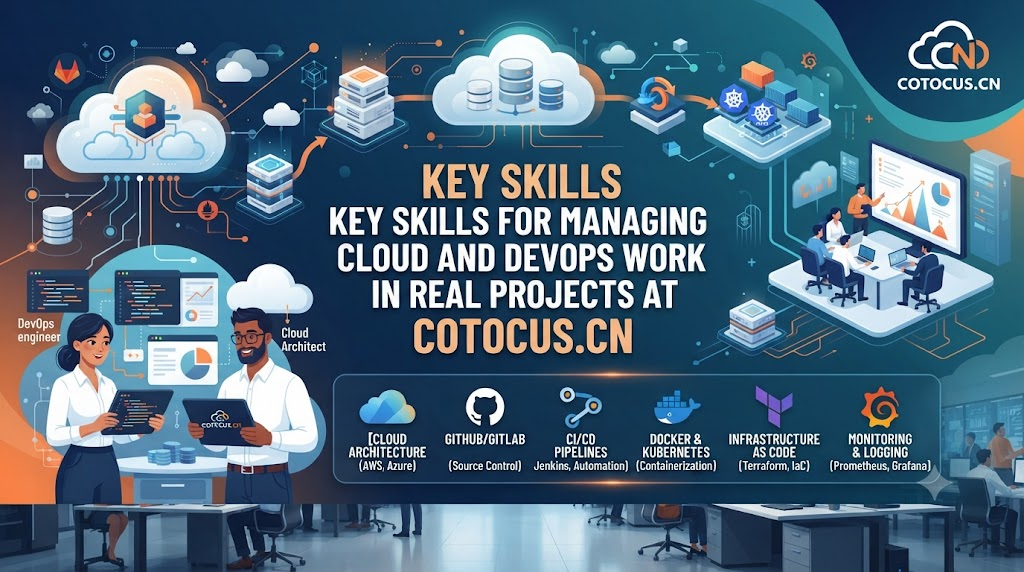
Introduction
The benchmark for digital maturity has fundamentally shifted. For modern enterprises, success is no longer defined by simply launching a mobile app or moving static workloads to a cloud server—it is determined by how quickly, reliably, and intelligently a business can evolve its entire software ecosystem. Today’s market demands software platforms that continuously learn through artificial intelligence, scale dynamically without ballooning costs, and deploy updates seamlessly without service interruption. Yet, bridging the gap between ambitious digital strategies and stable, real-world execution remains a formidable challenge.
Cotocus.cn stands at the convergence of this technological evolution. Operating as a comprehensive technology consultant and engineering partner, Cotocus.cn helps startups, digital-first ventures, and global enterprises build, modernize, and manage intelligent, cloud-native applications. By fusing custom AI application development with robust cloud architecture, continuous delivery pipelines, and proactive site reliability engineering, Cotocus.cn provides organizations with the technical foundation needed to turn modern software into a sustained competitive advantage.
What Is Cotocus.cn?
Cotocus.cn is an AI Software Development Company that collaborates with startups, enterprises, and digital-first organizations to design, build, modernize, and run intelligent software platforms. Rather than offering isolated development resources or basic IT support, Cotocus.cn provides a holistic technology-service framework that addresses both software creation and long-term operational stability.
The foundation of Cotocus.cn’s service offering spans several critical technological disciplines:
- AI Software Development and Generative AI Development Services
- Custom Software Development and SaaS Product Development
- Cloud Consulting Services (AWS, Azure, Google Cloud)
- DevOps Consulting Services, SRE Consulting Services, and Platform Engineering Services
- Digital Transformation Consulting and Corporate DevOps Training
By addressing both the front-end application layer and the underlying operational infrastructure, Cotocus.cn helps organizations bridge the gap between initial product vision and dependable, production-grade delivery.
What Services Does Cotocus.cn Provide?
AI Software Development & Generative AI Services
Cotocus.cn builds custom artificial intelligence systems, integrating Large Language Models (LLMs), natural language processing (NLP), machine learning (ML), intelligent search, and autonomous AI agents directly into production environments to solve complex operational challenges.
Custom Software Development
The firm engineers tailored web applications, mobile platforms, robust APIs, and enterprise-scale software designed around specific business workflows where off-the-shelf software falls short.
SaaS Product Development Company Solutions
Cotocus.cn supports the complete software-as-a-service lifecycle, guiding digital products from initial ideation and Minimum Viable Product (MVP) creation to multi-tenant cloud architecture, subscription management, and system integrations.
Cloud Consulting Services
Assisting organizations across AWS, Azure, and Google Cloud, Cotocus.cn delivers cloud architecture design, legacy migration, application modernization, cost optimization, and cloud-native engineering.
DevOps & SRE Consulting Services
To streamline software delivery and operational stability, Cotocus.cn implements continuous integration/continuous deployment (CI/CD) pipelines, infrastructure automation, GitOps, Kubernetes orchestration, Service Level Objectives (SLOs), and automated incident management.
Platform Engineering Services
Cotocus.cn builds Internal Developer Platforms (IDPs) and self-service infrastructure layers that reduce cognitive load for engineering teams and standardize internal development workflows.
Digital Transformation Consulting & Corporate DevOps Training
The company aligns broad business goals with practical technology execution while offering hands-on corporate training programs to upskill internal engineering teams in DevOps, cloud-native tools, SRE, and modern software delivery.
Why Modern Businesses Need Integrated Software and Engineering Services
In traditional IT structures, software development, cloud infrastructure management, and system operations were frequently managed in isolated silos. Developers wrote code without deep visibility into cloud hosting costs, while operations teams struggled to maintain availability when new code features were deployed rapidly.
Modern software platforms require these domains to work in unison. A high-performing AI feature requires continuous model monitoring, optimized cloud compute, automated delivery pipelines, and reliable infrastructure. Integrating application development with DevOps, SRE, and cloud consulting ensures that systems are built for security, scalability, and high performance from day one, minimizing downtime and technical debt.
Who Should Use Cotocus.cn?
1. Startups and Growing Technology Companies
Early-stage technology ventures need to validate ideas rapidly without sacrificing long-term technical architecture. Cotocus.cn assists startups in building robust MVPs, establishing cloud infrastructure, automating deployments, and embedding intelligent AI capability to establish a strong market presence.
2. Enterprises Modernizing Existing Systems
Legacy organizations with monolithic architectures often experience slow delivery cycles and high maintenance costs. Cotocus.cn helps enterprises migrate legacy systems to cloud-native platforms, implement containerization, improve operational reliability, and modernize legacy codebases.
3. SaaS and Digital Product Companies
Companies building subscription-based digital software require multi-tenant architectures, secure data segregation, scalable payment integrations, and high availability. Cotocus.cn supports SaaS providers across every product maturity stage to ensure platform growth without performance bottlenecks.
4. Organizations Adopting Generative AI
Businesses seeking to incorporate AI capability into daily workflows need more than standalone chatbots or temporary API connections. Cotocus.cn assists organizations in embedding LLMs, AI agents, and custom machine learning pipelines directly into business-critical applications.
5. Engineering Teams Improving Delivery and Reliability
Organizations struggling with slow releases, frequent deployment failures, or unstable environments benefit from Cotocus.cn’s DevOps and SRE consulting services, which establish automated CI/CD pipelines, clear observability, and proactive incident response workflows.
6. Organizations Building Modern Engineering Capabilities
Companies looking to scale their internal developer operations rely on Cotocus.cn for platform engineering solutions—creating internal developer platforms that simplify infrastructure access—complemented by hands-on corporate training to upskill engineering staff.
Understanding Cotocus.cn: Services, Technology Expertise, and Business Support
AI Software Development and Generative AI Development
Moving AI from a trial environment into a production ecosystem presents distinct engineering challenges. As an AI Software Development Company, Cotocus.cn helps organizations navigate data handling, API integrations, and model reliability. Through its Generative AI Development Services, Cotocus.cn enables organizations to build workflow automation, natural language interfaces, custom AI agents, and intelligent search systems that operate securely within existing enterprise software environments.
Custom Software Development
Off-the-shelf software often forces organizations to alter their business workflows to fit rigid software constraints. As a Custom Software Development Company, Cotocus.cn designs applications around specific operational workflows. This includes web portals, mobile solutions, secure APIs, and integrated core systems built using modern frameworks designed for performance, maintainability, and scalability.
SaaS Product Development
Building a SaaS product involves intricate technical architecture beyond standard web development. As a SaaS Product Development Company, Cotocus.cn supports product teams in creating multi-tenant database designs, subscription and billing engines, third-party integrations, and automated client onboarding workflows, ensuring the underlying architecture scales seamlessly as user loads grow.
Cloud Consulting Services
Navigating major cloud infrastructure providers—such as AWS, Azure, and Google Cloud—demands strategic planning to avoid unnecessary costs and operational complexity. Cotocus.cn delivers Cloud Consulting Services that help businesses architect cloud environments, migrate legacy servers, optimize monthly resource consumption, and implement cloud-native methodologies like containerization and serverless computing.
DevOps, SRE, and Platform Engineering Services
Cotocus.cn approaches operational efficiency through three complementary disciplines:
- DevOps Consulting Services: Focuses on automating deployment workflows via CI/CD, managing infrastructure as code (IaC), orchestrating containers using Kubernetes, and establishing GitOps methodologies.
- SRE Consulting Services: Focuses on system uptime and platform stability by defining Service Level Indicators (SLIs) and Service Level Objectives (SLOs), managing capacity planning, and building automated monitoring and incident management frameworks.
- Platform Engineering Services: Creates standardized Internal Developer Platforms (IDPs) that offer self-service infrastructure provisioning, allowing software developers to deploy applications without running into administrative delays.
Digital Transformation Consulting and Corporate DevOps Training
Technology adoption requires both business alignment and team readiness. Cotocus.cn offers Digital Transformation Consulting to assist executive teams in evaluating technology roadmaps and modernizing operational frameworks. Additionally, through Corporate DevOps Training, Cotocus.cn provides practical upskilling programs for internal engineering teams, teaching real-world application across cloud management, Kubernetes, SRE practices, and modern deployment toolchains.
Understanding AI Software Development
AI software development extends beyond making basic API requests to third-party language models. It requires designing full-stack software architectures that ingest, process, and secure data while delivering real-time responses to users.
Building production-ready AI applications involves:
- Data Integration & Vector Search: Connecting unstructured company data with retrievable storage systems to ground AI outputs in relevant factual context.
- AI Agent Workflows: Designing autonomous workflows where models perform structured multi-step tasks across integrated corporate systems.
- Model Evaluation & Safety: Implementing guardrails, automated content checks, and contextual validation to limit non-deterministic errors.
- Observability & Cost Management: Monitoring API usage, response latencies, and token costs to keep production platforms performant and cost-effective.
Generative AI Development: From Experiments to Production Applications
Many enterprises successfully test generative AI prototypes, only to encounter hurdles when transitioning those prototypes into secure, reliable production software. Moving from experiment to production requires structured engineering disciplines:
- Use Case Identification: Defining clear functional requirements where generative capabilities yield measurable time savings or process improvements.
- Contextual Augmentation: Utilizing Retrieval-Augmented Generation (RAG) to ensure LLMs reference private internal knowledgebases accurately without exposing sensitive data.
- API & Workflow Orchestration: Linking generative models to operational systems via APIs so the AI can execute actionable tasks—such as generating invoices, drafting tickets, or querying database tables.
- Monitoring & Ongoing Tuning: Continuously evaluating response accuracy, tracking latency, and updating prompts or model layers based on real-world usage data.
Custom Software Development vs. Off-the-Shelf Software
Organizations frequently evaluate whether to purchase off-the-shelf software solutions or invest in custom development.
Off-the-shelf applications offer rapid deployment and lower initial costs for standardized operational needs, such as general accounting or basic messaging. However, they can limit flexibility when an organization relies on proprietary workflows.
Custom software development provides long-term advantages when unique operational logic, specific compliance requirements, or proprietary algorithms form the core of a company’s market offering. Owning the IP allows businesses to modify, scale, and integrate platforms without paying perpetual per-user licensing fees or depending on third-party vendor roadmaps.
SaaS Product Development: Important Areas to Consider
Developing a commercial SaaS application requires careful architectural planning before writing the initial lines of code:
- Multi-Tenant Data Security: Ensuring user and enterprise customer data is strictly segregated at the application and database levels.
- Flexible Billing Infrastructure: Building adaptable subscription, usage-based, or tiered metering engines that accommodate evolving pricing strategies.
- Scalable Infrastructure: Utilizing auto-scaling cloud architectures that dynamically absorb peak user traffic without incurring unnecessary idle resource costs.
- Self-Service Onboarding: Designing automated user provisioning, account management, and integration capabilities to minimize customer onboarding friction.
- Continuous Updates: Establishing automated deployment pipelines that roll out feature updates and security patches with zero downtime.
Cloud Consulting and Modernization
Cloud infrastructure forms the operational engine of contemporary software. Moving to the cloud or modernizing an established cloud presence requires balancing flexibility with governance across AWS, Azure, or Google Cloud environments.
Effective cloud consulting helps organizations avoid common pitfalls, such as simply rehosting inefficient monolithic applications onto expensive virtual machines (“lift-and-shift”). Instead, modern cloud-native strategies leverage serverless computing, managed database services, container orchestration, and dynamic resource management to optimize operational performance while keeping cloud costs under control.
DevOps, SRE, and Platform Engineering: How They Connect
While DevOps, Site Reliability Engineering (SRE), and Platform Engineering overlap in their goal of improving software operations, each discipline plays a unique role in the software lifecycle:
DevOps
Establishes cultural practices, continuous deployment pipelines, automated testing, and infrastructure automation to bridge the operational divide between software development and IT delivery.
SRE
Applies software engineering principles directly to infrastructure and operational problems. It emphasizes system availability, operational metrics, fault tolerance, incident management, and error budgets.
Platform Engineering
Focuses on developer experience by building internal self-service platforms that package complex cloud resources, security policies, and CI/CD tools into simple workflows for development teams.
Working together, these disciplines ensure that code moves smoothly from local development environments into highly available, resilient production systems.
Technology Service Comparison
| Service Area | Main Focus | Common Business Requirement | Key Areas |
| AI Software Development | Building intelligent software features | Automating complex data processing & tasks | LLMs, ML models, vector search, workflow automation |
| Custom Software Development | Tailored application engineering | Replacing rigid or legacy software systems | Web apps, mobile applications, microservices, APIs |
| SaaS Product Development | Multi-tenant commercial products | Launching scalable subscription platforms | MVPs, tenant isolation, billing engines, user portals |
| Cloud Consulting | Infrastructure management & migration | Improving system agility & optimizing cloud costs | AWS, Azure, Google Cloud, modernization, security |
| DevOps Consulting | Automated delivery & deployment | Reducing release cycles & software deployment risk | CI/CD pipelines, Kubernetes, GitOps, IaC |
| SRE Consulting | Operational reliability & uptime | Managing system stability during peak usage | SLOs/SLIs, observability, incident management |
| Platform Engineering | Developer self-service platforms | Removing internal engineering delivery bottlenecks | IDPs, standardized tooling, self-service portals |
How Cotocus.cn Services Can Work Together
Cotocus.cn’s core service offerings operate as an integrated ecosystem across the entire software technology lifecycle:
- Product Development: AI development, custom software engineering, and SaaS product methodologies establish core application features and user experiences.
- Cloud Foundation: AWS, Azure, or Google Cloud architectures provide scalable compute, storage, and networking layers.
- Software Delivery: DevOps practices automate testing, integration, and zero-downtime deployment workflows.
- Reliability Engineering: SRE strategies manage monitoring, performance limits, and platform availability under heavy user traffic.
- Engineering Productivity: Platform engineering creates internal developer platforms that empower engineering teams to deploy capabilities independently.
- Organizational Modernization: Digital transformation consulting and corporate DevOps training align corporate leadership goals with technical capabilities.
Step-by-Step Guide to Using Cotocus.cn for Technology Modernization
Step 1: Identify the Main Business or Technology Problem
Begin by pinpointing current business challenges—such as slow software releases, unreliable system uptime, high cloud expenses, legacy technical debt, or an unexecuted AI strategy.
Step 2: Define Business and Technical Goals
Establish clear success metrics, such as target deployment frequencies, required application throughput, system availability percentages, budget limits, or revenue targets for new SaaS platforms.
Step 3: Assess the Existing Technology Environment
Conduct a thorough audit of active codebases, cloud infrastructure configurations, security controls, delivery pipelines, and operational developer workflows to highlight performance bottlenecks.
Step 4: Select the Appropriate Technology Service
Align identified technical needs with Cotocus.cn’s specialized practice areas—whether deploying custom AI models, modernizing cloud infrastructure, or launching an internal developer platform.
Step 5: Plan Development or Modernization
Architect target application layers, data storage designs, container strategies, security protocols, and third-party integrations required to support sustainable system growth.
Step 6: Implement and Improve Engineering Practices
Execute application development while establishing continuous deployment pipelines, automated security checks, infrastructure as code, and automated system monitoring.
Step 7: Build Internal Skills and Capabilities
Utilize targeted corporate training programs to ensure internal developer teams acquire hands-on proficiency with updated cloud frameworks, Kubernetes management, and SRE operational workflows.
Step 8: Monitor, Review, and Continue Improving
Track production performance metrics, evaluate user feedback, optimize cloud usage costs, and refine software features in structured iterative cycles.
Common Mistakes Businesses Should Avoid
- Adopting AI Without Clear Use Cases: Deploying complex machine learning models or LLMs without identifying specific operational efficiencies or client value.
- Confusing Prototypes with Production Software: Assuming a basic AI proof-of-concept is ready for live traffic without implementing security, error handling, and performance monitoring.
- Performing Unplanned Cloud Migrations: Transferring legacy application architectures directly into the cloud without optimizing underlying codebases, leading to high monthly expenses.
- Treating DevOps Purely as Tool Selection: Purchasing operational tools without updating underlying team collaboration, testing habits, and deployment strategies.
- Neglecting System Reliability Until Outages Occur: Delaying monitoring setups, incident response planning, and SLO definitions until production platforms experience downtime.
- Ignoring Internal Developer Experience: Overburdening developers with cloud operational tasks rather than providing standardized internal development platforms.
Best Practices for Modern Software and Engineering Teams
- Design Systems Around Clear Requirements: Prioritize user value and business logic over adopting trendy technical frameworks.
- Embed Security Early in the Lifecycle: Incorporate automated security vulnerability scanning into CI/CD pipelines to catch defects early.
- Automate Manual Infrastructure Tasks: Manage infrastructure using code (IaC) to maintain consistent deployment environments across testing and production.
- Establish Clear Observability Metrics: Track practical system health using real-time logs, metrics, and application traces rather than relying solely on server uptime.
- Standardize Operational Tooling: Provide development teams with standardized templates and self-service deployment pathways to maintain architectural consistency.
- Invest in Continuous Skill Development: Provide engineering teams with practical, hands-on training to keep pace with changing cloud and automation standards.
How to Evaluate an AI, Software, Cloud, or DevOps Service Provider
Selecting a technology services partner requires careful evaluation beyond reviewing surface-level marketing claims.
Key Evaluation Areas
| Evaluation Area | What to Check | Why It Matters |
| AI Expertise | Experience with LLM integration, agent workflows, and data guardrails | Prevents AI implementations from becoming fragile, inaccurate prototypes |
| Software Development | Clean code standards, modern architectural designs, and API design | Ensures long-term maintainability without creating excessive technical debt |
| SaaS Capability | Understanding multi-tenant structures, billing engines, and system scalability | Guarantees the application can grow seamlessly as paid user adoption expands |
| Cloud Expertise | Multi-cloud knowledge across AWS, Azure, and Google Cloud environments | Avoids cloud platform lock-in and prevents expensive cloud resource misconfigurations |
| DevOps Knowledge | Practical usage of automated CI/CD pipelines, Kubernetes, and GitOps | Reduces release risks and accelerates the pace of software deliveries |
| SRE Practices | Systematic approach to error budgets, SLO definitions, and incident mitigation | Minimizes platform downtime and maintains customer trust during high load |
| Platform Engineering | Capability to design developer portals and self-service deployment layers | Boosts internal developer productivity and minimizes administrative delays |
| Security | Implementation of automated checks, data encryption, and access policies | Protects corporate and client data against security threats and compliance leaks |
| Training & Support | Ability to upskill internal staff and deliver structured technical handoffs | Prevents permanent operational dependency on external service providers |
| Scalability | Architectural approaches that support expanding user volumes seamlessly | Ensures core software platforms remain stable during sudden usage surges |
Benefits of Integrating AI, Cloud, DevOps, SRE, and Platform Engineering
Combining software development with robust infrastructure and operational disciplines delivers measurable advantages across the enterprise:
- Accelerated Time-to-Market: Automated testing and modern continuous delivery pipelines reduce the time required to move features from development into live production environments.
- Enhanced System Reliability: SRE principles and active observability frameworks catch system faults early, minimizing unexpected platform downtime.
- Improved Development Efficiency: Platform engineering and standardized self-service infrastructure allow developers to focus on writing application code rather than configuring servers.
- Optimized Operational Costs: Strategic cloud management prevents resource over-provisioning and keeps monthly infrastructure bills under control.
- Structured Technology Adoption: Unified software development and corporate training frameworks make adopting complex technologies like AI manageable and sustainable.
How Cotocus.cn Can Support Different Technology Requirements
Scenario A: A Startup Building an AI-Driven Software Product
A growing business requires an AI-powered analytics web application. Cotocus.cn provides custom software development to engineer the front-end platform, delivers Generative AI development services to integrate intelligent data query capabilities, and establishes automated cloud deployment pipelines on AWS.
Scenario B: A Digital Company Launching a New SaaS Platform
A software venture needs to bring a multi-tenant business platform to market. Cotocus.cn assists with MVP planning, builds multi-tenant database systems, integrates automated payment and subscription processing, and deploys auto-scaling cloud infrastructure to support initial user growth.
Scenario C: An Enterprise Modernizing Legacy Application Infrastructure
An established business experiences frequent platform outages and slow release cycles on legacy on-premise servers. Cotocus.cn provides cloud consulting to execute a phased migration to Google Cloud or Azure, refactors monolithic code into containerized microservices managed via Kubernetes, and establishes SRE reliability frameworks.
Scenario D: An Engineering Organization Improving Developer Output
A company with a large engineering team experiences long operational delays whenever developers request testing environments. Cotocus.cn designs an Internal Developer Platform for self-service infrastructure provisioning while delivering structured corporate DevOps training to upskill internal staff.
Digital Transformation: Connecting Strategy with Implementation
Digital transformation initiatives often fail when high-level executive strategy loses connection with ground-level technical implementation. Real transformation requires aligning software applications, cloud platforms, delivery pipelines, and team skill sets.
Through Digital Transformation Consulting, Cotocus.cn helps organizations navigate this transition pragmatically. By auditing current technical workflows, recommending targeted software modernization, establishing cloud automation, and upskilling personnel, transformation shifts from a vague managerial concept into a structured, executable engineering roadmap.
Corporate DevOps Training and Engineering Skill Development
As cloud environments, Kubernetes standards, and AI integration practices evolve, internal engineering teams must continually update their skill sets. Relying solely on external consulting without internal knowledge transfer creates long-term operational dependencies.
Cotocus.cn addresses this gap through Corporate DevOps Training. These hands-on training sessions focus on practical skills—teaching engineering teams how to build robust CI/CD pipelines, manage Kubernetes clusters, configure automated observability dashboards, run SRE incident workflows, and operate platform engineering toolchains within real-world production environments.
Frequently Asked Questions
What is Cotocus.cn?
Cotocus.cn is an AI Software Development Company that helps startups, enterprises, and digital-first businesses build, modernize, and run intelligent software platforms. Its service offerings span custom software development, SaaS product development, cloud consulting, DevOps, SRE, platform engineering, digital transformation consulting, and corporate training.
What services does an AI Software Development Company typically provide?
An AI software development firm designs, builds, and deploys applications embedded with machine learning, language models, and automation capabilities. Services include embedding LLMs into business systems, constructing AI agents, setting up vector search pipelines, and managing production AI infrastructure.
How are Generative AI Development Services used in real-world applications?
Generative AI services help businesses integrate language models and context-aware capabilities directly into core software systems. Common applications include automated document processing, natural language database search, intelligent customer support workflows, and automated internal task processing.
When should a business choose custom software development over pre-built applications?
Custom software development is ideal when core business workflows require unique features that pre-built software cannot accommodate. It provides full ownership of intellectual property, complete architectural flexibility, seamless integration options, and freedom from third-party vendor licensing fees.
What does SaaS product development involve?
SaaS product development covers the complete lifecycle of subscription-based software. This includes initial MVP design, multi-tenant database segregation, automated subscription management, scalable cloud infrastructure, self-service user onboarding, and zero-downtime deployment setups.
Why do organizations engage Cloud Consulting Services during system migration?
Cloud consulting helps businesses design secure, cost-effective cloud platforms across AWS, Azure, or Google Cloud. Consultants guide resource migration strategies, optimize monthly infrastructure expenses, refactor legacy code for cloud suitability, and configure robust data security policies.
What technical challenges do DevOps Consulting Services address?
DevOps consulting helps resolve slow software release cycles, manual infrastructure configuration errors, inconsistent deployment environments, and communication gaps between developer and operations teams by deploying automated CI/CD pipelines and infrastructure as code.
How do SRE Consulting Services improve application reliability?
SRE consulting focuses on platform uptime and performance by establishing Service Level Objectives (SLOs), managing error budgets, configuring real-time observability dashboards, planning compute capacity, and setting up automated incident management procedures.
What are Platform Engineering Services used for?
Platform engineering creates internal developer platforms (IDPs) that offer self-service access to infrastructure, testing environments, and deployment pipelines. This reduces cognitive overhead for software developers and eliminates internal ticketing delays.
How does Corporate DevOps Training support internal engineering teams?
Corporate DevOps training provides technical teams with hands-on learning across cloud management, Kubernetes, SRE practices, CI/CD automation, and modern deployment toolchains, ensuring internal staff can manage modern technical infrastructure independently.
Conclusion
Navigating today’s software ecosystem requires balancing application development, cloud infrastructure management, automation, system reliability, and continuous team upskilling. Treating software creation, cloud hosting, and system operations as disconnected projects often leads to technical debt, system instability, and inflated operational costs. Cotocus.cn addresses these challenges through a unified technology framework—combining AI Software Development, Generative AI Development Services, Custom Software Development, SaaS Product Development, Cloud Consulting Services, DevOps Consulting Services, SRE Consulting Services, Platform Engineering Services, Digital Transformation Consulting, and Corporate DevOps Training. By aligning modern application engineering with dependable operational practices, Cotocus.cn helps organizations build flexible, reliable, and scalable digital systems designed for sustained business growth.