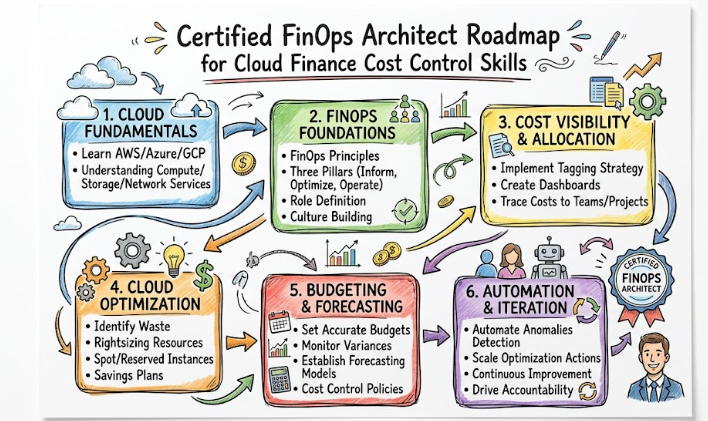
Introduction
Cloud architectures are heavily utilized across global industries to drive digital transformation. However, infrastructure budgets are frequently exceeded due to unmanaged resources and complex billing structures. Traditional financial models are often found to be incompatible with the variable nature of cloud computing. To address these operational challenges, the framework of financial operations is widely adopted by modern enterprises.
A critical bridge between engineering capabilities and corporate financial accountability is established by this methodology. Technical systems are no longer evaluated solely on uptime and performance metrics. Instead, cloud infrastructure is continuously audited for cost efficiency and fiscal responsibility. Within this landscape, specialized governance expertise is highly valued by organizations seeking to maximize their cloud investments.
The optimization of large-scale infrastructure requires a structured and standardized approach. Professional validation in this domain is sought by engineers and managers worldwide to ensure alignment with industry benchmarks. A definitive pathway toward mastering cloud financial engineering is provided by this comprehensive roadmap.
Defining the Certified FinOps Architect
The management of variable cloud spend is addressed directly by the Certified FinOps Architect designation. This professional program is structured to cultivate deep expertise in cloud financial governance, architectural optimization, and multi-departmental alignment. Operational silos between finance, engineering, and leadership teams are systematically dismantled by the principles taught in this curriculum.
Why It Matters Today
Uncontrolled cloud spending is recognized as a major operational risk for modern enterprises. Rapid deployment models often lead to over-provisioned infrastructure and orphaned resources. Visibility into real-time costs is frequently obscured by complex enterprise discount programs and multi-cloud billing datasets.
The role of a financial operations architect has become indispensable because cloud waste cannot be resolved by automated tools alone. Cultural transformation and structural accountability must be injected into the engineering culture. Operational efficiency is achieved when technical leaders are equipped to design systems that are inherently cost-aware from the initial deployment phase.
Why Certified FinOps Architect certifications are important
Career longevity is significantly enhanced when cloud infrastructure management is combined with financial governance skills. A measurable return on investment is delivered to employers by certified individuals who can successfully identify and eliminate architectural inefficiencies.
Furthermore, strategic decision-making capabilities are refined through this training. Complex unit economics are successfully analyzed, enabling organizations to forecast future infrastructure costs with high precision. Leadership opportunities are frequently unlocked as a direct result of mastering this cross-functional discipline.
why choose Finopsschool ?
Finopsschool Production-grade financial engineering scenarios are emphasized throughout the curriculum offered by this provider. Theoretical concepts are consistently supported by practical exercises, ensuring that real-world applicability is prioritized. A standardized vocabulary is established across all modules, allowing technical professionals to communicate seamlessly with finance executives.
The educational content is continuously updated to reflect the evolving nature of multi-cloud billing structures and enterprise governance frameworks. Enterprise-scale budgeting, complex chargeback mechanisms, and automated compliance policies are fully explored. Comprehensive support is provided to learners, ensuring that complex cloud financial challenges can be confidently navigated in real enterprise environments.
Comprehensive Examination of the Certification Pathway
What is This Certification?
The Certified FinOps Architect credential is an advanced professional validation centered on cloud cost architecture, strategic budgeting, and organizational governance. Production-focused learning is prioritized to ensure that infrastructure design decisions are directly correlated with business value and corporate financial constraints.
Who Should Take This Certification?
This program is ideally suited for senior technical professionals who are tasked with managing large-scale cloud budgets. Cloud architects, platform engineers, site reliability engineers, and engineering managers will find immense value in this curriculum. It is also highly beneficial for finance professionals who require a deep understanding of cloud-native infrastructure operations.
Complete Certification Hierarchy Table
| Track | Level | Who it’s for | Prerequisites | Skills Covered | Recommended Order |
| FinOps Core | Foundation | Newcomers, finance analysts, junior cloud engineers | Basic cloud awareness | Billing basics, cost visibility, tagging structures | First |
| Engineering Operations | Professional | Cloud engineers, DevOps practitioners, SRE teams | Cloud operations experience | Forecasting, budgeting, automated optimization | Second |
| Architectural Leadership | Advanced | Cloud architects, FinOps leads, infrastructure managers | FinOps framework understanding | Operating model design, global governance, strategy | Third |
| Automation & Delivery | Professional | DevOps professionals, platform builders | CI/CD pipeline knowledge | Cost-aware pipelines, environment control patterns | After Foundation |
| Reliable Infrastructure | Foundation | Operations teams, reliability engineers | Production monitoring basics | Reliability-cost balance, capacity planning patterns | Parallel Track |
Skills Are Acquired
The following core capabilities are developed during this certification journey:
- Granular visibility is established across complex, multi-account cloud environments through advanced tagging strategies.
- Data-driven forecasting models are successfully constructed to accurately predict future infrastructure spend based on historical utilization patterns.
- Unit economics are formulated to correlate cloud infrastructure expenditures directly with key business performance metrics.
- Automated cost-remediation scripts and governance policies are designed and implemented within active deployment pipelines.
- Cross-departmental collaboration frameworks are created to foster a pervasive culture of financial accountability.
Real-World Projects Post-Certification
The following technical initiatives can be confidently executed upon successful completion of the program:
- A comprehensive chargeback and showback accounting matrix is designed for a multi-tenant corporate platform.
- An automated resource scheduling architecture is built to systematically deactivate non-production environments during idle periods.
- A major cloud migration plan is architected using precise serverless cost models to guarantee a reduction in baseline infrastructure spend.
- A cross-functional Financial Operations Center of Excellence is successfully established within a global enterprise.
Structured Preparation Frameworks
The 14-Day Accelerated Strategy
- Days 1 to 5: The official handbook is thoroughly reviewed, and core architectural terminology is completely mastered.
- Days 6 to 10: Deep analysis of enterprise case studies is performed to understand real-world cloud optimization patterns.
- Days 11 to 14: Practice examinations are taken repeatedly, and specific domain gaps are systematically corrected.
The 30-Day Comprehensive Strategy
- Days 1 to 10: Cloud billing datasets are scrutinized, and standard cost allocation methodologies are practiced manually.
- Days 11 to 20: Automated scripting patterns for cloud rightsizing and reservation coverages are thoroughly explored.
- Days 21 to 30: High-level stakeholder communication frameworks are studied, followed by a final review of governance principles.
The 60-Day Mastery Strategy
- Days 1 to 20: Foundational cloud financial lifecycles are deeply analyzed alongside basic infrastructure design patterns.
- Days 21 to 40: Advanced multi-cloud billing APIs are integrated into mock dashboard architectures to practice data visibility.
- Days 41 to 60: Enterprise governance policies are formulated, mock audits are executed, and final certification preparations are completed.
Common Pitfalls to Avoid
- The technical aspects of infrastructure are often over-emphasized while organizational culture change is neglected.
- Variable cloud spend models are frequently treated as fixed traditional data center budgets.
- Tagging strategies are implemented without establishing strict, automated policy enforcement mechanisms.
- Automated cost-cutting recommendations are accepted blindly without verifying potential impacts on system reliability.
Subsequent Professional Credentials
Same-Track Continuation
Expert-level financial engineering programs are recommended to further refine strategic governance capabilities.
Cross-Track Progression
Advanced infrastructure management credentials, such as specialized Kubernetes administration programs, should be pursued to enhance container cost optimization.
Leadership and Management Alignment
Enterprise architecture frameworks or specialized engineering management certifications are ideally taken to prepare for executive-level infrastructure roles.
Selecting an Optimal Strategic Learning Vector
The DevOps Vector
Continuous deployment pipelines must be aligned with financial guardrails. Cost-aware automation is introduced into the delivery lifecycle so that budget overruns are detected before code is pushed to production systems.
The DevSecOps Vector
Security compliance and financial governance are merged within this vector. The financial impact of security logging, threat detection architectures, and data retention policies is systematically analyzed to ensure cost-effective protection.
The Site Reliability Engineering Vector
An optimal balance between system availability and cloud expenditure is continuously sought. Capacity planning methodologies are integrated with cost data to ensure that service level objectives are achieved without over-provisioning infrastructure.
The AIOps and MLOps Vector
The substantial infrastructure demands of machine learning models are managed efficiently under this track. Training pipelines, data ingestion workflows, and model inference deployments are architected to prevent exponential cost growth.
The DataOps Vector
Massive enterprise data pipelines and storage architectures are optimized for fiscal efficiency. Analytical query execution, data warehousing tiers, and lifecycle retention policies are structured to minimize data processing overheads.
The FinOps Vector
Dedicated practitioners are enabled to transition from basic cost reporting to advanced strategic architecture design. The holistic orchestration of culture, tooling, and financial accountability is mastered across the entire cloud footprint.
Mapping of Operational Roles to Recommended Credentials
| Professional Role | Primary Focus Area | Recommended Certification Focus |
| DevOps Engineer | Pipeline Cost Automation | Engineering Operations Level |
| Site Reliability Engineer | Reliability-Cost Tradeoffs | Reliable Infrastructure Track |
| Platform Engineer | Internal FinOps Guardrails | Architectural Leadership Level |
| Cloud Engineer | Resource Optimization & Tagging | Engineering Operations Level |
| Security Engineer | Secure Cost Governance | Automation & Delivery Track |
| Data Engineer | Data Pipeline Cost Management | Specialized Data Optimization |
| FinOps Practitioner | Lifecycle Orchestration | Architectural Leadership Level |
| Engineering Manager | Strategic Budgeting & Forecasting | Architectural Leadership Level |
Next Certifications to Take
Same-Track Progression
Advanced specialized masterclasses are targeted to deepen expertise in multi-cloud financial environments. Complex vendor negotiation methodologies and enterprise-scale commitment strategies are thoroughly mastered in this phase. Cultural transformation frameworks are studied extensively to enable the successful leadership of large-scale organizational changes.
Cross-Track Advanced Learning
Cloud-native container infrastructure administration programs are pursued to ensure that modern microservices are designed with cost awareness. Deep technical knowledge regarding container scheduling, resource limits, and cluster scaling patterns is acquired. The alignment of container orchestration with cloud financial visibility is successfully achieved.
Leadership-Focused Advanced Learning
Executive technology management programs are undertaken to prepare for senior leadership positions. Strategic corporate financial planning, high-level risk management, and organizational design methodologies are mastered. The ability to present complex infrastructure data as clear business value metrics to board-level executives is developed.
Educational Ecosystem and Support Institutions
DevOpsSchool
Comprehensive educational programs are delivered by this institution to bridge the gap between software delivery and cloud financial responsibility. Production-grade labs are utilized to ensure that technical skills are developed effectively.
Cotocus
Specialized training methodologies are provided here to assist corporate teams in adopting cloud financial governance frameworks. Hands-on exercises are emphasized to ensure that theoretical knowledge is transformed into operational capability.
ScmGalaxy
A robust repository of technical resources, expert insights, and community support is maintained by this platform. Advanced infrastructure management and automated cost optimization strategies are covered extensively.
BestDevOps
Practical learning paths are structured by this entity to enable engineers to master modern cloud-native architectures. Cost accountability and pipeline efficiency are integrated into the core curriculum.
devsecopsschool.com
Educational modules are engineered on this site to combine security automation with financial governance principles. Safe and cost-effective deployment methodologies are prioritized.
sreschool.com
The delicate balance between system performance, operational reliability, and cloud expenditure is taught through specialized courses on this portal. Production environment stability is analyzed from a financial perspective.
aiopsschool.com
Automated operations and data-driven infrastructure management are explored through the lens of cost efficiency on this platform. Scalable cloud architectures are thoroughly analyzed.
dataopsschool.com
Specialized training is provided here to ensure that data engineering infrastructure is designed with strict financial accountability. Large-scale data storage and analytics costs are addressed.
finopsschool.com
The primary authoritative education regarding the cloud financial management framework is delivered directly through this specialized portal. Comprehensive certification preparation is supported across all professional levels.
Strategic Inquiry
General Operational Queries
1. What level of difficulty is associated with these examinations?
An intermediate to advanced level of difficulty is maintained, requiring a solid understanding of both cloud infrastructure and basic corporate financial concepts.
2. What duration of time is typically required for successful preparation?
A period ranging from 30 to 60 days is generally found to be sufficient, depending on prior experience with cloud operations and billing systems.
3. Are specific professional prerequisites mandatory before attempting the exam?
No absolute prerequisites are enforced, but foundational knowledge of cloud-native environments and enterprise billing models is highly recommended.
4. What is the ideal sequence for attempting these certifications?
The journey is best started with the Foundation level, followed sequentially by the Professional track, and culminating in the Advanced Architect validation.
5. What measurable career value is derived from this credential?
Professional credibility is significantly enhanced, leading to increased demand from enterprises seeking to control growing cloud expenditures.
6. Which specific enterprise job roles are unlocked by this training?
Positions such as Cloud Financial Architect, FinOps Lead, Platform Director, and Enterprise Infrastructure Manager are successfully targeted.
7. How frequently is the educational curriculum updated by the provider?
The core modules are continuously revised to ensure alignment with the latest multi-cloud billing APIs and enterprise governance strategies.
8. Is global recognition associated with this certification program?
Yes, the validation is recognized globally across the IT sector, serving as a benchmark for cloud financial engineering competence.
9. How are the practical assessment phases structured within the program?
Scenario-based evaluations and mock budgeting projects are utilized to test real-world problem-solving capabilities under production conditions.
10. Can finance professionals without coding experience navigate this curriculum?
Yes, the material is structured to accommodate finance professionals, provided a basic understanding of cloud service models is maintained.
11. What specific types of cloud waste are addressed by these methodologies?
Common inefficiencies such as idle virtual machines, unattached storage volumes, and under-utilized database instances are systematically targeted.
12. How does this training assist in establishing a corporate Center of Excellence?
The necessary operational frameworks, cross-departmental communication strategies, and governance patterns are completely provided by the coursework.
Certified FinOps Architect Focus Queries
1. What core focus distinguishes the Certified FinOps Architect exam from foundational tracks?
The advanced design of enterprise operating models, global governance policies, and strategic stakeholder alignment is prioritized over basic terminology.
2. How are multi-cloud billing complexities handled within the architect curriculum?
Advanced methodologies for normalizing disparate billing datasets and unifying cost visibility across multiple cloud providers are deeply taught.
3. What architectural strategies are emphasized for container cost optimization?
The precise calculation of pod-level unit economics and the design of automated cluster scaling mechanisms are extensively analyzed.
4. Is the creation of internal developer platforms covered in this track?
Yes, the integration of automated financial guardrails and cost transparency features into internal developer portals is fully explored.
5. How is long-term cloud expenditure forecasting taught at this level?
Data-driven predictive modeling techniques that correlate infrastructure spend with macro business KPIs are utilized throughout the training.
6. What role does policy enforcement automation play in the architect framework?
The implementation of automated compliance scripts that actively prevent the provisioning of non-compliant, high-cost resources is prioritized.
7. How are complex corporate chargeback mechanisms designed by a certified architect?
Shared infrastructure costs are accurately allocated to specific business units using sophisticated consumption-based accounting matrices.
8. What approach is taken toward managing enterprise cloud discount agreements?
The strategic analysis, procurement, and ongoing lifecycle management of Savings Plans and Reserved Instances are comprehensively mastered.
Testimonials
Rajesh
A complete transformation in cloud cost visibility was achieved within our infrastructure within months of completing this program. Automated governance guardrails were successfully integrated directly into our production pipelines.
Priya
The delicate balance between system reliability and infrastructure expenditure is now managed with total precision. Architectural decisions are completely guided by data-driven unit economics.
Amit
Strategic clarity regarding multi-cloud budgeting was completely realized through this advanced curriculum. siloed conversations between engineering and finance teams were successfully replaced with a unified operational language.
Sunita
Corporate compliance risks were drastically reduced after implementing the automated cost-remediation patterns taught in this course. Confidence in long-term cloud forecasting was significantly elevated across our leadership team.
Vikram
Complex containerized workloads are now optimized with absolute financial accountability. Measurable reductions in cloud waste were delivered to our global business units almost immediately.
Final Summary
The management of cloud environments demands a sophisticated blend of technical mastery and financial responsibility. The Certified FinOps Architect designation provides the definitive framework required to navigate these modern enterprise challenges successfully. Sustainable cloud cost optimization is achieved only when engineering teams are empowered with structural governance capabilities.
Long-term career longevity is secured by professionals who transcend basic resource provisioning to become value engineers. Organizational efficiency is driven, waste is systematically eliminated, and technical choices are aligned with business outcomes. A strategic commitment to this learning path is highly recommended for anyone seeking to lead modern cloud operations.
The blog explains FinOps architecture and cost management concepts with great clarity and purpose.
That practical insight helps readers connect technical skills with real business impact.