Introduction
Many technology teams rush to release software updates quickly, but they often feel overwhelmed when security vulnerabilities and compliance failures block their deployment pipelines at the last minute. Month-end release cycles and pressure from stakeholders create stressful bottlenecks when security checks are treated as an afterthought rather than a core part of the process. Small daily oversights in code repositories or cloud configurations may look harmless, but they can quietly expose sensitive systems to major security breaches. This blog will explain what DevSecOps consulting involves, why integrating security early matters, and how organizations can bridge the gap between development, security, and operations. Beginners, software engineers, and business leaders will benefit from understanding how structured consulting helps build resilient pipelines without sacrificing delivery speed. Practical understanding is always better than quick, reactive fixes that create more technical debt over time. We will guide you through this journey with a trustworthy, educational approach that focuses on long-term stability and risk reduction.
Understanding Complete Guide to DevSecOps Consulting for Secure Software Delivery in Simple Words
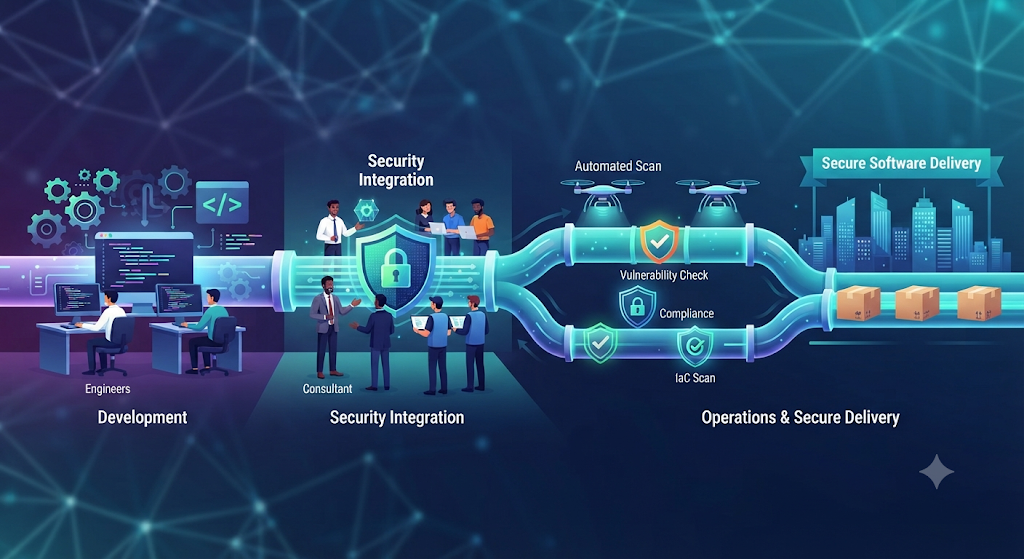
DevSecOps consulting means bringing in specialized external experts to help organizations integrate security practices into every phase of their software development lifecycle. Instead of treating security as a final barrier before launch, consulting focuses on automating checks throughout building, testing, and deployment. People search for this topic because modern cyber threats require continuous monitoring and automated vulnerability detection across cloud and on-premise environments. In real life, it connects with software engineering, infrastructure management, compliance auditing, and risk mitigation. For example, a retail startup might hire a consultant to automate security scans in their GitHub workflow so that outdated libraries are flagged before reaching production. A common misunderstanding is that consultants simply install expensive security software and leave, when in reality, they build cultural habits and automated guardrails. The practical takeaway is that DevSecOps consulting transforms security from a manual bottleneck into an automated enabler of fast, safe software delivery.
Why Complete Guide to DevSecOps Consulting for Secure Software Delivery Is Important
Integrating secure practices into software delivery directly affects how organizations manage risk, deploy updates, and maintain customer trust. Without proper planning, teams face constant firefighting, costly vulnerability patches, and failed compliance audits that damage business reputation. Expert consulting guides better decision-making across infrastructure planning, risk awareness, and long-term technical discipline. Consider a scenario where a growing fintech company rushes a new payment feature live without proper dependency checks, leading to exposed customer data and emergency rollbacks. Structured consulting prevents such incidents by establishing clear testing gates and automated feedback loops. By focusing on sustainable engineering habits rather than panic-driven patches, teams avoid emotional decision-making during high-pressure releases and build resilient systems for the future.
The Real Problem Readers Face With Complete Guide to DevSecOps Consulting for Secure Software Delivery
The core problem behind adopting secure software delivery practices is the sheer volume of confusing advice and fragmented tools available online. Many organizations struggle with a lack of internal awareness, treating security as a box-ticking exercise rather than an active engineering mindset. Teams often make emotional decisions under tight deadlines, ignoring proper risk analysis and skipping critical code reviews. Another major issue is relying completely on social media trends or generic templates without understanding their specific infrastructure needs. Furthermore, failing to read tool documentation or ignoring compliance guidelines leads to false security confidence. Recognizing these real-world obstacles helps teams shift away from reactive habits and adopt structured, realistic next steps.
How Complete Guide to DevSecOps Consulting for Secure Software Delivery Works Step by Step
Step 1: Current State Assessment
This step involves auditing existing codebases, deployment pipelines, and access controls to identify security gaps. It matters because you cannot fix vulnerabilities if you do not know where they exist. Apply this by conducting a comprehensive tooling and workflow review with your team. For example, a team maps out every manual approval step in their deployment pipeline. A common mistake is assuming current processes are secure without empirical testing. A better approach is to use automated discovery tools alongside expert interviews to map real risks.
Step 2: Defining Security Objectives
This means establishing clear, measurable security and compliance goals for software delivery. It matters because vague goals lead to unfocused tool adoption. Apply this by setting specific targets for vulnerability resolution times and compliance coverage. For example, defining a rule that critical vulnerabilities must be patched within twenty-four hours. A common mistake is setting unrealistic zero-defect goals that halt all progress. A better approach is prioritizing risks based on severity and real-world impact.
Step 3: Pipeline Integration
This step focuses on embedding automated security testing directly into continuous integration and continuous deployment workflows. It matters because manual checks slow down delivery and miss hidden flaws. Apply this by adding static and dynamic code analysis tools to your repository triggers. For example, configuring automatic scans every time a developer opens a pull request. A common mistake is turning on every alert rule at once, causing massive developer fatigue. A better approach is starting with high-priority checks and gradually tuning rule sets.
Step 4: Vulnerability Management
This means creating a structured system for tracking, triaging, and resolving identified security flaws. It matters because unmanaged alerts clutter dashboards and hide real threats. Apply this by centralizing vulnerability reports into a single ticketing dashboard. For example, routing high-priority alerts straight to the responsible engineering lead. A common mistake is ignoring low-severity warnings until they compound into major issues. A better approach is establishing regular review schedules for all severity levels.
Step 5: Cultural and Team Training
This involves educating developers and operations staff on secure coding principles and tool usage. It matters because technology alone cannot prevent human error. Apply this by organizing hands-on secure coding workshops and sharing post-mortem learnings. For example, running internal lunch-and-learn sessions on preventing common injection flaws. A common mistake is treating security training as a one-time annual HR requirement. A better approach is embedding continuous micro-learning into daily engineering rituals.
Step 6: Continuous Monitoring and Improvement
This step establishes ongoing observation of production environments and feedback loops into the development lifecycle. It matters because new threats emerge constantly after software is deployed. Apply this by setting up automated logging, anomaly detection, and regular audit cycles. For example, monitoring cloud resource configurations for unexpected permission changes. A common mistake is setting up monitoring dashboards and never reviewing the alerts. A better approach is refining alert thresholds and conducting periodic retrospective reviews to improve security posture over time.
Key Factors That Influence Complete Guide to DevSecOps Consulting for Secure Software Delivery
- Tool Reliability: Choosing established security scanners and automation tools that integrate smoothly into existing workflows ensures high adoption rates without breaking builds.
- Team Skill Level: The technical readiness and openness of development teams to adopt secure coding practices directly determine how fast secure pipelines are successfully implemented.
- Regulatory Compliance: Adhering to industry standards like SOC 2, ISO, or HIPAA shapes how tightly access controls and audit logging must be enforced across pipelines.
- Infrastructure Complexity: The mix of cloud services, container platforms, and legacy systems influences the scope and depth required during a security consulting engagement.
- Budget and Resources: Financial and time investments dictate whether an organization can implement comprehensive end-to-end automation or must prioritize high-impact areas first.
- Leadership Support: Active buy-in from engineering directors and executive management ensures security initiatives receive necessary time, priority, and resource allocation.
- Feedback Velocity: How quickly developers receive actionable security alerts after committing code affects their ability to fix issues without delaying releases.
- Risk Tolerance: An organization’s specific risk appetite guides decisions on how strict automated build failure rules should be when vulnerabilities are detected.
. Detailed Breakdown of Complete Guide to DevSecOps Consulting for Secure Software Delivery
Successful adoption of secure software delivery requires looking beyond basic tool installations and examining the underlying architecture of your engineering organization. Consulting engagements typically begin with a deep dive into how code flows from a developer’s workstation into production environments. Understanding static application security testing versus dynamic testing helps teams catch vulnerabilities at different stages of the lifecycle. Furthermore, managing software bill of materials ensures that open-source dependencies are tracked for known vulnerabilities. Beginner mistakes often include buying expensive enterprise security suites without internal staff trained to interpret the results. Organizations must prioritize building a culture of shared responsibility where developers, security specialists, and operations engineers collaborate closely. Following random configuration guides from the internet without matching your specific cloud architecture creates false security and potential compliance failures. Maintaining clear documentation and regular review cycles ensures that your secure software delivery pipeline evolves alongside emerging threat landscapes.
Common Mistakes Beginners Make With Complete Guide to DevSecOps Consulting for Secure Software Delivery
- Ignoring Developer Friction: Implementing overly strict security gates that block every build without clear explanations frustrates developers and leads to workarounds.
- Tool Overload: Adopting too many automated scanners at once without a centralized triage strategy creates alert fatigue and hides critical threats.
- Treating Security as an Event: Believing that hiring a consultant once solves security forever, rather than understanding it requires continuous internal practice.
- Failing to Prioritize Fixes: Attempting to patch every single low-risk advisory immediately instead of focusing resources on high-impact vulnerabilities.
- Neglecting Third-Party Code: Focusing solely on custom-written code while ignoring vulnerabilities hidden inside open-source dependencies and libraries.
Don’t Do This Checklist
- Do not buy complex enterprise security tools before assessing your team’s actual operational capacity.
- Do not bypass code reviews to rush a feature release under tight deadline pressure.
- Do not ignore compliance requirements until the final week before an audit.
- Do not rely on default security configurations without hardening your cloud environments.
Practical Real-Life Examples of Complete Guide to DevSecOps Consulting for Secure Software Delivery
- A mid-sized software company was facing frequent deployment delays due to manual security sign-offs. By hiring a consultant to automate static code analysis, they reduced security review time from days to minutes while catching critical bugs early.
- An e-commerce startup suffered a minor data leak caused by an outdated open-source library. They engaged a consulting partner to implement a software bill of materials scanner, preventing future vulnerable dependency imports.
- A financial technology firm struggled with high developer resistance to new security tools. The consulting team introduced gradual feedback loops and training workshops, turning security into a collaborative engineering effort.
- A healthcare tech provider needed to meet strict compliance frameworks before launching a new cloud product. Consultants helped them map their infrastructure code to regulatory controls, ensuring smooth audit approval.
- A growing SaaS enterprise was overwhelmed by thousands of false-positive security alerts. A consulting review helped them tune their scanner configurations and establish clear triage workflows, cutting noise by eighty percent.
Table 1: Security Testing Types and Implementation Stages
| Testing Type | Primary Focus | When to Apply | Beginner Impact |
| SAST | Source code vulnerability scanning | During code authoring and pull requests | Catches syntax and logic security flaws early |
| DAST | Running application penetration testing | Staging or pre-production environments | Identifies runtime and configuration vulnerabilities |
| SCA | Open-source dependency analysis | Dependency management and build phase | Highlights known vulnerabilities in external libraries |
| IaC Security | Cloud infrastructure template checks | Infrastructure provisioning phase | Prevents misconfigured cloud storage and networks |
Table 2: Beginner Mistakes vs Correct Approach in DevSecOps
| Area | Common Beginner Mistake | Better Approach |
| Tool Adoption | Installing every available security scanner at once | Starting with targeted scans on high-risk repositories |
| Alert Management | Ignoring warning logs or trying to fix everything instantly | Establishing a severity-based triage and patching workflow |
| Team Culture | Treating security as an exclusive task for external auditors | Fostering shared responsibility across development and operations |
| Compliance | Cramming documentation right before an audit deadline | Maintaining continuous automated compliance checking and logging |
Tools, Methods, and Frameworks Readers Can Use
- Static Analysis Tools: Automated scanners that review source code for security flaws without executing programs, helping developers catch bugs during coding.
- Dependency Trackers: Utilities that maintain a complete inventory of open-source libraries and alert teams when a new vulnerability is disclosed.
- Infrastructure as Code Scanners: Tools that evaluate cloud deployment templates for security misconfigurations before resources are provisioned.
- Risk Assessment Matrix: A structured framework to evaluate the likelihood and impact of potential security threats on your software deliverables.
- Incident Response Playbook: A step-by-step document outlining team responsibilities and actions to take if a security vulnerability is discovered in production.
Expert Tips to Make Better Decisions
- Start with High-Risk Areas: Focus your initial security automation efforts on customer-facing APIs and data storage layers where exposure is highest.
- Involve Developers Early: Include engineering teams in selecting security tools so they feel ownership rather than resentment toward new workflows.
- Automate Gradually: Introduce security gates as warnings first before configuring them to hard-block production deployments.
- Maintain Clear Documentation: Keep a centralized record of your pipeline architecture, security policies, and vulnerability exception processes.
- Review Metrics Regularly: Track metrics like mean time to remediation to measure whether your security posture is actually improving over time.
- Avoid Alert Fatigue: Fine-tune rule sets regularly to suppress repetitive false positives and keep developers focused on real threats.
- Invest in Training: Provide ongoing educational resources on secure coding rather than relying solely on automated gatekeepers.
- Segregate Environments: Keep development, testing, and production environments strictly separated with independent access controls.
- Audit Third-Party Code: Regularly review external libraries and vendor dependencies for compliance and security updates.
- Plan for Failures: Design your systems assuming that security perimeters can fail, ensuring strong internal data encryption and logging.
Case Studies: How Better Understanding Changes Decisions
Case Study 1: Scaling Secure Deployments
- Profile: A growing SaaS provider with thirty developers.
- Situation: Rapid feature releases were causing frequent security regressions in production.
- Problem: Security checks were manual and bottlenecked release schedules.
- Wrong Approach: Forbidding deployments until manual audits were complete, stalling business growth.
- Better Approach: Hiring a DevSecOps consultant to embed automated testing into their continuous integration pipeline.
- Result/Learning: Releases sped up while security bugs dropped significantly, proving automation scales better than manual checks.
- Key Takeaway: Automating routine checks empowers developers to move fast safely.
Case Study 2: Managing Open-Source Risk
- Profile: A mobile application development agency.
- Situation: The team relied heavily on open-source packages without tracking update histories.
- Problem: A critical vulnerability in a third-party library exposed user session tokens.
- Wrong Approach: Banning all open-source packages entirely, which halted development velocity.
- Better Approach: Implementing an automated dependency scanner and establishing a library review protocol.
- Result/Learning: The team could use open-source tools safely with automated visibility into outdated components.
- Key Takeaway: Visibility into dependencies is essential for modern software supply chain security.
Case Study 3: Navigating Compliance Audits
- Profile: A healthcare technology startup.
- Situation: Preparing for their first major enterprise security compliance audit.
- Problem: Infrastructure configurations were undocumented and compliance evidence was scattered.
- Wrong Approach: Rushing to manually screenshot cloud settings right before the auditor arrived.
- Better Approach: Using infrastructure as code scanning and automated logging tools recommended by a consultant.
- Result/Learning: Passed the audit smoothly with continuous evidence generation instead of last-minute panic.
- Key Takeaway: Continuous compliance automation reduces audit stress and human error.
Risk Awareness: What Readers Must Check First
- Data Privacy Risk: Understand how sensitive user data is handled, stored, and transmitted across your software pipelines to prevent accidental exposure.
- Supply Chain Risk: Recognize that external libraries and vendor dependencies can introduce hidden vulnerabilities into your proprietary software.
- Operational Disruption Risk: Be aware that poorly configured security gates can halt all deployment pipelines and disrupt business operations.
- Compliance Penalty Risk: Failing to meet required industry regulations can lead to severe financial penalties and loss of customer trust.
- Misinformation Risk: Avoid relying on unverified security scripts or outdated advice from random internet forums without proper technical vetting. Readers should verify details and consult a qualified technical professional before making major infrastructure changes.
Checklist Before Taking Action
- Clear understanding of your current software deployment pipeline and security gaps established.
- Risk assessment completed for high-priority codebases and cloud assets.
- Multiple consulting options or tooling solutions compared properly before purchase.
- Implementation costs, licensing fees, and team training requirements reviewed.
- Team capacity and operational readiness checked to handle new security workflows.
- Unrealistic zero-vulnerability claims or overnight fix promises avoided.
- Emergency rollback and incident response plans kept ready.
- Personal and corporate data privacy protected during tool integrations.
- Regulatory compliance and audit impacts reviewed.
- Written implementation roadmap prepared.
- Emotional and rushed decision-making avoided under tight deadlines.
- Professional technical advice considered for complex cloud architectures.
Using this checklist before initiating a consulting engagement or tooling overhaul ensures that your organization invests time and money wisely into sustainable security practices.
Strategic Insights for Better Decision-Making
Adopting DevSecOps consulting requires a strategic shift from treating security as a perimeter defense to embedding resilience into every layer of software architecture. Organizations must evaluate their position sizing, ensuring that security tooling matches their engineering team size and operational maturity. Avoid herd mentality by blindly adopting enterprise platforms that are too complex for your current scale. Instead, focus on incremental integration: start with automated code scanning, move to dependency tracking, and gradually incorporate infrastructure compliance checks. Maintain long-term discipline by treating security metrics as core engineering key performance indicators rather than administrative checkboxes. By aligning development speed with robust risk management, teams build sustainable software delivery capabilities that support business growth over the long run.
Key Terms Explained for Beginners
- DevSecOps: A practice that integrates security testing and compliance checks into every stage of the software development lifecycle from the beginning.
- Pipeline: An automated sequence of build, test, and deployment steps that takes code from a developer’s workstation into production environments.
- Vulnerability: A weakness or flaw in software code or cloud configuration that could be exploited by malicious actors.
- Static Analysis: An automated method of examining source code for security flaws without actually executing the program.
- Dependency: An external library or piece of open-source code utilized within a software project to accelerate development.
- Compliance: Adhering to established industry regulations, legal standards, and security frameworks required for operating in specific markets.
- Triage: The process of reviewing, prioritizing, and assigning security alerts based on their severity and real-world impact.
- Automation: Using technology and scripts to perform repetitive tasks like security scans without requiring manual human intervention.
- Audit: A formal evaluation of an organization’s security controls, infrastructure, and processes to verify regulatory adherence.
- Remediation: The act of fixing, patching, or resolving identified security vulnerabilities in code or system configurations.
Who Should Read This Blog
- Beginners: Individuals looking for a clear, jargon-free introduction to modern software security and delivery practices.
- Software Engineers: Developers wanting to understand how to write secure code and integrate automated tests into their daily workflows.
- Engineering Leads: Technical managers seeking guidance on selecting security tools and structuring team responsibilities.
- Small Business Owners: Founders looking to protect their digital products and meet customer compliance requirements effectively.
- IT Professionals: Operations staff transitioning into secure cloud infrastructure management and automated pipeline maintenance.
- Tech Bloggers: Content creators looking for accurate, structured terminology and frameworks around software delivery.
Frequently Asked Questions
What is DevSecOps consulting?
DevSecOps consulting involves partnering with specialized experts to integrate security practices, automated testing, and compliance checks into your software delivery pipelines. It helps organizations catch vulnerabilities early and maintain secure cloud environments without slowing down innovation.
Why is secure software delivery important for beginners?
Secure software delivery matters because modern applications face constant automated threats and strict compliance rules. Understanding the basics helps beginners build secure coding habits early and avoid costly data breaches or failed product launches.
How can beginners start with security integration safely?
Beginners can start by incorporating basic static code analysis tools into their version control systems and setting up automated dependency checks. Taking an incremental approach prevents overwhelming development teams with too many alerts at once.
What is the biggest mistake to avoid in DevSecOps?
The biggest mistake is treating security as a one-time event or implementing overly strict blocking gates that frustrate developers. A better approach focuses on gradual automation, clear triage workflows, and shared team responsibility.
Is DevSecOps consulting useful for small businesses?
Yes, small businesses benefit greatly by gaining expert guidance on cloud security and compliance without needing to hire a full-time, in-house security team immediately. Consultants help them prioritize high-impact risks efficiently.
What risks should I know before adopting security tools?
Key risks include alert fatigue from false positives, operational disruptions from misconfigured build gates, and relying on unverified scripts. Organizations must carefully review tool documentation and maintain incident response plans.
How can I compare different security consulting options?
Compare options by looking at their practical experience, alignment with your tech stack, transparency in pricing, and focus on team education rather than selling proprietary software licenses.
Should I take professional advice for my cloud architecture?
Yes, consulting a qualified technical professional is highly recommended when designing complex cloud infrastructure or preparing for major enterprise compliance audits to avoid costly misconfigurations.
How often should I review my software delivery security plan?
You should review your security plan and pipeline metrics on a monthly or quarterly basis to adapt to emerging threat landscapes and refine alert thresholds based on team feedback.
What should I avoid before taking action on security tooling?
Avoid buying expensive enterprise suites without testing them in a staging environment first, and never ignore open-source dependency updates in your project manifests.
How does DevSecOps help with overall business planning?
It aligns software development speed with robust risk management, ensuring that product releases meet regulatory standards and maintain customer trust over the long term.
What is the best next step after reading this blog?
The best next step is to audit your current deployment workflow, identify one high-priority area for automated security testing, and establish a collaborative review routine with your engineering team.
Conclusion
Navigating the complexities of modern software delivery requires balancing deployment speed with rigorous security and compliance standards. Throughout this guide, we explored how DevSecOps consulting transforms security from a stressful bottleneck into an automated, collaborative enabler of resilient systems. By understanding core principles, avoiding common pitfalls, and implementing gradual automation, teams can protect their digital assets without sacrificing innovation. Remember that sustainable security relies on continuous learning, clear triage workflows, and shared responsibility across development and operations teams. Your practical next step is to assess your current pipeline, identify vulnerable dependencies or manual review steps, and introduce automated checks incrementally. Verify all tool selections carefully and consult qualified technical professionals when designing complex cloud architectures. With a patient, disciplined, and risk-aware mindset, you can build secure software delivery pipelines that stand strong against future challenges.