Introduction
You finish writing a piece of content and feel ready to share it, but then comes the part nobody warns you about: finding somewhere to actually publish it. A quick search for “free posting sites” turns up pages of outdated lists filled with broken links and platforms that shut down years ago. You click through dozens of websites, only to find ones crowded with spam, others with registration processes that take days, and plenty more where your topic simply does not belong. After hours of digging, you might have two or three usable options, and you still aren’t sure if they are worth your time. This is the exact problem FreePostFinder was built to solve—not with flashy promises or shortcuts around platform rules, but by giving you an organized way to discover, compare, and evaluate free content publishing platforms so you can make informed decisions about where your content actually belongs.
What Are Free Posting Sites?
Before diving into how to find them, it helps to understand what free posting sites actually are and what they are not.
A free posting site is any online platform that allows users to publish content without paying a fee. That is the straightforward definition. The reality, however, is more nuanced. These platforms vary enormously in purpose, audience, quality, and rules.
Some free posting sites are designed for long-form articles and educational content. Others focus on short updates, discussions, or business information. Some require account verification before you can publish anything. Others allow instant posting but moderate content after publication. A few have no visible moderation at all, which often means low-quality content dominates the space.
The types of content people publish on these platforms include articles, tutorials, opinion pieces, business profiles, product documentation, community questions and answers, videos, newsletters, and more. Writers, marketers, business owners, developers, and creators all use these platforms for different reasons.
What distinguishes free posting sites from a personal website is straightforward: you do not control the platform. You are participating in someone else’s space, subject to their rules, their moderation policies, and their audience expectations. This is not necessarily a disadvantage. Established platforms often have existing audiences, built-in discovery mechanisms, and community trust that a brand-new personal website lacks.
However, the word “free” can be misleading. Free does not automatically mean useful. A platform that costs nothing but reaches the wrong audience provides zero value. A platform filled with spam and auto-generated content can actually harm your credibility if you associate your name with it.
This is why the process of finding suitable platforms matters. It is not about collecting the longest list of free posting sites. It is about identifying the ones where your content will actually be seen by relevant people in a context that makes sense.
Why Finding the Right Publishing Platform Matters
Choosing where to publish is not simply a logistical decision. It affects how your content is perceived, whether it reaches the intended audience, and whether the effort you put into creating it was worthwhile.
Consider audience relevance first. If you write a detailed technical guide about database optimization and publish it on a general-interest platform where most visitors are looking for lifestyle content, your article will likely receive little engagement. Even if someone stumbles across it, they may not have the background to appreciate it. The platform’s audience and your content need to align.
Content format is another factor. Some platforms support long-form articles with embedded images and code blocks. Others are designed for short posts, status updates, or video content. Publishing a 2,000-word tutorial on a platform built for 200-character updates is not going to work, regardless of how good the content is.
Publishing rules vary significantly between platforms. Some have strict guidelines about promotional content, external links, or specific topics. Others require that all content be original and not published elsewhere. Ignoring these rules can result in content removal, account suspension, or a permanent ban. Beyond the immediate consequences, it also damages your reputation with platform moderators and the community.
Registration and verification requirements differ as well. Some platforms allow immediate posting after creating an account. Others require identity verification, manual approval from moderators, or a waiting period before new users can publish. If you need to publish content on a timeline, you need to know these requirements in advance.
Content lifespan is another practical consideration. On some platforms, content remains discoverable for years. On others, posts quickly disappear from view as new content pushes them down. Depending on your goals, you may prefer platforms where content has a longer shelf life.
Platform reputation matters too. If a platform is known for hosting misleading content, aggressive advertising, or poorly moderated discussions, being associated with it can reflect poorly on you or your business. Readers often judge content partly by where it appears.
These are not abstract concerns. They are practical factors that determine whether the time you spend publishing content leads to meaningful results.
What Is FreePostFinder?
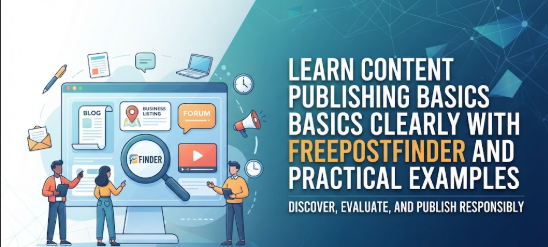
FreePostFinder is a content publishing platform finder created to help users discover and evaluate free posting sites in an organized way.
The concept behind it is simple. Instead of searching through scattered results and hoping to find relevant platforms, users can access a structured directory where publishing opportunities are organized by category, content type, and other practical criteria.
The platform was built around a straightforward observation: many people who create content know what they want to publish but do not know where to publish it. They may have articles ready, business information to share, or videos to distribute, but the process of finding appropriate platforms takes longer than creating the content itself.
FreePostFinder addresses this by making platform discovery more efficient. Users can search for publishing opportunities based on what kind of content they have and what type of platform they need. Instead of browsing through random lists of websites, they can see relevant platforms grouped together with information about what each one supports.
This is not about providing a list of every website that accepts user submissions. It is about helping users find platforms where their specific type of content will be appropriate, welcome, and likely to reach a relevant audience.
The platform is designed for a wide range of users. Bloggers looking for places to publish articles. Writers seeking platforms that accept original stories or educational content. Marketers who want to distribute useful content without resorting to spam. Business owners who need to maintain accurate information in relevant directories. Developers looking for technical communities. Video creators searching for platforms that support visual media. Startups wanting to share company information in appropriate places.
What makes an organized directory useful is the time it saves. Research that might take hours or days when done manually becomes faster when platforms are already categorized and their key characteristics are visible. This does not eliminate the need to evaluate each platform individually, but it significantly reduces the initial discovery burden.
Types of Free Publishing Platforms You Can Discover
Understanding the different categories of free public posting platforms helps narrow down where your content will fit best. FreePostFinder organizes platforms into several main types, each suited to different content goals.
Free Article Posting Sites
Article posting sites are platforms designed for longer-form written content. These are the places where you can publish tutorials, how-to guides, opinion pieces, educational articles, and informative content.
These platforms typically support formatted text, images, and sometimes embedded media. Many have established audiences that actively search for information on specific topics. Some are general-interest platforms, while others focus on particular subjects like technology, business, health, or creative writing.
For writers and bloggers, article posting sites offer an opportunity to reach readers who might never find a personal blog. The key is matching the platform’s topic focus and audience expectations with the content you want to publish.
Free Blog Posting Sites
Blog posting sites function similarly to article platforms but often provide more personalization. Some allow users to create individual blog-style spaces within the larger platform. Others publish all content in a shared feed.
These platforms are suitable for long-form articles, personal insights, professional experiences, industry commentary, and narrative content. Many bloggers use these sites alongside their personal websites to reach different audiences or to build an initial readership before launching an independent blog.
The distinction between article posting sites and blog posting sites is sometimes blurry. The practical difference often comes down to content presentation and how much control you have over the formatting and organization of your published content.
Free Business Listing Sites
Business listing sites serve a different purpose. They are platforms where businesses can publish company information such as names, addresses, contact details, services, operating hours, and descriptions.
These platforms help with local visibility. When potential customers search for businesses in their area, well-maintained business listings can appear in the results. Accuracy matters here. Inconsistent or outdated information across different listing sites can confuse customers and reduce trust.
Business listing sites are not places for articles or promotional blog posts. They are directories designed for factual business information. Using them appropriately means providing accurate details and keeping them updated as your business changes.
Free Forum Posting Sites
Forums are community discussion platforms. They are built around conversations, questions, answers, and knowledge sharing. Users post topics, other users reply, and discussions develop over time.
Forums are not designed for article publishing or business promotion. They are spaces for genuine participation. A developer might answer technical questions in a programming forum. A fitness professional might contribute to discussions about exercise techniques. Someone with gardening experience might help troubleshoot plant problems.
The value of forum participation comes from contributing usefully to ongoing conversations. Forums have some of the strictest moderation policies regarding promotional content because their communities are built around discussion, not broadcasting. Approaching forums with the goal of dropping links or promoting products usually results in post removal and account restrictions.
Responsible forum participation means reading the community rules, understanding what topics are discussed, and contributing only when you have something genuinely relevant and helpful to add.
Free Video Posting Sites
Video posting sites support visual and video content. This category includes platforms for long-form videos, short-form clips, live streaming, presentations, and visual tutorials.
These platforms vary widely. Some focus on polished, produced content. Others emphasize casual, authentic video. Some support live interaction with viewers. Others are designed for on-demand viewing.
For content creators who work in video format, finding the right video posting site involves considering audience demographics, supported video lengths, discovery mechanisms, and community norms.
Other Free Content Publishing Platforms
Beyond these main categories, publishing opportunities exist in many other forms. Some platforms support publishing stories or serialized content. Others are designed for newsletters, image galleries, documents, event listings, code repositories, product reviews, or community-organized content.
The diversity of available platforms means that most content creators can find somewhere suitable if they know where to look and what to look for.
How to Choose the Right Free Posting Site
Finding a list of free posting sites is only the beginning. The more important task is evaluating which ones are actually suitable for your content and goals. This evaluation process works best when approached systematically.
Content Type
Start with the most basic question: does the platform support the type of content you want to publish? If you have a video, a text-based article platform will not work. If you have a 2,000-word tutorial, a platform designed for short updates will not accommodate it. Check supported formats before considering any other factor.
Audience
Who uses the platform? Are they the people you want to reach? A platform with millions of users provides no value if none of those users care about your topic. Conversely, a smaller platform with a highly focused audience in your subject area might produce better results than a larger, more general one.
Publishing Rules
Every platform has rules about what content is acceptable. Some prohibit promotional content entirely. Others restrict certain topics. Some require that content be exclusive to their platform. Read these rules before publishing. Content removal after the fact wastes the time you spent preparing and posting.
Registration Requirements
Understand what is required to create an account and start publishing. Some platforms allow immediate access. Others require email verification, identity confirmation, moderator approval, or a waiting period. If you need to publish within a specific timeframe, factor these requirements into your planning.
Moderation Practices
How does the platform handle content review? Some platforms moderate content before publication, which means there may be a delay between submission and when your content appears. Others allow immediate posting but remove content that violates rules afterward. Understanding the moderation process helps set realistic expectations about when your content will be visible.
Content Quality
Browse the platform before publishing. What does the existing content look like? Is it well-written, useful, and appropriately formatted? Or is it filled with keyword-stuffed articles, auto-generated text, and spam? The quality of existing content tells you a lot about the platform’s standards and what kind of content is tolerated there.
Community Relevance
Think about whether your content fits naturally within the platform’s existing content. If every article on the platform is about one broad topic and you are publishing something completely unrelated, your content will stand out in a negative way. Publishing where your topic already has a natural home increases the likelihood of positive reception.
Risk Assessment
Look for warning signs. Excessive advertising, auto-playing videos, misleading headlines, comment sections filled with spam, and obvious lack of moderation are all indicators that a platform may not be maintained or respected. Publishing on such platforms offers little value and may carry reputational risk.
Step-by-Step Guide to Find Free Posting Sites
Finding and evaluating platforms becomes more manageable when broken down into clear steps. Here is a practical process that works for most content types and goals.
Step 1: Define What You Want to Publish
Be specific about your content. Is it a tutorial, an opinion piece, a business profile, a video, a question for discussion? The content type determines which platform categories are relevant.
Step 2: Choose Your Target Audience
Identify who you want to reach. Are they technical professionals, local customers, hobbyists, business owners, general readers? Knowing your audience helps filter platforms by relevance.
Step 3: Select the Appropriate Platform Category
Based on your content type and audience, determine whether you need article posting sites, blog platforms, business directories, discussion forums, video platforms, or another category.
Step 4: Search for Relevant Publishing Platforms
Use a platform finder like FreePostFinder to browse platforms in your selected category. Look for platforms that match your content type and audience focus.
Step 5: Check Platform Requirements
For each potential platform, review what is needed to create an account and publish content. Note registration processes, verification requirements, and any waiting periods.
Step 6: Read Publishing and Moderation Rules
Go through the platform’s content guidelines. Understand what is allowed, what is prohibited, and how moderation works. This step prevents wasted effort on platforms where your content will not be accepted.
Step 7: Compare Suitable Platforms
Create a shortlist of platforms that appear suitable and compare them. Consider audience relevance, content quality, moderation standards, and how well your content fits the platform’s existing material.
Step 8: Prepare Original Content
Create content specifically for the platforms you have selected. If a platform values original material, do not submit content that appears elsewhere. Tailor your content to fit the platform’s format and audience expectations.
Step 9: Publish Responsibly
Follow the platform’s submission process. Respect formatting guidelines, category selections, and any other requirements. Publish content that genuinely contributes value to the platform and its audience.
Step 10: Monitor and Maintain Your Published Content
After publishing, check back periodically. Respond to comments if appropriate. Update business information if it changes. Remove outdated content if the platform allows it. Published content is not a one-time task; it requires occasional attention.
How FreePostFinder Makes Platform Discovery Easier
The process described above is thorough, but it can be time-consuming when done manually. This is where a content publishing platform finder becomes useful.
FreePostFinder helps users search for publishing opportunities based on content type and platform category. Instead of starting from zero with a general search engine, users can begin with a structured overview of platforms organized by their relevance to specific content goals.
The platform allows users to browse categories to see what types of publishing opportunities exist. This is particularly helpful for people who know they want to publish something but are not yet sure what options are available for their content type.
Filtering capabilities help narrow down options. A user who wants to publish articles can look specifically at article posting sites without having to sort through business directories, video platforms, and discussion forums.
For each platform listed, users can typically find information about supported content types, registration requirements, verification processes, and publishing rules. This makes the comparison step faster because key information is accessible without visiting every platform individually.
Understanding why content might be rejected on a particular platform is another practical benefit. When publishing rules and moderation practices are visible upfront, users can avoid submitting content that does not meet the platform’s standards.
FreePostFinder also helps users identify potential risks by making platform characteristics visible. If a platform has minimal moderation, unclear rules, or signs of quality issues, users can factor that into their decisions.
The overall value is efficiency. Research that might otherwise take hours becomes more focused because the discovery and initial evaluation steps are supported by organized information.
How to Use FreePostFinder for Different Content Goals
Different users approach platform discovery with different objectives. Here is how various types of content creators can use a platform finder effectively.
For Bloggers
Bloggers typically need article posting sites and blog posting sites where long-form written content is accepted and appreciated. The goal is to find platforms where readers actively seek out the types of topics the blogger covers. Using FreePostFinder, a blogger can browse article and blog categories, compare platforms based on audience and content quality, and identify places where their writing will reach relevant readers.
For Writers
Writers often need platforms that accept original articles, stories, essays, or educational content. The emphasis is on platforms that respect authorship, have clear content guidelines, and maintain reasonable quality standards. A platform finder helps writers discover options beyond the most well-known sites, including niche platforms where specific types of writing are valued.
For Marketers
Content marketers need relevant platforms for distributing useful content without crossing into spam territory. The challenge is finding platforms where marketing-adjacent content is allowed under the rules but where the audience is genuinely interested in the topic. FreePostFinder helps marketers identify platforms by content type and category, making it easier to find places where informative content will be welcome rather than removed.
For Businesses
Businesses need accurate listings in relevant directories. This is less about publishing articles and more about ensuring consistent company information appears in the right places. A platform finder helps business owners identify business listing sites where they can publish and maintain their company details.
For Developers
Developers often seek technical communities where they can share knowledge, ask and answer questions, and publish technical content. Forums, article platforms with technical categories, and code-focused communities are typically most relevant. FreePostFinder helps developers find platforms where technical content is the norm rather than the exception.
For Startups
Startups need to share company information, product details, and educational resources in appropriate places. This might include business directories, article platforms for thought leadership content, and relevant communities. A structured platform finder helps startups identify opportunities without spending excessive time on research.
For Video Creators
Video creators need platforms that support their format, whether that is long-form produced content, short-form clips, or live streaming. FreePostFinder helps video creators find platforms categorized by media type, making it easier to identify options beyond the most obvious choices.
Real-Life Scenarios
To make this more concrete, here are realistic scenarios showing how different people approach finding and using free publishing platforms.
Scenario 1: A New Blogger
A new blogger has written five articles about sustainable living and home gardening. The content is informative, well-researched, and genuinely useful. The problem is that nobody is reading it because the blogger’s personal website has no traffic yet.
The research process starts with identifying article posting sites and blog posting sites where topics like sustainability, gardening, and eco-friendly living are discussed. The blogger uses FreePostFinder to browse relevant categories and finds several platforms that accept long-form articles in these subject areas.
For each potential platform, the blogger checks the publishing rules, reads existing content to understand what resonates with the audience, and notes registration requirements. Three platforms look suitable: they have active readership, content quality is good, and the topics align with what the blogger writes.
The blogger prepares slightly adapted versions of the articles for each platform, respecting any guidelines about originality, formatting, and external links. The content is published over several weeks rather than all at once. Over time, the articles start reaching readers who are actively interested in sustainable living, and some of those readers begin visiting the blogger’s personal website.
Scenario 2: A Small Business
A local bakery has been operating for two years. The owner realizes that when people search for bakeries in the area, inconsistent information appears across different websites. Some directories list old hours. Others have an incorrect phone number. A few still show the previous business that occupied the same address.
The owner uses FreePostFinder to identify relevant business listing sites. The goal is not to publish articles or blog posts but to ensure accurate business information appears in appropriate directories.
For each listing site, the owner creates or claims the business profile, verifies ownership where required, and publishes accurate, consistent information. The name, address, phone number, website, hours, and description are the same across all platforms.
This is not a one-time task. The owner makes a note to review the listings every few months and update them if anything changes. The result is that customers find consistent, accurate information regardless of which directory they encounter.
Scenario 3: A Technical Writer
A developer who enjoys writing technical tutorials has published several pieces on a personal blog. The tutorials cover topics like database optimization, API design, and debugging techniques. The developer wants to share this content with a wider technical audience.
Using FreePostFinder, the developer looks for free content publishing platforms that accept technical articles. The search focuses on platforms where technical discussions are common and where the audience has the background to appreciate detailed tutorials.
The developer finds several platforms, including some that specialize in programming content and others that have active technical sections within a broader platform. For each one, the developer reads the content guidelines carefully. Some platforms require that code examples be formatted in specific ways. Others do not allow promotional links to personal projects.
The developer publishes selected tutorials on platforms where they fit naturally. In addition to article platforms, the developer also identifies relevant forum posting sites where technical questions are discussed. Instead of posting full tutorials in forums, the developer participates in existing discussions, answers questions, and occasionally references a tutorial when it genuinely helps answer someone’s question.
Scenario 4: A Content Marketer
A content marketer works for a company that sells project management software. The marketing strategy involves creating genuinely useful content about project management methodologies, team collaboration, and productivity techniques. The goal is to distribute this content in places where people interested in these topics will find it.
The marketer uses FreePostFinder to find article posting sites and blog platforms where business and productivity content is published. The focus is on platforms that allow informative content but have clear rules about promotional material.
Rather than publishing the same article everywhere, the marketer selects a small number of platforms where the audience is clearly relevant. For each platform, the content is adapted to fit the specific audience and format. Some platforms receive shorter, practical guides. Others receive longer, more analytical pieces.
The marketer also identifies a few forum communities where project management is discussed. Instead of posting company content, the marketer participates in conversations, answers questions about project management practices, and builds a presence as a knowledgeable contributor. Company affiliation is disclosed transparently where required by platform rules.
Scenario 5: A Video Creator
A video creator produces educational content about photography techniques. The videos include tutorials, gear reviews, and editing walkthroughs. The creator already uses major video platforms but wants to find additional places where photography-focused content might reach interested viewers.
Using FreePostFinder, the creator looks for video posting sites and platforms that support visual content. The search reveals several specialized platforms where photography and videography content is published and discussed.
The creator evaluates each platform based on supported video formats, audience demographics, and community engagement. Some platforms are more suited to short-form tips, while others accommodate longer tutorials. The creator selects platforms that match the content style and begins publishing selected videos on those platforms.
The creator also discovers community platforms where photographers share work and discuss techniques. While these are not strictly video posting sites, they offer opportunities to participate in discussions and occasionally share relevant video content where it adds value to the conversation.
Common Mistakes to Avoid
Learning what not to do is often as valuable as learning what to do. Here are common mistakes people make when approaching free posting sites.
Using Every Free Posting Site Available
The idea that more platforms equals better results is persistent but wrong. Publishing on fifty platforms with irrelevant audiences produces less value than publishing on five platforms where your content genuinely fits. FreePostFinder makes it possible to find many platforms, but the goal is to choose the right ones, not all of them.
Publishing the Same Content Everywhere
Duplicate content across multiple platforms creates a poor experience for readers who encounter the same article in different places. It also violates the rules of many platforms that require original submissions. Tailoring content for each platform takes more effort but produces better outcomes.
Ignoring Platform Rules
Every platform has content guidelines. Ignoring them leads to content removal, account restrictions, and wasted effort. Read the rules before publishing, not after your content has been taken down.
Choosing Irrelevant Websites
A platform might accept your content type but have an audience that does not care about your topic. Publishing cooking recipes on a technology forum is technically possible if the forum allows it, but it provides no value to anyone.
Focusing Only on Backlinks
Some people approach free posting sites solely as a way to build backlinks. This mindset leads to low-quality submissions, irrelevant placements, and content that provides no reader value. Platforms recognize this behavior and increasingly moderate against it.
Posting Promotional Content in Communities
Forums and discussion communities are particularly sensitive to promotional content. Entering a community and immediately posting about your product or service is a fast way to get banned. Participation should contribute to discussions first.
Creating Low-Quality Content
Content written solely to fill space and include keywords benefits no one. Readers ignore it, platforms remove it, and any short-term gains are quickly erased. Quality content takes more effort but remains valuable longer.
Ignoring Moderation Requirements
Some platforms moderate content before publication. Others moderate after. Understanding how and when moderation happens prevents frustration when content does not appear immediately.
Using Misleading Information
Publishing false or misleading content violates platform rules and damages credibility. This applies to business listings with incorrect information, articles with unsupported claims, and any content designed to deceive.
Mass Posting Automatically
Using automated tools to post content across many platforms simultaneously is against the terms of service of most platforms. It also produces low-quality results because content is not adapted to each platform’s audience and format.
Choosing Quantity Over Relevance
The number of platforms you publish on matters far less than whether those platforms are relevant to your content and audience. Ten well-chosen platforms provide more value than a hundred random ones.
FreePostFinder is designed around responsible publishing. The platform helps users find relevant places to publish, not mass-submission opportunities. The distinction matters.
Free Posting Sites vs. Relevant Publishing Platforms
There is an important difference between compiling a large list of websites where posting is technically free and identifying platforms where publishing is actually worthwhile.
A free posting site is simply a platform that does not charge for content submission. That is a financial characteristic, not a quality indicator. Many free platforms exist that offer no audience, no moderation, and no genuine community. Publishing there is free in the monetary sense but costly in terms of time and potential reputational impact.
A relevant publishing platform is one where your content fits naturally, reaches an appropriate audience, and meets quality standards that make the platform respected. The platform might be free to use, but its value comes from relevance, not price.
When evaluating platforms, consider these comparisons:
Audience relevance matters more than platform size. A small, focused community interested in your topic provides more engagement than a massive general-interest platform where your content gets lost.
Content quality standards matter more than ease of posting. A platform that requires effort to meet quality guidelines typically produces better outcomes than one where anything gets published instantly.
Moderation matters more than total freedom. Platforms with active moderation tend to have higher-quality content and more engaged audiences than platforms with no oversight.
Publishing rules matter more than unlimited acceptance. If a platform accepts anything, it likely publishes a lot of low-quality content, which drives away serious readers.
Community value matters more than personal promotion opportunity. Platforms built around genuine community interaction provide longer-term benefits than platforms designed primarily for self-promotion.
The key principle is this: the goal is not to publish everywhere. The goal is to publish in the right places.
Table 1: Types of Free Publishing Platforms
| Platform Type | Suitable Content | Typical Users | Main Purpose |
|---|---|---|---|
| Article Posting Sites | Articles, tutorials, guides, opinion pieces | Writers, bloggers, educators, marketers | Publishing long-form written content for interested readers |
| Blog Posting Sites | Long-form articles, personal insights, industry commentary | Bloggers, professionals, writers | Sharing written content in a blog-style format |
| Business Listing Sites | Company information, services, contact details | Business owners, marketers, local businesses | Maintaining accurate business information in directories |
| Forum Posting Sites | Questions, answers, technical discussions | Professionals, hobbyists, developers, enthusiasts | Community discussion and knowledge sharing |
| Video Posting Sites | Videos, short-form content, live streams | Video creators, educators, presenters | Publishing and sharing video content |
| Community Platforms | Stories, newsletters, images, reviews, documents | Various content creators | Sharing diverse content types within organized communities |
Table 2: How to Evaluate a Free Posting Site
| Factor | What to Check | Why It Matters |
|---|---|---|
| Audience | Who uses the platform and what topics they engage with | Determines whether your content will reach relevant readers |
| Content Rules | Platform guidelines, prohibited content, promotional policies | Prevents content removal and account issues |
| Moderation | How content is reviewed, approval processes, quality standards | Affects content visibility and platform quality |
| Registration | Account creation requirements, verification processes | Determines how quickly you can begin publishing |
| Verification | Identity or credential checks required by the platform | Some platforms require verification before publishing |
| Content Format | Supported media types, length limits, formatting options | Must match the content you want to publish |
| Relevance | How well your topic fits the platform’s existing content | Content that fits naturally performs better |
| Platform Quality | Overall content standards, design quality, user experience | Reflects on your content and credibility |
| Risk | Signs of spam, poor moderation, misleading content | Protects your time and reputation |
User Experiences
Example 1: A Beginner Blogger
“I had written several articles about personal finance and budgeting. The problem was that my own blog had almost no readers, and I did not know where else I could publish my writing. I spent evenings searching for free posting sites, but most of what I found were outdated lists with broken links. I tried a few platforms, but they turned out to be filled with spam content and unrelated articles.
What changed things for me was using a structured platform finder. Instead of random searches, I could look specifically for article posting sites that accepted personal finance content. I found five platforms that were actively maintained, had clear publishing guidelines, and had audiences interested in financial topics. I published my articles on three of them over the course of a month. Some articles received more engagement than others, but the overall result was that my writing started reaching people who were actually looking for financial advice.”
Example 2: A Small Business Owner
“I run a small landscaping business. Over the years, my business information had ended up scattered across various directories, and many of them had outdated details. Some listed my old phone number. Others showed incorrect service areas. When customers tried to find me, they sometimes got wrong information.
I needed a way to find relevant business listing sites so I could update my information everywhere it mattered. Using a platform finder, I identified the main business directories relevant to my industry and location. I went through each one, claimed my business profile where possible, and updated all the details to be accurate and consistent.
It took some time to work through the list, but now when someone searches for landscaping services in my area, the information they find is correct. I check the listings every few months to make sure nothing has changed. The peace of mind that comes from knowing my business information is accurate across directories is worth the effort.”
Benefits of Using a Content Publishing Platform Finder
A structured approach to finding publishing platforms offers several practical advantages:
- Saves research time by organizing platforms into categories rather than requiring manual searching
- Makes platform discovery easier by grouping relevant opportunities together
- Helps compare options by presenting key platform characteristics in one place
- Makes it easier to identify relevant categories for specific content types
- Helps users understand publishing requirements before investing time in content preparation
- Encourages responsible content distribution by emphasizing platform rules and audience relevance
- Reduces reliance on outdated lists that may contain broken links or irrelevant platforms
- Helps users choose platforms based on content type rather than random discovery
- Supports informed decision-making by making moderation and quality factors visible
- Reduces the likelihood of publishing on low-quality or spam-affected platforms
Frequently Asked Questions
What are free posting sites?
Free posting sites are online platforms that allow users to publish content without paying a fee. They include article platforms, blog sites, business directories, discussion forums, video platforms, and various community spaces. The term refers to the lack of monetary cost, not necessarily the quality or relevance of the platform.
Where can I post content for free?
Content can be posted for free on many types of platforms, including article posting sites, blog platforms, forums, video sites, and business directories. The appropriate platform depends on your content type, target audience, and publishing goals. A platform finder can help identify suitable options.
What are free article posting sites?
Free article posting sites are platforms that accept long-form written content such as tutorials, guides, opinion pieces, and educational articles. They typically support formatted text, images, and sometimes embedded media. These platforms are used by writers, bloggers, and marketers to reach readers interested in specific topics.
Are free blog posting sites useful for beginners?
Yes, blog posting sites can be useful for beginners who do not yet have an established personal website or who want to reach existing audiences on established platforms. They provide an opportunity to publish content and get feedback without the overhead of managing a website.
What are free business listing sites?
Free business listing sites are directories where businesses can publish company information such as names, addresses, phone numbers, services, and descriptions. These platforms help with local visibility and ensure that accurate business information appears in relevant directories.
What are free forum posting sites?
Free forum posting sites are community discussion platforms where users post topics, ask questions, share knowledge, and participate in conversations. Forums are designed for genuine interaction rather than article publishing or self-promotion.
Can I publish the same article on multiple websites?
While technically possible on some platforms, publishing identical content on multiple websites is discouraged by many platforms and can create a poor experience for readers. Many platforms prefer or require original content. Tailoring content for each platform is a better approach.
How do I choose the right publishing platform?
Choose based on content type compatibility, audience relevance, publishing rules, moderation standards, platform quality, and how well your content fits the existing community. A systematic evaluation process produces better results than publishing widely without consideration.
Is every free posting site safe or useful?
No. Some free posting sites have minimal moderation, poor content quality, misleading advertisements, or spam-filled communities. Publishing on such platforms provides little value and may carry reputational risk. Evaluating platforms before using them is important.
What is a content publishing platform finder?
A content publishing platform finder is a tool or directory that helps users discover and evaluate publishing platforms organized by category, content type, and other criteria. It makes the research process more efficient by providing structured information about available platforms.
How does FreePostFinder help users find publishing platforms?
FreePostFinder organizes publishing platforms by type and category, allowing users to search for opportunities relevant to their content. It provides information about platform characteristics, requirements, and rules, helping users make informed decisions about where to publish.
Should I focus on quantity or relevance when publishing content?
Relevance matters far more than quantity. Publishing on a small number of well-chosen, relevant platforms produces better results than publishing widely on platforms with no connection to your topic or audience. Quality and fit should guide your choices.
Conclusion
Finding the right places to publish content is a challenge that many writers, bloggers, marketers, and business owners face. The internet offers countless free posting sites, free public posting platforms, and websites to post content for free, but the availability of platforms does not guarantee their suitability.
The process of identifying relevant platforms involves understanding your content, knowing your audience, selecting appropriate platform categories, and evaluating each option based on practical criteria like rules, moderation, quality, and community fit. This takes time when done without structure, but the time is well spent because publishing in the wrong places provides little value and can carry risks.
Relevance is more important than quantity. A handful of platforms where your content fits naturally and reaches interested readers will serve you better than dozens of platforms where your content is irrelevant or unwelcome. Responsible publishing means respecting platform rules, contributing value to communities, and treating each publishing opportunity as a chance to share something useful rather than simply to gain visibility.
A content publishing platform finder like FreePostFinder can simplify the discovery and evaluation process. By organizing platforms into categories and providing information about their characteristics, it helps users spend less time searching and more time making informed decisions about where to publish.
Before you publish your next piece of content, take the time to research where it belongs. Understand the platforms you are considering. Read their rules. Evaluate their audiences. Ensure your content adds value. The extra effort at the research stage makes everything that follows more effective.