Introduction
Language learning apps are digital platforms designed to help individuals acquire new linguistic skills through structured lessons, interactive exercises, and immersive content. These tools leverage various educational methodologies—such as spaced repetition systems (SRS), gamification, and speech recognition—to teach vocabulary, grammar, pronunciation, and listening comprehension. Unlike traditional classroom settings, these apps offer the flexibility to learn at one’s own pace, making language acquisition more accessible than ever before.
The importance of these tools lies in their ability to bridge communication gaps in an increasingly globalized economy. Whether for personal growth or professional advancement, mastering a second language enhances cognitive function and fosters cultural empathy. Key real-world use cases include business professionals preparing for overseas assignments, travelers seeking basic conversational skills, and students supplementing their formal education. When evaluating these tools, users should prioritize the quality of the curriculum, the effectiveness of the speech recognition technology, the variety of languages offered, and the ability to track progress over time.
Best for: Self-motivated learners, frequent travelers, international business teams, and students seeking flexible study options. It is an ideal category for those who need a portable, cost-effective way to build linguistic proficiency.
Not ideal for: Individuals who require intensive, real-time interpersonal interaction to stay focused, or advanced learners seeking highly specialized, technical jargon in niche academic fields that standard apps may not cover.
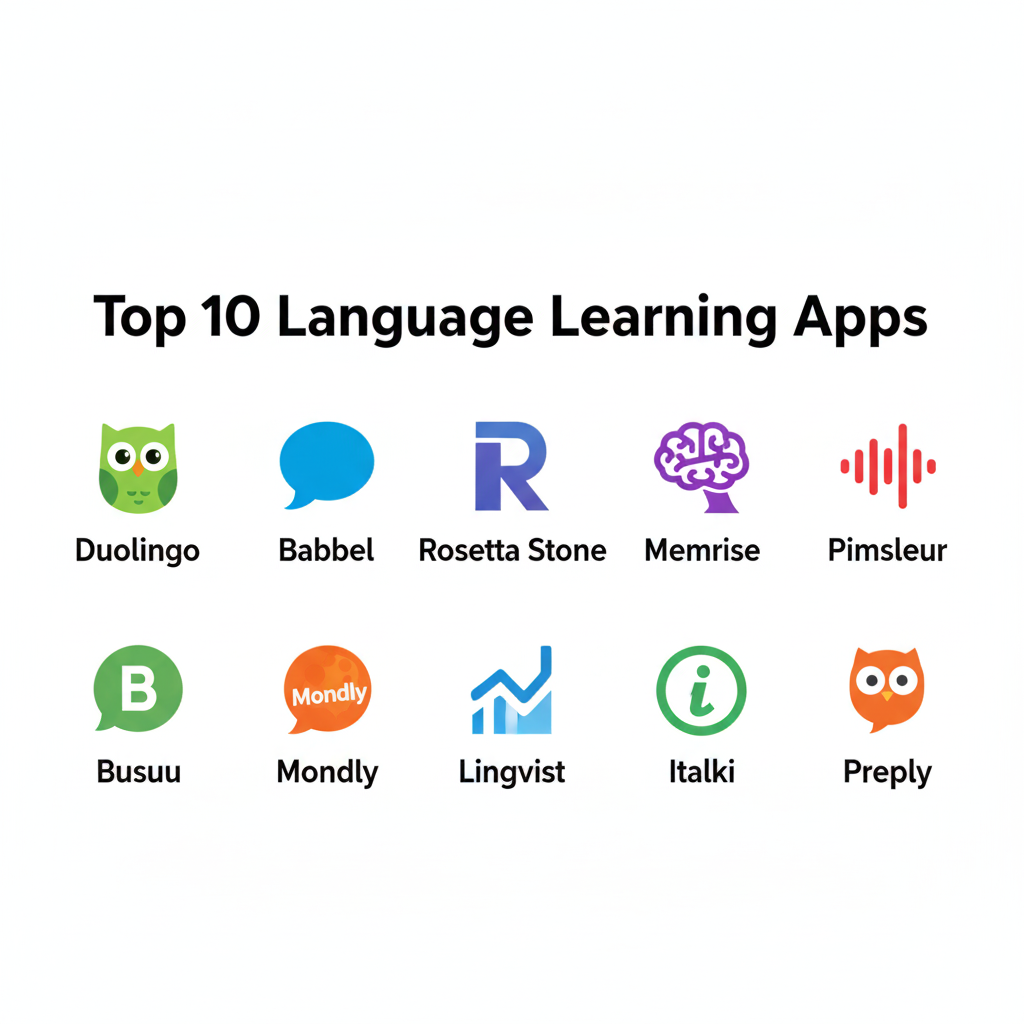
Top 10 Language Learning Apps
1 — Duolingo
Duolingo is the world’s most popular language learning platform, known for its highly gamified approach that makes daily practice feel like a game. It is designed for casual learners who want a fun, low-pressure introduction to a new language.
- Key features
- Gamified progression with “streaks,” “leagues,” and XP rewards.
- Short, bite-sized lessons focused on reading, writing, and listening.
- Character-driven stories to improve reading comprehension.
- AI-powered speech recognition for pronunciation practice.
- Duolingo Max tier offering AI-driven conversation practice (OIDC/GPT-4).
- Extensive library of over 40 languages, including endangered and fictional ones.
- Duolingo for Schools for classroom tracking.
- Pros
- Completely free to access the full curriculum (ad-supported).
- Highly addictive structure that helps users build a consistent daily habit.
- Cons
- Focuses heavily on translation rather than immersive conversation.
- Can sometimes prioritize “gaming the system” over deep linguistic understanding.
- Security & compliance: GDPR, COPPA compliant, and SOC 2 (Varies / N/A).
- Support & community: Massive online forum, extensive help center, and active social media communities.
2 — Babbel
Babbel is a premium platform that focuses on practical, real-life conversation. It is designed by linguistic experts for serious learners who want to achieve functional fluency for travel or business.
- Key features
- Dialogue-based lessons tailored to specific life scenarios (e.g., ordering food).
- Spaced Repetition System (SRS) for long-term vocabulary retention.
- Babbel Live: Optional small-group classes with certified teachers.
- Culture-specific insights integrated into grammar lessons.
- Speech recognition technology to fine-tune pronunciation.
- Review sessions that adapt to the user’s specific weak points.
- Dedicated “Babbel for Business” for corporate language training.
- Pros
- Teaches grammar in a contextual, intuitive way rather than through rote memorization.
- High-quality audio featuring native speakers rather than synthesized AI voices.
- Cons
- No free version (subscription-only model).
- Offers a smaller selection of languages (14) compared to competitors.
- Security & compliance: GDPR compliant, ISO 27001 standards, and end-to-end encryption.
- Support & community: Professional customer support, detailed blogs, and corporate onboarding.
3 — Rosetta Stone
Rosetta Stone is a legacy brand that pioneered the “Immersion Method,” teaching languages without using the learner’s native tongue for translations. It is built for users who want to learn a language like a child does.
- Key features
- TruAccent speech recognition for advanced pronunciation feedback.
- Dynamic Immersion technique using images and native audio only.
- “Seek and Speak” augmented reality features for real-world object naming.
- Offline lessons for learning during travel or commutes.
- Audio Companion for hands-free listening practice.
- Live coaching sessions with native-speaking tutors.
- Phrasebooks for quick reference to essential travel terms.
- Pros
- Excellent for building a strong intuitive foundation without “translating in your head.”
- One of the most stable and proven curricula in the industry.
- Cons
- The lack of native-language explanations can be frustrating for complex grammar.
- The pace can feel slow for users who want to learn specific phrases quickly.
- Security & compliance: GDPR, SOC 2 Type II, and enterprise-grade SSO support.
- Support & community: High-quality customer service and dedicated enterprise support teams.
4 — Memrise
Memrise focuses on “Language Learning in the Wild,” utilizing thousands of video clips of native speakers to help users understand how people actually talk in real life.
- Key features
- “Learn with Locals” video library featuring authentic native speakers.
- AI-powered “MemBot” for practicing conversational skills.
- Mnemonic-based vocabulary learning to speed up memorization.
- Scenarios focused on slang, idioms, and informal speech.
- Gamified review sessions and speed review modes.
- User-generated courses for niche topics and dialects.
- Offline mode for mobile learning.
- Pros
- Superior to most apps for learning regional accents and everyday slang.
- The video content makes the learning experience feel much more human.
- Cons
- Less emphasis on formal grammar and sentence structure.
- The quality of user-generated courses can vary significantly.
- Security & compliance: GDPR compliant and secure user data protocols.
- Support & community: Active user forums and a large community of course creators.
5 — Pimsleur
Pimsleur is an audio-centric platform based on the scientific research of Dr. Paul Pimsleur. It is designed for hands-free learning and is ideal for busy professionals or commuters.
- Key features
- 30-minute core audio lessons focused on listening and responding.
- Organic Basis: Focusing on the 2,000 most common words in a language.
- Voice-activated “Driving Mode” for safe learning in the car.
- Digital flashcards and speed round games to reinforce audio.
- Reading lessons to accompany the core audio curriculum.
- “Meets” feature for practicing conversations with AI.
- Support for over 50 languages.
- Pros
- Arguably the most effective method for developing high-quality listening skills.
- Perfectly suited for multi-tasking and hands-free learning.
- Cons
- Lacks the visual engagement and writing practice of other apps.
- The audio-only format might not suit visual learners.
- Security & compliance: GDPR compliant and standard web encryption.
- Support & community: Email support and a comprehensive technical FAQ.
6 — Busuu
Busuu stands out for its social learning component, allowing users to have their writing and speaking exercises corrected by native speakers within the community.
- Key features
- Social feedback: Native speakers review and correct your work.
- Professional certification through partnership with McGraw Hill.
- Smart Review tool powered by an AI algorithm.
- Specialized courses (e.g., Business English, Travel Spanish).
- Grammar Review feature for deep-diving into complex rules.
- Study plans that allow you to set goals and deadlines.
- Offline learning and vocabulary trainer.
- Pros
- The community feedback provides a “human touch” that AI cannot yet match.
- The structured study plans are excellent for goal-oriented learners.
- Cons
- Some community corrections can be inconsistent in quality.
- Key features like grammar lessons are locked behind the Premium wall.
- Security & compliance: GDPR compliant, encryption at rest, and secure SSO.
- Support & community: Large global community and dedicated learner support.
7 — Mondly
Mondly is a tech-forward platform that utilizes Augmented Reality (AR) and Virtual Reality (VR) to create immersive language learning environments.
- Key features
- AR and VR “Classrooms” where you interact with virtual avatars.
- Chatbot with speech recognition for role-playing scenarios.
- Daily lessons, weekly quizzes, and monthly challenges.
- Conjugation tables and grammar notes available with a single tap.
- Leaderboards for competing with friends and global users.
- Mondly Kids: A specialized version for younger learners.
- Integration with high-end headsets for a fully immersive experience.
- Pros
- Very innovative use of technology for those bored by traditional apps.
- Excellent for visual and experiential learners.
- Cons
- The AR/VR features can sometimes feel more like a “gimmick” than a deep learning tool.
- The lesson structure can feel repetitive over long periods.
- Security & compliance: GDPR compliant and secure cloud hosting.
- Support & community: Responsive technical support and social media communities.
8 — Lingvist
Lingvist is a data-driven app that uses mathematical algorithms to tailor the learning experience to the individual. It is built for users who want to learn a language as efficiently as possible.
- Key features
- Big Data approach: Learning vocabulary based on frequency in real-world texts.
- Adaptive algorithm that skips words you already know.
- “Course Wizard” to create a custom course based on your interests or profession.
- Grammar tips that appear precisely when you struggle with a rule.
- Progress tracking with detailed data visualizations.
- Focus on the “Top 4,000” words that make up 80% of language use.
- Text-to-speech for listening comprehension.
- Pros
- One of the fastest ways to build a high-volume vocabulary.
- Eliminates wasted time by avoiding content that is too easy or too hard.
- Cons
- The interface is very clinical and lacks the “fun” of gamified apps.
- Not ideal for absolute beginners who need a slow, hand-holding introduction.
- Security & compliance: GDPR compliant and high-level data privacy.
- Support & community: Direct support and a technical blog for power users.
9 — Italki
Italki is not a curriculum-based app but a massive marketplace connecting students with 1-on-1 professional teachers and community tutors for personalized lessons.
- Key features
- Access to thousands of certified teachers in 150+ languages.
- Pay-per-lesson model with no subscription commitment.
- Customizable lesson plans based on your specific goals (e.g., medical, law).
- Community “Notebook” for writing practice and corrections.
- Free language exchange features for practicing with peers.
- Integrated video classroom platform.
- Trial lessons at a reduced price.
- Pros
- Unrivaled for developing actual conversational fluency and confidence.
- Highly flexible pricing; you can find tutors for almost any budget.
- Cons
- No structured app-based curriculum; you rely on the teacher’s materials.
- Scheduling lessons across time zones can be a challenge.
- Security & compliance: GDPR, secure payment processing, and audit logs.
- Support & community: Massive global community and 24/7 customer support.
10 — Preply
Preply is similar to Italki but focuses heavily on the corporate and professional market, offering structured tutor-led programs for business teams.
- Key features
- Tutors specialized in “Business Language” for specific industries.
- AI-powered matching system to find the perfect tutor based on your style.
- Preply Enterprise: Team-wide dashboards for HR and managers.
- Corporate-grade reporting and progress analytics.
- Structured learning plans provided by Preply for tutors to follow.
- Mobile app for on-the-go video lessons.
- Built-in vocabulary tool to save words from your lessons.
- Pros
- The best option for corporate language training and scale.
- High accountability; having a live person waiting for you prevents quitting.
- Cons
- More expensive than self-paced apps since you are paying for a human’s time.
- Requires a stable, high-speed internet connection for video calls.
- Security & compliance: GDPR, SOC 2 (Varies), and secure B2B data handling.
- Support & community: Dedicated enterprise account managers and 24/7 support.
Comparison Table
| Tool Name | Best For | Platform(s) Supported | Standout Feature | Rating |
| Duolingo | Casual Habits | Web, iOS, Android | Gamified Leagues | 4.7/5 |
| Babbel | Practical Conversation | Web, iOS, Android | Expert-Designed Dialogues | 4.6/5 |
| Rosetta Stone | Pure Immersion | Desktop, Mobile | TruAccent Recognition | 4.5/5 |
| Memrise | Real-world Slang | Web, iOS, Android | “Learn with Locals” Videos | 4.4/5 |
| Pimsleur | Hands-free/Commuters | Mobile, Smart Device | Audio-Only Core Lessons | 4.8/5 |
| Busuu | Community Feedback | Web, iOS, Android | Native Speaker Corrections | 4.5/5 |
| Mondly | Tech/AR Lovers | Web, VR, Mobile | AR/VR Classrooms | 4.2/5 |
| Lingvist | Maximum Efficiency | Web, iOS, Android | Adaptive Big Data Engine | 4.3/5 |
| Italki | 1-on-1 Personalized | Web, iOS, Android | 150+ Language Tutors | 4.9/5 |
| Preply | Business/Corporate | Web, iOS, Android | Enterprise Dashboards | 4.8/5 |
Evaluation & Scoring of Language Learning Apps
To ensure an objective assessment, we evaluated each platform against a weighted rubric designed to reflect the needs of both recreational and professional learners.
| Category | Weight | Evaluation Highlights |
| Core Features | 25% | Quality of curriculum, speech recognition, and language variety. |
| Ease of Use | 15% | UI/UX design, mobile responsiveness, and onboarding. |
| Integrations | 15% | Connectivity with corporate tools (LMS/SSO) or calendars. |
| Security & Compliance | 10% | Data privacy (GDPR) and institutional security standards. |
| Performance | 10% | App stability, offline availability, and voice latency. |
| Support & Community | 10% | Availability of help desks and peer-to-peer communities. |
| Price / Value | 15% | Free vs. Premium ROI and subscription fairness. |
Which Language Learning Apps Tool Is Right for You?
Solo Users vs SMB vs Mid-Market vs Enterprise
If you are a Solo User looking to dip your toes into a language, Duolingo is the easiest entry point. For SMBs needing to upskill a small team for an upcoming expansion, Babbel for Business offers great value without high overhead. Mid-Market and Enterprise organizations should prioritize Preply or Rosetta Stone Enterprise, as these platforms provide the reporting, SSO integrations, and bulk management features required for large-scale employee training.
Budget-conscious vs Premium Solutions
The Budget-conscious learner should maximize the free offerings of Duolingo or the community features of Italki. However, if you have a budget to invest, Premium solutions like Pimsleur (for audio) or Babbel (for structured grammar) offer a significantly faster path to actual fluency by cutting out the fluff and focusing on professional-grade methodology.
Feature Depth vs Ease of Use
If you prioritize Ease of Use, Duolingo and Mondly are the winners; you can start learning within seconds of downloading. If you need Feature Depth—such as understanding the complex case systems of Slavic languages or the tonal nuances of Mandarin—you will likely need the human-led depth of Italki or the scientifically rigorous curriculum of Pimsleur.
Integration and Scalability Needs
For schools or corporations, the ability to Scale is critical. Rosetta Stone and Preply allow administrators to track thousands of learners from a single dashboard. If your learning needs to integrate with your existing tech stack (such as a company LMS), ensure the tool supports OIDC or SAML protocols, which are standard in the enterprise versions of these apps.
Security and Compliance Requirements
Privacy-minded organizations and those in regulated industries must ensure GDPR compliance. While almost all major apps meet this standard, Babbel and Rosetta Stone have the most robust documentation regarding data handling for corporate clients, making them the safer choice for high-security environments.
Frequently Asked Questions (FAQs)
Can I really become fluent using just an app?
Apps are excellent for building vocabulary and basic grammar. However, true fluency usually requires a combination of an app and real-life conversation. Using an app alongside a platform like Italki is the most effective strategy.
Which app is best for kids?
Duolingo ABC and Mondly Kids are specifically designed for younger learners, utilizing simplified interfaces and age-appropriate content.
How much time should I spend on an app daily?
Consistency is more important than duration. Research suggests 15–30 minutes of daily practice is far more effective for long-term retention than a single three-hour session once a week.
Do these apps work without an internet connection?
Many premium versions (like Rosetta Stone, Pimsleur, and Babbel) allow you to download lessons for offline use, making them perfect for flights or remote areas.
What is Spaced Repetition (SRS)?
SRS is a learning technique that shows you words just before you are about to forget them. Most modern apps use this algorithm to ensure high-priority vocabulary is moved to your long-term memory.
Which app is best for learning Asian languages like Japanese or Chinese?
While Duolingo is popular, Lingodeer (not in the top 10 but notable) or the immersion-heavy Rosetta Stone are often cited by experts as more effective for non-Latin character systems.
Can I learn more than one language at a time?
Yes, but it is generally recommended to focus on one until you reach an intermediate level to avoid “cross-contamination,” especially with similar languages like Spanish and Italian.
Are the “Lifetime Subscriptions” worth it?
If you plan to study multiple languages over several years, a lifetime license from Rosetta Stone or Mondly can save hundreds of dollars compared to monthly subscriptions.
How do apps handle regional dialects?
Most apps teach a “standard” version (e.g., Castilian Spanish). If you need a specific dialect (like Mexican Spanish), Memrise is the best choice due to its native-speaker video clips.
Can I use these apps to prepare for official exams like TOEFL or DELF?
While they provide a good foundation, you should supplement them with specific exam-prep materials. Busuu and Preply are the most helpful for this due to their structured certifications and professional tutors.
Conclusion
The “best” language learning app is the one you will actually use every day. If you thrive on competition and rewards, Duolingo will keep you coming back. If your goal is to speak confidently during a business dinner, the practical dialogues of Babbel or the live tutors on Preply are superior choices.
Choosing a tool is not a permanent commitment; many successful polyglots use a “stacked” approach—using Pimsleur for listening, Duolingo for fun reinforcement, and Italki for real conversation. By aligning your chosen platform with your specific learning style and professional goals, you turn your smartphone into a powerful gateway to the rest of the world.