Introduction
A Digital Experience Platform (DXP) is an integrated software solution designed to deliver seamless, personalized, and engaging digital experiences across multiple channels. Unlike traditional content management systems, DXPs combine content management, customer data management, analytics, e-commerce, and personalization capabilities to create cohesive experiences across websites, mobile apps, social media, IoT devices, and more.
DXPs are critical in today’s digital-first world where consumers expect consistent, personalized, and responsive interactions with brands. By centralizing data, automating workflows, and enabling multi-channel engagement, DXPs allow organizations to improve customer satisfaction, increase conversion rates, and streamline marketing, sales, and service operations.
Key real-world use cases include personalized marketing campaigns, e-commerce storefront management, omnichannel content delivery, customer journey optimization, and data-driven decision-making for digital marketing teams. Organizations leverage DXPs to unify siloed customer data, manage complex content workflows, and deliver targeted experiences that drive engagement and loyalty.
When choosing a DXP, companies should evaluate integration capabilities, personalization and AI features, scalability, analytics and reporting, workflow automation, ease of use, and security compliance. Vendor support and community resources also play a significant role in long-term success.
Best for:
Enterprises, mid-market businesses, and digital-first organizations in retail, finance, media, healthcare, and e-commerce that need personalized, scalable, and omnichannel digital experiences.
Not ideal for:
Small businesses or organizations with limited content and low complexity digital needs may not require a full DXP; a traditional CMS or marketing automation platform may suffice.
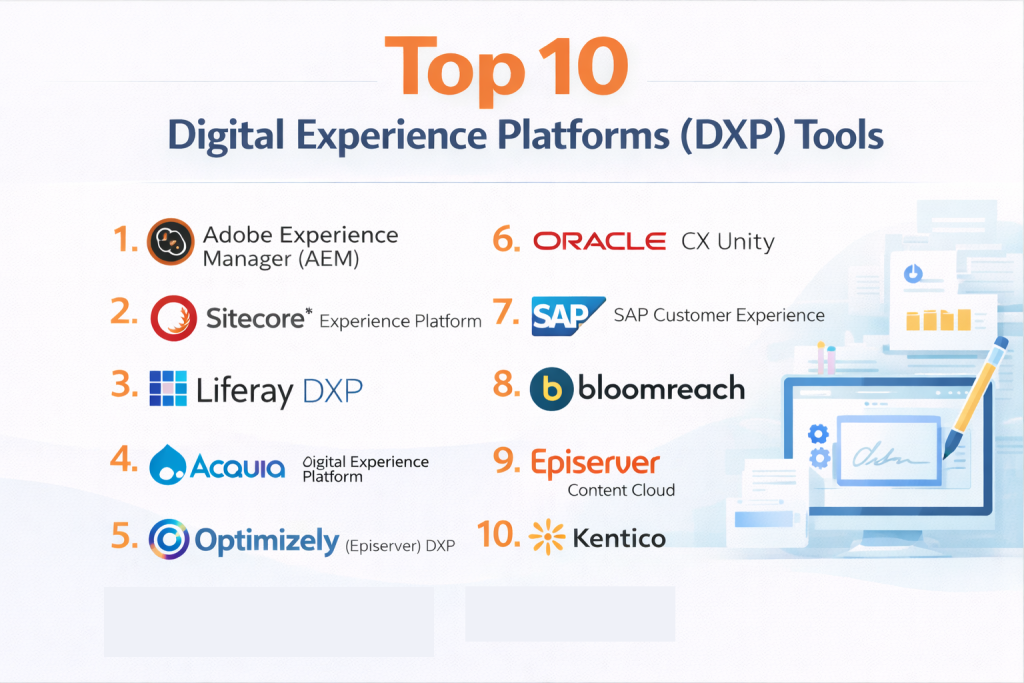
Top 10 Digital Experience Platforms (DXP) Tools
1 — Adobe Experience Manager (AEM)
Adobe Experience Manager is an enterprise-grade DXP designed to deliver personalized, omnichannel digital experiences. It integrates content management, digital asset management, marketing automation, and AI-powered personalization to enable marketers and developers to create seamless customer experiences at scale.
Key features:
- Advanced content and digital asset management
- Omnichannel content delivery
- AI-driven personalization and targeting
- Workflow automation and collaboration
- Integration with Adobe Marketing Cloud and third-party tools
- Analytics and reporting for insights
- Cloud and on-premise deployment options
Pros:
- Comprehensive, enterprise-grade solution
- Highly scalable for global organizations
- Deep integration with Adobe ecosystem
Cons:
- High cost of ownership
- Steep learning curve
- Complex implementation for smaller teams
Security & compliance:
SSO, encryption, GDPR, SOC 2, ISO
Support & community:
Adobe documentation, training programs, enterprise support, and community forums.
2 — Sitecore Experience Platform
Sitecore Experience Platform is a DXP focused on personalization, omnichannel marketing, and customer journey optimization. It is designed for enterprise marketers who need to deliver data-driven, contextually relevant experiences across web, mobile, email, and social channels.
Key features:
- Omnichannel marketing and personalization
- Customer data platform and analytics
- Workflow automation for content and campaigns
- Multi-language and localization support
- Integration with CRM and marketing tools
- AI-powered recommendations
- Cloud-hosted and on-premise deployment
Pros:
- Strong personalization capabilities
- Comprehensive customer analytics
- Enterprise scalability
Cons:
- Requires technical expertise to deploy
- Expensive for smaller organizations
- Complex interface for content editors
Security & compliance:
SSO, encryption, GDPR, SOC 2
Support & community:
Documentation, training, community forums, and enterprise support.
3 — Liferay DXP
Liferay DXP is a flexible, open-source platform designed to create personalized digital experiences, portals, and intranets. It serves enterprises requiring robust integration capabilities and highly customizable workflows across web, mobile, and social channels.
Key features:
- Portal and intranet capabilities
- API-first and integration-friendly architecture
- Personalization and segmentation
- Workflow automation and collaboration
- Multi-language and localization support
- Analytics and reporting
- Cloud, on-premise, or hybrid deployment
Pros:
- Open-source flexibility
- Strong integration ecosystem
- Scalable for complex digital experiences
Cons:
- Requires technical expertise
- Initial setup and configuration can be time-consuming
- Enterprise support may be limited in open-source model
Security & compliance:
SSO, encryption, GDPR, ISO
Support & community:
Documentation, open-source community, enterprise support options.
4 — Acquia Digital Experience Platform
Acquia DXP is built on Drupal and designed for content-driven organizations that require personalization, automation, and multichannel delivery. It targets enterprises seeking cloud-based solutions with AI-driven personalization and strong developer support.
Key features:
- Drupal-based content management
- AI-driven personalization
- Multi-channel content delivery
- Workflow automation and collaboration
- Cloud hosting with scalability
- Integration with marketing and analytics tools
- Reporting and performance tracking
Pros:
- Strong developer and community support
- Flexible and scalable
- Cloud-native with robust personalization
Cons:
- Drupal knowledge required
- Enterprise pricing
- Some advanced features may require custom development
Security & compliance:
SSO, encryption, GDPR, SOC 2, ISO
Support & community:
Documentation, training, Acquia community, and enterprise support.
5 — Optimizely (Episerver) DXP
Optimizely DXP offers personalization, experimentation, and content management capabilities for enterprises looking to optimize customer experiences. It enables marketers to A/B test content, deliver personalized journeys, and integrate with multiple digital channels.
Key features:
- Personalization and segmentation
- Content experimentation and A/B testing
- Multi-channel delivery
- Workflow automation
- Integration with CRM, analytics, and marketing tools
- Cloud-based hosting with scalability
- Real-time reporting and analytics
Pros:
- Strong experimentation and personalization
- Cloud-native for scalability
- Integrates well with marketing tools
Cons:
- Premium pricing for enterprise features
- Requires training for advanced testing
- Some features limited on lower-tier plans
Security & compliance:
SSO, encryption, GDPR, SOC 2
Support & community:
Documentation, webinars, customer support, and community forums.
6 — Oracle CX Unity
Oracle CX Unity is a DXP focused on customer data unification and experience personalization. It is designed for enterprises seeking a data-driven platform to manage omnichannel customer experiences and deliver targeted marketing campaigns.
Key features:
- Customer data platform (CDP)
- Omnichannel personalization
- Integration with Oracle CX Cloud suite
- AI-driven insights and recommendations
- Workflow automation
- Real-time analytics and reporting
- Cloud-hosted and scalable
Pros:
- Comprehensive customer insights
- Seamless integration with Oracle ecosystem
- Enterprise scalability
Cons:
- Complex implementation
- High licensing costs
- Requires expertise for full utilization
Security & compliance:
SSO, encryption, GDPR, SOC 2, ISO
Support & community:
Documentation, Oracle support portal, and enterprise-level assistance.
7 — SAP Customer Experience (SAP CX)
SAP CX is a DXP built to enhance customer engagement, personalization, and commerce. It is designed for large enterprises seeking to unify marketing, sales, commerce, and service into a single digital experience platform.
Key features:
- Omnichannel customer experience management
- Commerce and personalization
- Marketing automation and analytics
- Integration with SAP ERP and CRM
- Workflow automation for content and campaigns
- AI-driven recommendations
- Cloud and hybrid deployment
Pros:
- Deep enterprise integrations
- Strong personalization and analytics
- Scalable for large organizations
Cons:
- Expensive for small teams
- Implementation complexity
- Requires technical expertise
Security & compliance:
SSO, encryption, GDPR, SOC 2, ISO
Support & community:
Documentation, SAP training, community forums, and enterprise support.
8 — Bloomreach Experience Manager
Bloomreach DXP combines AI-powered search, personalization, and content management for e-commerce and digital marketing teams. It is ideal for organizations that want to deliver highly relevant, personalized digital experiences across multiple channels.
Key features:
- AI-driven personalization and search
- Omnichannel content delivery
- Workflow and content automation
- Integration with e-commerce platforms
- Analytics and reporting
- Multi-language support
- Cloud-based deployment
Pros:
- Strong AI and personalization capabilities
- Easy integration with e-commerce systems
- Cloud-native scalability
Cons:
- Premium pricing
- Requires technical setup
- Advanced analytics may need custom configuration
Security & compliance:
SSO, encryption, GDPR, SOC 2
Support & community:
Documentation, support portal, and community forums.
9 — Episerver Content Cloud
Episerver Content Cloud, part of Optimizely DXP, provides content management, personalization, and marketing automation. It is designed for marketers seeking flexible content delivery, testing, and analytics to optimize digital experiences.
Key features:
- Content management and personalization
- Marketing automation and A/B testing
- Multi-channel content delivery
- Analytics and performance tracking
- Workflow automation
- Cloud deployment
- Integration with CRM and analytics tools
Pros:
- Marketing-focused DXP
- Real-time analytics and optimization
- Cloud-hosted and scalable
Cons:
- Pricing may be high for SMBs
- Requires training for advanced features
- Complex integrations for enterprise deployments
Security & compliance:
SSO, encryption, GDPR, SOC 2
Support & community:
Documentation, tutorials, webinars, and enterprise support.
10 — Kentico Xperience
Kentico Xperience is a digital experience platform combining CMS, online marketing, and commerce features. It is suitable for SMBs and mid-market businesses looking for an all-in-one solution for website, e-commerce, and digital marketing.
Key features:
- CMS and content personalization
- E-commerce and online marketing
- Workflow and campaign automation
- Multi-channel content delivery
- Analytics and reporting
- API for integration
- Cloud and on-premise deployment
Pros:
- All-in-one solution for SMBs and mid-market
- Easy content personalization
- Strong marketing automation features
Cons:
- Limited scalability for large enterprises
- Premium features may require additional cost
- Setup can be time-consuming
Security & compliance:
SSO, encryption, GDPR, SOC 2
Support & community:
Documentation, tutorials, training, and customer support.
Comparison Table
| Tool Name | Best For | Platform(s) Supported | Standout Feature | Rating |
|---|---|---|---|---|
| Adobe Experience Manager | Enterprises | Web, Mobile | AI-powered personalization | N/A |
| Sitecore Experience Platform | Enterprise Marketing | Web, Mobile | Customer journey optimization | N/A |
| Liferay DXP | Portals & Enterprise | Web, Mobile | Customizable workflows & integration | N/A |
| Acquia DXP | Content-driven Enterprises | Web, Mobile | Cloud-based personalization | N/A |
| Optimizely DXP | E-commerce & Marketing | Web, Mobile | Experimentation & A/B testing | N/A |
| Oracle CX Unity | Customer Data-driven | Web, Mobile | CDP & personalization | N/A |
| SAP CX | Enterprise Commerce | Web, Mobile | Unified commerce & marketing | N/A |
| Bloomreach Experience Manager | E-commerce | Web, Mobile | AI-powered search & personalization | N/A |
| Episerver Content Cloud | Marketing Teams | Web, Mobile | Content & marketing automation | N/A |
| Kentico Xperience | SMB & Mid-market | Web, Mobile | All-in-one CMS, marketing & commerce | N/A |
Evaluation & Scoring of Digital Experience Platforms (DXP)
| Criteria | Weight |
|---|---|
| Core features | 25% |
| Ease of use | 15% |
| Integrations & ecosystem | 15% |
| Security & compliance | 10% |
| Performance & reliability | 10% |
| Support & community | 10% |
| Price / value | 15% |
Which Digital Experience Platforms (DXP) Tool Is Right for You?
- Solo users / SMBs: Kentico Xperience, Bloomreach, Acquia for cost-effective, cloud-based solutions.
- Mid-market: Episerver, Sitecore, Acquia for flexible content delivery and marketing automation.
- Enterprise / Global brands: Adobe AEM, Sitecore, SAP CX, Oracle CX Unity for omnichannel, personalized, and scalable DXPs.
Consider integration capabilities, personalization needs, budget, technical expertise, and scalability when selecting a DXP.
Frequently Asked Questions (FAQs)
- What is a DXP?
A software platform enabling personalized, omnichannel digital experiences through integrated content, commerce, and analytics. - Why use a DXP?
To unify customer interactions across channels, improve engagement, and drive conversions. - Can SMBs benefit?
Yes, cloud-based DXPs like Kentico Xperience or Bloomreach are suitable for mid-market and SMBs. - Are DXPs secure?
Most provide SSO, encryption, GDPR, SOC 2, and ISO compliance. - Can DXPs integrate with existing systems?
Yes, they often integrate with CRM, ERP, marketing automation, analytics, and e-commerce platforms. - Do DXPs support omnichannel content delivery?
Yes, web, mobile, social, IoT, and digital signage can be managed from a single DXP. - Is technical expertise required?
Complex DXPs like Adobe AEM or Sitecore may require developer skills; simpler DXPs are user-friendly. - Can DXPs personalize content for users?
Yes, AI-driven personalization and targeting are standard in modern DXPs. - Are DXPs scalable?
Enterprise DXPs are designed to scale for global operations, high traffic, and multiple brands. - Which DXP is best for large enterprises?
Adobe AEM, Sitecore, SAP CX, and Oracle CX Unity are top choices for enterprise-grade digital experiences.
Conclusion
Digital Experience Platforms (DXP) are essential for delivering consistent, personalized, and engaging experiences across multiple digital channels. Choosing the right DXP depends on organizational size, technical expertise, content complexity, omnichannel needs, and budget. Evaluating features, security, integrations, and scalability ensures a DXP that enhances digital customer experiences and drives measurable business results.