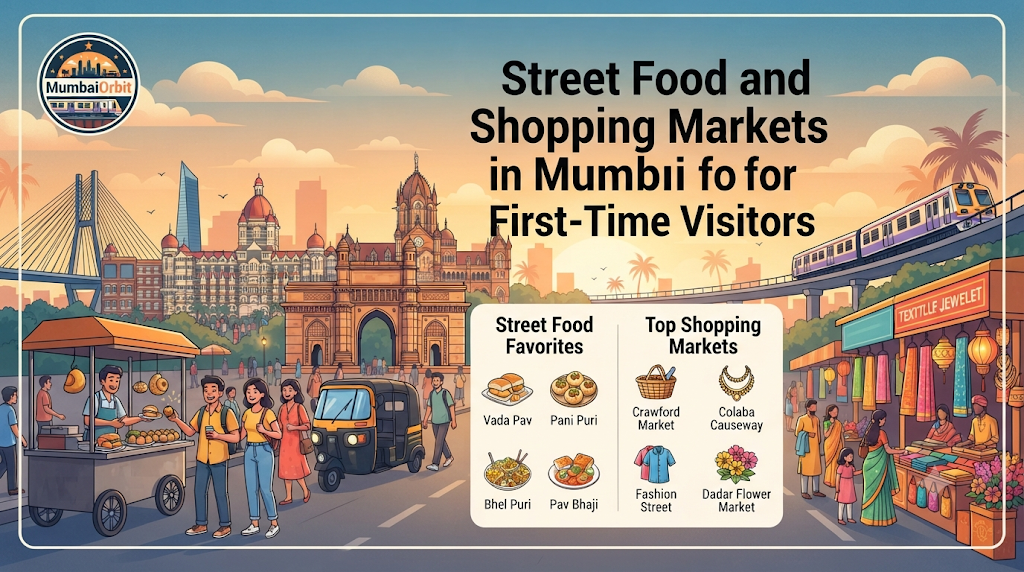
Food and markets are two of the best ways to understand Mumbai. They are also where first-time visitors make the most mistakes. This guide covers food safety, popular dishes, food areas and market planning. It is written for travellers and new residents who want clear, practical advice.
Food Safety Rules to Follow First
Good street food starts with good habits. A few simple rules make a big difference:
- Choose stalls with a steady crowd. Busy stalls cook fresh food more often.
- Watch how the food is prepared. Hot, freshly cooked items are a safer choice.
- Drink sealed bottled water.
- Start with small portions if your stomach is not used to spicy food.
- Carry tissues or a hand sanitiser.
These steps cost nothing and protect your trip.
Dishes to Try, Grouped by Time of Day
Many guides list dishes in a long row. It is easier to plan by mealtime.
Morning and tea time
- Bun maska with chai, a soft bun with butter, often found at old Irani cafés.
- Misal pav, a spicy sprout curry served with bread.
Afternoon snacks
- Vada pav, the famous potato patty in a bun. It is the simplest place to begin.
- Pani puri, small crisp shells filled with spiced water.
- Ragda pattice, potato patties topped with a white pea curry.
Evening and late night
- Pav bhaji, a buttery vegetable mash with bread.
- Kulfi or falooda, cold sweets that cool down a spicy meal.
If you want the best street food in Mumbai, try one item from each group. Then go back to the one you liked most.
Food Areas Known to Locals
Some areas are known for food, and each has its own mood.
- Girgaon Chowpatty: A beachfront area known for evening snacks.
- Juhu Beach: Known for chaat stalls and a lively crowd.
- Mohammed Ali Road: Known for rich non-vegetarian street food, especially in the evenings.
Stalls change, so check recent local advice before you choose one. In Mumbai, a food lane is often called a “khau galli.”
Match Your Shopping Goal to the Right Market
| What you want | Market type to look for | Planning tip |
|---|---|---|
| Fabric and clothing material | Textile markets, such as Mangaldas Market | Compare a few shops first |
| Fresh flowers | Wholesale flower markets, such as the one near Dadar | Go early in the day |
| Electronics and gadgets | Electronics markets, such as Manish Market | Check warranty and return terms |
| Hardware and tools | Hardware lanes, such as Lohar Chawl | Know the exact item you need |
| Street clothes and accessories | Open street markets | Bargain politely |
Shopping markets in Mumbai are busy and crowded. Wear light, comfortable clothes and shoes you can walk in. Keep your bag in front of you.
Bargaining Without Awkwardness
Bargaining is common at open stalls, but not in fixed-price shops. Follow these simple steps:
- Ask the price and smile.
- Offer a lower price, but not an unfair one.
- Be ready to walk away politely.
- Do not bargain unless you really want the item.
Reaching Food and Market Areas
Metro Line 3 has stations named Girgaon and Kalbadevi. Both are close to areas known for food and market shopping. Check the official metro source for the exit and walking route.
Local trains can also help you reach busy areas. Avoid peak rush hours if you can. A Mumbai local train guide is a good thing to read before your first ride.
Asking Locals Before You Go
Local views can help when you are choosing where to eat or shop. A Mumbai community forum gives residents and visitors a place to share tips. MumbaiOrbit is a Mumbai-focused community and information platform that combines a local discussion forum with a travel and lifestyle blog. Its forum has categories such as Khau Galli, Ask Mumbai and Trains & Transport. Use these discussions for ideas, then check key facts yourself.
Common Mistakes at Food Lanes and Markets
- Eating too many spicy items on the first day.
- Visiting at the busiest hour without a plan.
- Paying the first price at an open stall without comparing.
- Carrying too much cash or too many valuables.
- Trusting old information about stalls or opening hours.
Frequently Asked Questions
What should I order first as a beginner?
Try vada pav. It is mild, filling and easy to find.
Can vegetarians eat well at Mumbai’s street stalls?
Yes. Many of the most famous street snacks are vegetarian.
Is it all right to eat street food with a sensitive stomach?
Be careful. Choose fresh, hot food and small portions, and avoid unsealed water.
Do small stalls take cards?
Many small stalls prefer cash. Carry some, but not too much.
When is the best time to visit a busy market?
Go in the morning or early afternoon, when it is usually easier to walk around.
Can I bargain everywhere?
No. Bargaining works at open stalls, not at fixed-price shops.
Final Thoughts
A good day of food and shopping in Mumbai starts with a few simple habits. Choose busy stalls, eat fresh and hot food, and drink only sealed water. Begin with mild dishes such as vada pav, then try spicier ones.
For shopping, match each market to what you need. Go early, wear comfortable shoes and keep your bag close. Bargain politely at open stalls, but not at fixed-price shops.
Metro Line 3 and local trains can take you close to many busy areas. Timings and stalls can change, so check official sources before you go.
For more local tips, you can visit the Khau Galli and Trains & Transport discussions on MumbaiOrbit