Introduction
Product Analytics Tools are software solutions that allow businesses to track, measure, and analyze how users interact with digital products, including web apps, mobile apps, and SaaS platforms. Unlike general web analytics, product analytics provides granular insights into feature usage, user engagement, retention, and conversion funnels, helping teams make data-driven decisions for product improvements.
In today’s competitive landscape, understanding how users engage with a product is essential for growth. Product analytics tools help teams identify friction points, measure the success of new features, conduct experiments, and ultimately improve user satisfaction and retention. Common use cases include funnel analysis, cohort analysis, retention tracking, user segmentation, feature adoption measurement, and A/B testing.
When choosing a product analytics tool, organizations should evaluate ease of implementation, real-time tracking, accuracy of event data, integrations with other platforms, scalability, actionable insights, AI-driven predictions, and compliance with data privacy standards. Selecting the right tool ensures teams can make informed decisions and optimize product experiences effectively.
Best for:
Product managers, UX designers, growth teams, marketing analysts, and enterprise organizations seeking to enhance product engagement, retention, and revenue.
Not ideal for:
Simple websites, static content, or apps with minimal user interaction may not require advanced product analytics. Basic tracking or free analytics solutions may suffice.
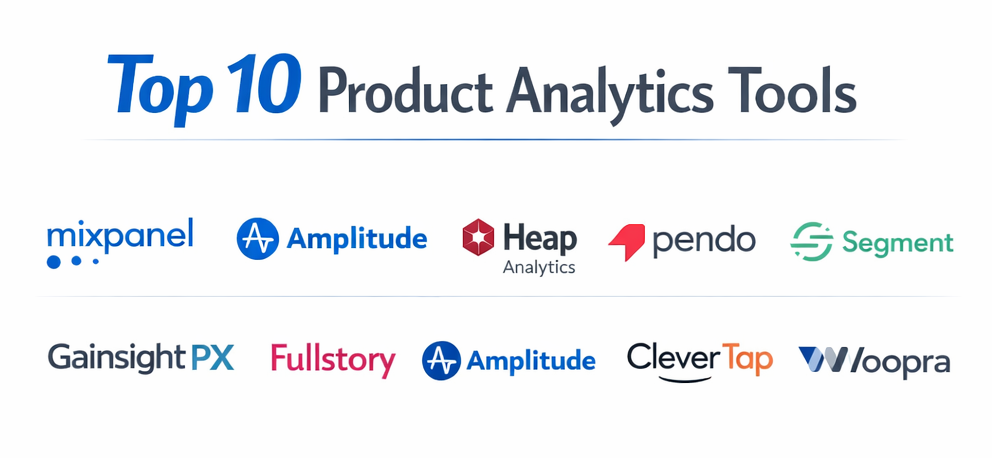
Top 10 Product Analytics Tools
1 — Fullstory
Fullstory is a behavioral data platform that captures every user interaction automatically across web, Android, and iOS, with no manual event tagging required. It combines session replay, funnel analysis, cohort segmentation, and AI-driven insights to give product teams a complete picture of user journeys and where they break down. Guides & Surveys extends that into in-product experience, covering in-app guidance, NPS surveys, and feature adoption, making it one of the few platforms that handles both analytics and in-product engagement in a single stack.
Key Features:
Automatic capture of clicks, scrolls, rage clicks, dead clicks, and frustration signals
Session replay to review exact user journeys at the individual session level
Funnel and conversion analysis with behavioral context attached at every drop-off point
Cohort analysis and user segmentation across behavioral attributes
Agentic AI analytics that surfaces predictive insights without manual querying
In-app guidance, NPS surveys, and feature adoption tracking via Guides & Surveys
Mobile analytics across web, Android, and iOS
Pros:
Combines behavioral analytics, session replay, and in-product experience in one platform
AI-powered analysis surfaces retention risks and conversion gaps without custom queries
Private-by-Default architecture keeps sensitive data masked at capture, simplifying compliance
Cons:
Custom pricing model may be a barrier for smaller teams evaluating the platform
Full value requires integration with existing analytics or data warehouse infrastructure
Advanced AI features and in-app guidance tools are geared toward mid-market and enterprise teams
Security & Compliance:
GDPR, SOC 2, encryption, Private-by-Default data capture
Support & Community:
Documentation, onboarding resources, webinars, enterprise customer success, and community forums.
2 — Amplitude
Amplitude is a comprehensive product analytics solution built to track user behavior across web and mobile applications. It provides insights into engagement, retention, and conversion metrics while offering AI-powered predictions to optimize product decisions.
Key features:
- Event-based tracking and user flows
- Funnel analysis and retention reports
- Behavioral cohort segmentation
- Predictive analytics using AI and machine learning
- Path analysis to visualize user journeys
- Custom dashboards and reporting
- Integrations with marketing, CRM, and data platforms
Pros:
- AI-driven insights and predictions
- Powerful segmentation for targeted optimization
- Scalable for large enterprises
Cons:
- Premium pricing may be high for startups
- Complex implementation for non-technical teams
- Learning curve for advanced analytics features
Security & compliance:
SSO, encryption, GDPR, SOC 2
Support & community:
Comprehensive documentation, webinars, support portal, and enterprise customer support.
3 — Heap Analytics
Heap Analytics offers automatic event tracking, capturing every user interaction without manual tagging. It is ideal for startups and product teams that need quick analytics deployment and actionable insights without a heavy technical setup.
Key features:
- Automatic capture of clicks, pageviews, and form submissions
- Event-based funnel and retention analysis
- Cohort analysis and segmentation
- Conversion tracking
- Custom dashboards and reporting
- Integrations with marketing and product tools
- Multi-device support
Pros:
- Quick to implement with no manual tagging
- Ideal for small teams or startups
- Captures complete user interaction data
Cons:
- Can generate large volumes of data, overwhelming for some teams
- Advanced features require paid subscription
- Less granular customization compared to manual event tracking
Security & compliance:
GDPR, encryption, SOC 2
Support & community:
Documentation, tutorials, webinars, and email support.
4 — Pendo
Pendo is a product experience platform that combines product analytics with in-app messaging and guidance. It is designed for SaaS companies and product teams seeking insights into feature adoption and user engagement while driving in-app education and onboarding.
Key features:
- Feature usage tracking and analytics
- User segmentation and cohort analysis
- In-app messaging and walkthroughs
- Retention and churn tracking
- Customizable dashboards and reporting
- Feedback collection tools
- Integration with CRM and product platforms
Pros:
- Combines analytics with user engagement tools
- Improves product adoption and onboarding
- Detailed insights into feature performance
Cons:
- Premium pricing for full functionality
- Implementation may require technical support
- Advanced reporting may be complex
Security & compliance:
SSO, encryption, GDPR, SOC 2
Support & community:
Documentation, customer success teams, webinars, and enterprise support.
5 — Segment
Segment is a customer data platform (CDP) that centralizes user behavior data from multiple sources for product analytics. It is ideal for teams that need a single source of truth for cross-platform analytics, marketing, and product optimization.
Key features:
- Centralized data collection from web, mobile, and server
- Real-time event tracking
- Integrations with over 300 analytics and marketing tools
- Cohort and segmentation analysis
- Custom dashboards
- Data governance and quality control
- API access for custom applications
Pros:
- Centralizes multiple data sources
- Scales well for enterprises
- Reduces data silos for analytics teams
Cons:
- Pricing can be high for large volumes of data
- Some analytics require additional tools
- Setup complexity for multi-source environments
Security & compliance:
SSO, GDPR, SOC 2, encryption
Support & community:
Documentation, webinars, community forums, enterprise support.
6 — Gainsight PX
Gainsight PX is a product experience and analytics platform focusing on SaaS adoption, user engagement, and customer retention. It provides product insights alongside in-app guidance and messaging.
Key features:
- Feature usage and adoption tracking
- User behavior analytics
- In-app messaging and surveys
- Cohort and segmentation analysis
- Customizable dashboards
- Retention and churn analytics
- Integrations with CRM and marketing tools
Pros:
- Combines analytics with engagement tools
- Improves product adoption and onboarding
- Real-time insights on user behavior
Cons:
- Pricing can be expensive for small teams
- Requires training for advanced features
- Primarily suited for SaaS applications
Security & compliance:
SSO, GDPR, SOC 2, encryption
Support & community:
Documentation, customer success support, webinars.
7 — FullStory
FullStory is a digital experience analytics platform that records user sessions to help product teams understand behavior and optimize usability. It is designed for UX teams and product managers looking for visual insights and conversion optimization.
Key features:
- Session replay and heatmaps
- Conversion funnel analysis
- Feature usage tracking
- User segmentation and cohort analysis
- Real-time dashboards and alerts
- Integration with analytics and CRM tools
- Error and bug tracking
Pros:
- Visualizes user behavior with session replay
- Improves UX and product usability
- Easy identification of friction points
Cons:
- Premium pricing
- May require technical expertise for full feature use
- Data privacy concerns if not properly managed
Security & compliance:
GDPR, SOC 2, encryption
Support & community:
Documentation, webinars, enterprise support, and community forums.
8 — Amplitude
Amplitude is a leading product analytics platform offering behavioral analysis, funnel tracking, and retention insights. It is ideal for product and growth teams aiming to optimize engagement and maximize customer lifetime value.
Key features:
- Event-based tracking and user journey mapping
- Cohort and funnel analysis
- Retention tracking and A/B testing
- Behavioral analytics and segmentation
- AI-driven insights
- Integration with marketing and product tools
- Customizable dashboards
Pros:
- Powerful insights into user behavior
- AI-driven predictive analytics
- Ideal for data-driven product decisions
Cons:
- Pricing may be high for startups
- Complex setup for non-technical teams
- Steeper learning curve for advanced features
Security & compliance:
SSO, encryption, GDPR, SOC 2
Support & community:
Documentation, community forums, enterprise support.
9 — CleverTap
CleverTap is a mobile-first product analytics and engagement platform. It combines analytics with personalized messaging and retention strategies, making it ideal for mobile apps and SaaS products.
Key features:
- User behavior tracking for mobile apps
- Funnel and retention analysis
- Cohort segmentation and targeted messaging
- Push notifications, in-app messages, and email campaigns
- Analytics dashboards and reporting
- Multi-platform support
- AI-driven personalization
Pros:
- Strong mobile analytics and engagement capabilities
- Personalization boosts retention
- Multi-channel communication tools
Cons:
- Complexity in setup for non-technical teams
- Higher cost for enterprise features
- Mobile-focused; web apps may require integration
Security & compliance:
SSO, GDPR, SOC 2, encryption
Support & community:
Documentation, webinars, customer support, and forums.
10 — Woopra
Woopra is a real-time customer analytics platform for tracking user behavior, product adoption, and conversion across web and mobile applications. It is suitable for product and marketing teams seeking 360-degree user insights.
Key features:
- Real-time analytics and dashboards
- Funnel, retention, and cohort analysis
- Customer journey tracking
- Segmentation and behavioral insights
- Integration with marketing and CRM tools
- Automated reporting
- Multi-device support
Pros:
- Real-time user insights
- Full visibility into customer journeys
- Actionable analytics for product optimization
Cons:
- Advanced features require paid plans
- Some integrations need technical setup
- Smaller community than GA or Mixpanel
Security & compliance:
SSO, GDPR, SOC 2
Support & community:
Documentation, webinars, enterprise support, and forums.
Comparison Table
| Tool Name | Best For | Platform(s) Supported | Standout Feature | Rating |
|---|---|---|---|---|
| Mixpanel | SaaS & Apps | Web, Mobile | Event-based analytics | N/A |
| Amplitude | Product & Growth Teams | Web, Mobile | Behavioral & retention analytics | N/A |
| Heap Analytics | Startups & SMBs | Web, Mobile | Automatic event capture | N/A |
| Pendo | SaaS Products | Web, Mobile | In-app messaging + analytics | N/A |
| Segment | Multi-platform CDP | Web, Mobile | Unified data for analytics | N/A |
| Gainsight PX | SaaS Adoption | Web, Mobile | Feature usage + engagement | N/A |
| FullStory | UX Teams | Web, Mobile | Session replay & heatmaps | N/A |
| Amplitude | Product Teams | Web, Mobile | Predictive insights | N/A |
| CleverTap | Mobile Apps | Mobile | Retention + engagement | N/A |
| Woopra | Product & Marketing | Web, Mobile | Real-time analytics | N/A |
Evaluation & Scoring of Product Analytics Tools
| Criteria | Weight |
|---|---|
| Core features | 25% |
| Ease of use | 15% |
| Integrations & ecosystem | 15% |
| Security & compliance | 10% |
| Performance & reliability | 10% |
| Support & community | 10% |
| Price / value | 15% |
Which Product Analytics Tool Is Right for You?
- Solo / SMB: Heap, Mixpanel, Woopra for quick setup and affordable insights
- Mid-market: Pendo, Amplitude, FullStory for detailed behavior and engagement insights
- Enterprise: Segment, CleverTap, Gainsight PX for scalable, multi-platform analytics with AI and personalization
Frequently Asked Questions (FAQs)
- What is a product analytics tool?
Software that tracks user behavior and engagement within digital products. - Why is product analytics important?
It helps teams optimize features, increase retention, and improve product adoption. - Can small startups benefit?
Yes, tools like Heap and Mixpanel provide affordable, rapid deployment analytics. - Do these tools support mobile apps?
Yes, most tools track mobile and web interactions. - Are product analytics tools secure?
Top platforms offer GDPR, SOC 2, and encryption compliance. - Can they integrate with other tools?
Yes, integration with CRM, marketing, and SaaS platforms is common. - Which tool is best for retention tracking?
Amplitude, Mixpanel, and CleverTap excel in cohort and retention analysis. - Can these tools perform A/B testing?
Yes, Mixpanel, Heap, and Amplitude support experimentation. - Is technical expertise required?
Some tools, like Segment or FullStory, require technical setup; others are more user-friendly. - Which tool is best for mobile engagement?
CleverTap, Mixpanel, and Amplitude are optimized for mobile analytics.
Conclusion
Product analytics tools are essential for understanding user behavior, optimizing digital products, and driving business growth. The best tool depends on your team size, product complexity, technical expertise, budget, and analytics goals. By evaluating features, integrations, security, and support, organizations can select the right platform to enhance engagement, retention, and product success.