Introduction
Podcast hosting platforms are specialized services that store, manage, and distribute podcast audio files to major listening platforms. Unlike simple cloud storage, these platforms are designed specifically for podcasts. They generate podcast feeds, manage episode publishing, provide listener analytics, and ensure reliable delivery across multiple podcast directories.
Podcast hosting platforms are important because podcasts require stable storage, fast delivery, and consistent availability. Large audio files must be streamed or downloaded smoothly by listeners around the world. A good hosting platform ensures that episodes load quickly, remain accessible, and reach audiences across different podcast apps without technical issues.
In real-world use cases, podcast hosting platforms are used by independent creators, media companies, educators, businesses, and brands. They support use cases such as personal podcasts, interview shows, educational series, branded podcasts, internal corporate podcasts, marketing campaigns, and large podcast networks. Many platforms also provide tools for monetization, audience insights, and episode optimization.
When choosing a podcast hosting platform, users should evaluate storage limits, publishing workflow, analytics depth, distribution support, monetization features, ease of use, scalability, and pricing. Security, reliability, and long-term growth support are also critical considerations.
Best for:
Podcast hosting platforms are best suited for solo podcasters, content creators, journalists, educators, marketing teams, startups, media agencies, and enterprises producing branded or internal podcasts. They serve individuals as well as organizations managing multiple shows.
Not ideal for:
Users who only record audio for personal use or internal review without public distribution may not need a podcast hosting platform. Simple file storage or local recording tools may be sufficient for such use cases.
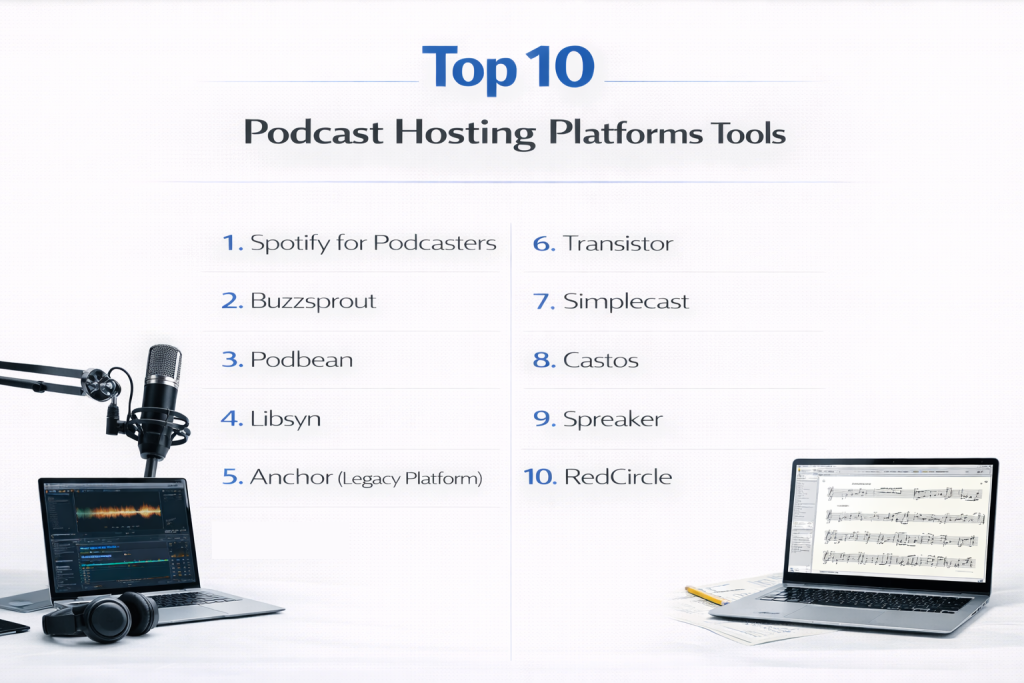
Top 10 Podcast Hosting Platforms Tools
1 — Spotify for Podcasters
Spotify for Podcasters is a podcast hosting and management platform designed to help creators publish, distribute, and grow podcasts with minimal setup. It is especially popular among new and independent podcasters due to its simple workflow and integrated analytics.
Key features:
- Podcast hosting and episode publishing
- Distribution to major listening platforms
- Basic listener analytics and insights
- Episode scheduling and management
- Monetization options for eligible creators
- Simple web-based dashboard
- Mobile-friendly management tools
Pros:
- Easy to use for beginners
- No hosting cost for basic use
- Strong reach through large listener base
Cons:
- Limited advanced analytics
- Fewer customization options
- Monetization features vary by region
Security & compliance:
Encryption in transit, GDPR compliance, basic access controls
Support & community:
Help documentation, creator guides, and an active creator community.
2 — Buzzsprout
Buzzsprout is a user-friendly podcast hosting platform designed for creators who value simplicity and clear analytics. It is widely used by small podcasters, educators, and businesses starting their podcast journey.
Key features:
- Podcast hosting and distribution
- Episode optimization tools
- Listener analytics and statistics
- Episode scheduling
- Automatic audio optimization
- Easy episode embedding
- Podcast website generation
Pros:
- Very beginner-friendly
- Clean and intuitive dashboard
- Clear analytics presentation
Cons:
- Storage limits on lower plans
- Advanced features require upgrades
- Limited customization for large networks
Security & compliance:
GDPR compliance, standard encryption, basic account security
Support & community:
Strong documentation, email support, onboarding guides, and tutorials.
3 — Podbean
Podbean is a full-featured podcast hosting platform offering hosting, distribution, monetization, and live podcasting features. It is suitable for creators who want an all-in-one solution.
Key features:
- Unlimited hosting plans
- Podcast distribution and publishing
- Monetization and advertising tools
- Live podcast streaming
- Listener analytics
- Podcast website hosting
- Mobile app support
Pros:
- Strong monetization options
- Supports live podcasts
- Scales well for growing shows
Cons:
- Interface can feel crowded
- Analytics less detailed than competitors
- Advanced features may require higher plans
Security & compliance:
Encryption, GDPR compliance, access controls vary by plan
Support & community:
Documentation, email support, webinars, and creator community.
4 — Libsyn
Libsyn is one of the oldest and most established podcast hosting platforms, trusted by professional podcasters and media networks. It is designed for reliability, scalability, and long-term podcast growth.
Key features:
- Reliable podcast hosting
- Advanced distribution options
- Detailed listener analytics
- Monetization tools
- Multi-show management
- Custom publishing workflows
- Long-term content storage
Pros:
- Proven reliability
- Strong distribution controls
- Suitable for professional podcasters
Cons:
- Interface feels outdated
- Learning curve for beginners
- Pricing can be complex
Security & compliance:
GDPR compliance, data protection controls, enterprise options available
Support & community:
Professional documentation, support plans, and experienced user base.
5 — Anchor (Legacy Platform)
Anchor, now integrated into Spotify for Podcasters, was originally designed as a simple podcast hosting solution for beginners. Its legacy features still influence modern podcast hosting workflows.
Key features:
- Easy podcast publishing
- Basic hosting and distribution
- Simple episode creation tools
- Monetization options
- Mobile recording support
- Listener interaction features
Pros:
- Very easy to get started
- No upfront cost
- Mobile-friendly tools
Cons:
- Limited advanced features
- Less control over customization
- Not suitable for professional networks
Security & compliance:
Basic encryption, GDPR compliance
Support & community:
Help guides, creator resources, community discussions.
6 — Transistor
Transistor is a podcast hosting platform built for businesses, teams, and networks managing multiple podcasts. It focuses on analytics, scalability, and team collaboration.
Key features:
- Multiple podcast hosting
- Team access and roles
- Advanced listener analytics
- Distribution automation
- Private podcast support
- Podcast website creation
- Episode management tools
Pros:
- Excellent for teams and networks
- Clean analytics interface
- Strong scalability
Cons:
- Higher starting price
- Not ideal for casual podcasters
- No built-in audio editing
Security & compliance:
GDPR compliance, secure access controls, private feed support
Support & community:
High-quality documentation, responsive support, professional user base.
7 — Simplecast
Simplecast is a modern podcast hosting platform designed for creators and businesses that value analytics and performance. It is widely used by professional podcasters and media brands.
Key features:
- Unlimited podcast hosting
- Advanced analytics
- Distribution management
- Team collaboration tools
- Podcast website support
- Episode scheduling
- Audience insights
Pros:
- Strong analytics depth
- Reliable performance
- Suitable for professional use
Cons:
- Higher pricing tiers
- Advanced features locked behind plans
- Overkill for beginners
Security & compliance:
Encryption, GDPR compliance, enterprise controls available
Support & community:
Professional documentation, support services, and industry reputation.
8 — Castos
Castos is a podcast hosting platform focused on simplicity, automation, and private podcasting. It is commonly used by educators, businesses, and content marketers.
Key features:
- Unlimited hosting and episodes
- Private podcasting
- Listener analytics
- Distribution automation
- Podcast website integration
- Simple dashboard
- Team access support
Pros:
- Unlimited uploads
- Strong private podcast features
- Easy to manage
Cons:
- Basic analytics
- Limited monetization tools
- Fewer advanced customizations
Security & compliance:
GDPR compliance, private feed authentication, secure delivery
Support & community:
Clear documentation, email support, growing user community.
9 — Spreaker
Spreaker is a podcast hosting and monetization platform designed for creators who want both hosting and audience engagement tools.
Key features:
- Podcast hosting and distribution
- Live broadcasting
- Monetization options
- Listener analytics
- Podcast player customization
- Mobile app support
- Episode scheduling
Pros:
- Supports live broadcasting
- Built-in monetization
- Strong audience engagement tools
Cons:
- Interface can feel complex
- Analytics less detailed
- Pricing varies by usage
Security & compliance:
Encryption, GDPR compliance, standard account protections
Support & community:
Documentation, help center, and creator forums.
10 — RedCircle
RedCircle is a podcast hosting platform focused on monetization and audience growth. It is suitable for independent podcasters who want to grow revenue opportunities.
Key features:
- Podcast hosting and distribution
- Monetization marketplace
- Listener analytics
- Cross-promotion tools
- Episode scheduling
- Podcast website support
- Audience growth tools
Pros:
- Strong monetization focus
- Good for independent creators
- Simple publishing workflow
Cons:
- Analytics not enterprise-grade
- Limited customization
- Less suitable for large networks
Security & compliance:
GDPR compliance, encryption in transit
Support & community:
Help documentation, email support, creator community.
Comparison Table
| Tool Name | Best For | Platform(s) Supported | Standout Feature | Rating |
|---|---|---|---|---|
| Spotify for Podcasters | Beginners | Web, Mobile | Easy distribution | N/A |
| Buzzsprout | New podcasters | Web | Simple analytics | N/A |
| Podbean | Monetization | Web, Mobile | Live podcasting | N/A |
| Libsyn | Professionals | Web | Long-term reliability | N/A |
| Anchor | Beginners | Web, Mobile | Free hosting | N/A |
| Transistor | Teams | Web | Multi-show support | N/A |
| Simplecast | Media brands | Web | Advanced analytics | N/A |
| Castos | Educators | Web | Private podcasts | N/A |
| Spreaker | Live podcasts | Web, Mobile | Live broadcasting | N/A |
| RedCircle | Monetization | Web | Growth tools | N/A |
Evaluation & Scoring of Podcast Hosting Platforms
| Criteria | Weight |
|---|---|
| Core features | 25% |
| Ease of use | 15% |
| Integrations & ecosystem | 15% |
| Security & compliance | 10% |
| Performance & reliability | 10% |
| Support & community | 10% |
| Price / value | 15% |
Which Podcast Hosting Platforms Tool Is Right for You?
Solo podcasters should prioritize ease of use and affordability. Small businesses benefit from simple analytics and publishing tools. Mid-market teams require collaboration and scalability. Enterprises should focus on reliability, security, and advanced analytics. The best platform depends on growth goals, audience size, and monetization needs.
Frequently Asked Questions (FAQs)
- What is a podcast hosting platform?
A podcast hosting platform stores and distributes podcast episodes to listening apps. - Do podcasts need a hosting platform?
Yes, hosting platforms generate podcast feeds and manage delivery. - Are free hosting platforms reliable?
They can be reliable but often have feature limitations. - Can I switch platforms later?
Yes, most platforms support migration. - Do hosting platforms provide analytics?
Most platforms offer listener and episode analytics. - Can I monetize my podcast?
Many platforms support monetization tools. - Is private podcasting possible?
Some platforms offer private feed options. - How much storage is required?
Depends on episode length and frequency. - Are podcast hosting platforms secure?
Most offer encryption and data protection. - Which platform is best for beginners?
Beginner-friendly platforms focus on simplicity.
Conclusion
Podcast hosting platforms are essential for publishing, distributing, and managing podcasts efficiently. They ensure reliable delivery, audience insights, and growth opportunities.
There is no single best podcast hosting platform for everyone. The right choice depends on your goals, audience size, budget, and feature requirements. By carefully evaluating your needs, you can choose a platform that supports both current production and long-term podcast success.