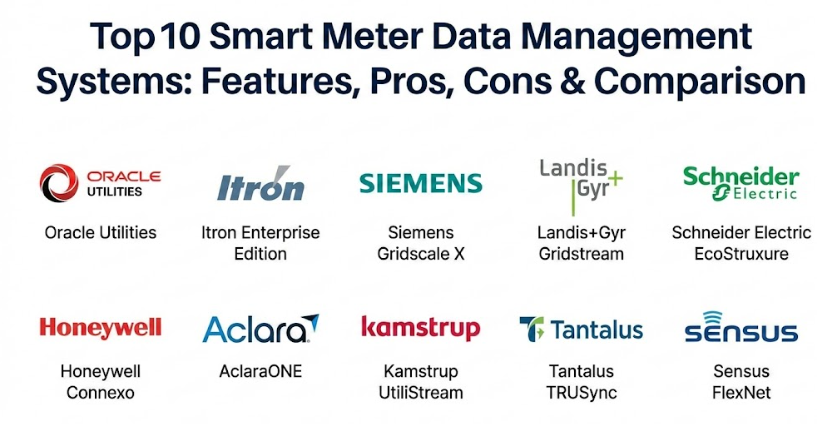
Introduction
A Smart Meter Data Management System, often called an MDMS, is a specialized piece of software that acts as a giant filing cabinet and brain for all the information coming from smart meters. Smart meters are the devices on the side of houses or buildings that track how much electricity, water, or gas is being used. Instead of a person coming by once a month to read a dial, these meters send data automatically every few minutes or hours. The MDMS is the system that collects all that raw data, checks it for mistakes, fixes any gaps, and then organizes it so the utility company can use it for billing and managing the grid. It is the bridge between the meters in the field and the computers in the office.
In the modern world, managing energy and water is no longer a simple task of “buy and sell.” Utilities now deal with massive amounts of data flowing in constantly. A Smart Meter Data Management System is important because it turns “big data” into “useful data.” Without this system, a utility company would be buried under billions of data points with no way to verify if they are accurate. By using an MDMS, companies can ensure that customers are billed correctly, outages are detected faster, and the overall supply of energy is balanced with the demand.
Key Real-World Use Cases
- Automated Billing: Automatically calculating bills based on actual usage without needing manual meter reads.
- Leak and Theft Detection: Identifying unusual patterns that suggest a water leak or someone tampering with an electric meter.
- Outage Management: Real-time alerts when a group of meters goes dark, helping repair crews find the problem faster.
- Demand Response: Sending signals to reduce power usage during peak times to prevent blackouts.
What to Look for When Choosing a System
When evaluating these tools, users should look for scalability (can it handle millions of meters?), interoperability (does it work with different brands of hardware?), and data quality (how well does it fix missing or broken data?). Additionally, the speed of processing and how easily it integrates with existing billing software are critical factors.
Best for: Large utility companies, city-owned water and gas departments, and energy cooperatives that are moving away from manual meter reading to automated digital systems. It is also vital for industrial sites that need to track high-volume energy use.
Not ideal for: Very small businesses or residential property managers who only have a handful of meters. In those cases, a simple spreadsheet or a basic monitoring app is usually enough and much cheaper.
Top 10 Smart Meter Data Management Systems Tools
1 — Oracle Utilities Meter Data Management
Oracle is a heavy hitter in the world of big data. Their system is designed to be a central repository for every single measurement a utility takes. It is built to handle the “meter-to-cash” process with extreme precision.
- Key Features:
- Advanced VEE (Validation, Estimation, and Editing) rules.
- 360-degree view of every device on the network.
- Native integration with Oracle’s customer billing systems.
- Support for high-volume interval data processing.
- Configurable dashboards for operational monitoring.
- Automated service issue monitoring.
- Pros:
- Extremely powerful for massive utility companies with millions of customers.
- Highly reliable and backed by a global tech leader.
- Cons:
- Can be very expensive to set up and maintain.
- Requires specialized staff to manage the complex configuration.
- Security & Compliance: SOC 2, GDPR, ISO 27001, and advanced encryption at rest and in transit.
- Support & Community: Extensive online documentation, global enterprise support, and a large community of certified consultants.
2 — Itron Enterprise Edition (IEE) MDM
Itron is one of the most well-known names in the metering industry. Their IEE platform is designed to work across electricity, gas, and water, making it a “one-stop shop” for multi-service utilities.
- Key Features:
- Highly scalable architecture for global deployments.
- Specialized “Settlements” module for energy market calculations.
- “IEE Essentials” version for smaller municipal utilities.
- Real-time alarm and event management.
- Deep integration with AMI (Advanced Metering Infrastructure).
- Flexible deployment options including cloud and on-premises.
- Pros:
- Very stable and has been proven in the field for decades.
- Excellent at managing complex regulatory requirements.
- Cons:
- The user interface can feel a bit dated compared to newer web apps.
- Customizing the software for unique needs can be a slow process.
- Security & Compliance: Advanced user authentication, audit logs, and compliance with NERC CIP standards.
- Support & Community: Strong professional services team and a long-standing user group community.
3 — Siemens Gridscale X (formerly EnergyIP)
Siemens has rebranded their famous EnergyIP system into Gridscale X. It is designed to be vendor-agnostic, meaning it is happy to work with any brand of smart meter you have installed.
- Key Features:
- Automated resolution of 99.9% of all data issues.
- High-speed processing for 5-minute interval data.
- Built-in analytics for revenue protection and theft detection.
- SaaS (Software as a Service) delivery for faster rollout.
- Interoperability with a wide range of grid software.
- Outage event management and analysis.
- Pros:
- Very easy to learn and use compared to competitors.
- Exceptional at managing data from “prosumers” (people who sell solar power back to the grid).
- Cons:
- Transitioning from the old version to the new platform can take time.
- Heavy reliance on high-speed internet for the cloud features.
- Security & Compliance: SOC 2 Type II, GDPR, and ISO standards.
- Support & Community: Managed services available, extensive training programs, and global support centers.
4 — Landis+Gyr Gridstream MDMS
Landis+Gyr focuses on turning raw sensor data into “intelligence.” Their system acts as a single system of record that cleans and standardizes data for the entire utility company.
- Key Features:
- Standards-based interfaces (CIM compliant).
- Powerful VEE engines for high-quality billing.
- Virtual and net metering for renewable energy programs.
- Distribution network visibility (voltage and amperage tracking).
- Automated exception management workflows.
- Connectivity model for the entire distribution grid.
- Pros:
- Strong focus on power quality, not just billing.
- Great at handling complex rate structures for residential and industrial users.
- Cons:
- Implementation projects can be long and labor-intensive.
- The documentation can sometimes be overly technical for non-IT users.
- Security & Compliance: Role-based access control, data encryption, and audit trails.
- Support & Community: Global presence with local support teams in many countries.
5 — Schneider Electric EcoStruxure MDM
Schneider Electric focuses on sustainability and efficiency. Their MDMS is part of a larger ecosystem that connects everything from the power plant to the light bulb in your house.
- Key Features:
- Integration with IoT sensors beyond just meters.
- Real-time insights into grid health and efficiency.
- Automated reporting for environmental and sustainability goals.
- Mobile-friendly interfaces for field workers.
- End-to-end lifecycle management of devices.
- Deep monitoring for data center and industrial power.
- Pros:
- Excellent user interface that feels modern and intuitive.
- Very strong for companies that care about “Green” metrics and carbon tracking.
- Cons:
- Can be expensive if you only need the MDM part and not the whole ecosystem.
- Some advanced features require a steep learning curve.
- Security & Compliance: Advanced cybersecurity features, MFA, and ISO 27001.
- Support & Community: High-quality client success representatives and an active online forum.
6 — Honeywell Connexo MDM
Honeywell’s Connexo is designed to be an “evolutionary” platform. It is built for utilities that want to start small and grow their digital capabilities over time.
- Key Features:
- Unifies data from over 200 different types of devices.
- Human-centric design focused on operator tasks.
- Web-based UI using modern web technologies.
- Built-in collaboration tools for team members.
- Compliance with SAP MDUS and other industry standards.
- Exception-based management to focus on critical issues.
- Pros:
- Very flexible; you can add modules only as you need them.
- The interface is one of the most user-friendly on the market.
- Cons:
- It may lack some of the deepest “big data” power found in Oracle.
- Finding third-party experts for this specific platform can be harder.
- Security & Compliance: Built-in auditing processes and data protection standards.
- Support & Community: Direct access to smart energy engineers for troubleshooting.
7 — AclaraONE
AclaraONE stands for “One Network for Everyone.” It is a web-based platform that combines meter data management with network monitoring and customer engagement.
- Key Features:
- Fully hosted cloud option (no on-site servers needed).
- Consumption-based analytics for leaks and pipe bursts.
- Event visualization and mapping tools.
- Configurable dashboards with “callout cards” for quick alerts.
- API-based interfaces for easy data sharing.
- Native support for gas, water, and electric meters.
- Pros:
- Fast “time-to-benefit” because the cloud setup is quick.
- The mapping and visualization tools are excellent for field crews.
- Cons:
- Some older modules may not feel as smooth as the newer web interface.
- Customizing reports can sometimes be limited compared to high-end enterprise tools.
- Security & Compliance: Hosted on Microsoft Azure with enterprise-grade security.
- Support & Community: Quarterly software releases and dedicated customer training.
8 — Kamstrup UtiliStream
Kamstrup is a Danish company that has become a leader in smart water and heat metering. Their UtiliStream system is highly focused on accuracy and making data easy to understand for water managers.
- Key Features:
- Automated billing file transfers to prevent human error.
- Proactive alerts for leaks, bursts, and frozen pipes.
- Daily system-wide consumption profiles.
- Agnostic billing formats (CSV, fixed width).
- Special “flow codes” to identify undersized meters.
- High-resolution usage graphs for customer service.
- Pros:
- Incredibly specialized for water utilities; they “speak the language” of water.
- The software is very simple to learn, requiring minimal training.
- Cons:
- Not as strong for electric utilities compared to brands like Itron or Siemens.
- The feature set is more focused on efficiency than complex energy market trading.
- Security & Compliance: GDPR compliant and uses secure data transmission protocols.
- Support & Community: Known for very high-quality customer service and long-term warranties.
9 — Tantalus TRUSync MDM
Tantalus provides a “grid modernization platform” that focuses on interoperability. They are particularly popular with smaller cooperatives and municipal utilities that have limited budgets.
- Key Features:
- Multi-purpose gateway that fits into existing meter sockets.
- TRUSync handles data from any vendor or communication network.
- Edge computing capabilities to process data before it hits the server.
- Reverse-compatibility ensures old meters still work with new software.
- Load management and demand response modules.
- Fiber, cellular, and ethernet communication support.
- Pros:
- Very cost-effective and built for gradual upgrades.
- Outstanding customer support with long-term relationships.
- Cons:
- The interface is more functional than “fancy.”
- Not designed for the massive scale of a top-tier global utility.
- Security & Compliance: Focused on utility-specific security and grid resiliency.
- Support & Community: Strong community among public power and cooperative utilities.
10 — Sensus FlexNet (MDM Component)
Sensus (owned by Xylem) offers the FlexNet system, which uses a licensed radio spectrum to ensure data always gets through. Their MDM component focuses on making sure billing data is complete and on time.
- Key Features:
- Primary-use FCC licensed spectrum for zero interference.
- “Single-tier” architecture for faster data delivery.
- High probability of receiving messages on the first try.
- Robust handling of outage and restoration messages.
- Supports electric, gas, water, and lighting controls.
- Integration with a wide range of customer portals.
- Pros:
- Extremely reliable communication; the data rarely goes missing.
- Excellent for rural areas where mesh networks might struggle.
- Cons:
- The system is somewhat “closed” compared to vendor-agnostic systems.
- Initial hardware costs for the radio network can be high.
- Security & Compliance: High-level encryption and secure, licensed communication.
- Support & Community: Strong technical support and deep expertise in radio frequency.
Comparison Table
| Tool Name | Best For | Platform(s) | Standout Feature | Rating |
| Oracle Utilities | Large Enterprises | Cloud / On-Prem | 360-Degree Device View | 4.4 / 5 |
| Itron IEE | Multi-Utility Corps | Cloud / On-Prem | Market Settlements | 4.2 / 5 |
| Siemens Gridscale X | Innovation & AI | SaaS | 99.9% Data Resolution | 4.5 / 5 |
| Landis+Gyr | Power Quality | Cloud / On-Prem | VEE Analytic Engines | 4.1 / 5 |
| Schneider Electric | Sustainability | SaaS / Web | IoT Ecosystem | 4.6 / 5 |
| Honeywell Connexo | Ease of Use | Web / Cloud | 200+ Device Support | 4.0 / 5 |
| AclaraONE | Cloud-First Needs | SaaS | Event Mapping | 4.3 / 5 |
| Kamstrup | Water Utilities | Web / Cloud | Leak & Burst Alerts | N/A |
| Tantalus | Cooperatives | Cloud / Edge | Reverse Compatibility | N/A |
| Sensus FlexNet | Remote/Rural Areas | Licensed Radio | High Data Reliability | 4.2 / 5 |
Evaluation & Scoring of Smart Meter Data Management Systems
| Category | Weight | Description |
| Core Features | 25% | How well it handles VEE, billing, and basic data storage. |
| Ease of Use | 15% | The quality of the user interface and how quickly staff can learn it. |
| Integrations | 15% | How easily it talks to other software like GIS, Billing, and CIS. |
| Security | 10% | Encryption, audit logs, and compliance with privacy laws. |
| Reliability | 10% | Uptime, system stability, and data accuracy. |
| Community | 10% | The availability of training, documentation, and user groups. |
| Price / Value | 15% | The total cost of ownership compared to the benefits gained. |
Which Smart Meter Data Management System Tool Is Right for You?
Choosing the right system depends entirely on the size of your operation and what you want to achieve beyond just sending out bills.
By Company Size
- Solo Operators / Very Small Systems: Look at Tantalus or AclaraONE. They offer lower entry costs and cloud models that don’t require you to have your own IT room.
- Mid-Market / Municipalities: Honeywell Connexo and Itron Essentials are great because they provide professional power without the overwhelming complexity of a massive enterprise suite.
- Large Enterprises: Oracle and Itron IEE are the standard. They can handle millions of meters and the complex legal and financial requirements of large-scale utilities.
By Goal
- If you want the best “look and feel”: Schneider Electric or Siemens offer the most modern, easy-to-use software interfaces.
- If you prioritize communication reliability: Sensus FlexNet is the winner due to its use of a private radio highway.
- If you are a Water-only utility: Kamstrup is the most tailored for your specific needs, like identifying leaks and sizing meters correctly.
Budget and Scalability
Always consider the “Total Cost of Ownership.” A cheap system might cost more in the long run if it is hard to integrate or if you outgrow it in a few years. If you plan to grow quickly, pick a SaaS model (like Siemens or AclaraONE) that lets you pay as you add more meters.
Frequently Asked Questions (FAQs)
1. What is the difference between AMI and MDM?
AMI is the physical hardware network (meters and radios) that collects data. MDM is the software “brain” that receives, cleans, and stores that data for the rest of the company to use.
2. Can an MDMS work with any brand of smart meter?
Some systems are “vendor-agnostic” (like Siemens) and work with almost anything. Others are designed to work best with their own brand of hardware. Always check for “interoperability” before buying.
3. Does MDM software help with energy theft?
Yes. Most modern systems have analytics that flag “non-technical losses.” If a meter shows a sudden drop in usage but the house is still occupied, the system will send an alert.
4. Is my data safe in a cloud-based MDM?
Generally, yes. Cloud providers like Azure and AWS used by companies like Aclara and Siemens have higher security standards than most local utility IT departments.
5. How long does it take to install an MDMS?
For a small utility using a cloud model, it can take a few months. For a large utility with complex needs and on-site servers, it can take a year or more.
6. Can these systems help during a power outage?
Absolutely. They can show exactly which meters are down on a map, helping utilities see the “shape” of an outage and find the broken transformer or line much faster.
7. Do I need a special team to run this software?
Large systems like Oracle usually require dedicated IT staff. Smaller cloud systems are designed to be run by the same people who handle billing or customer service.
8. What happens if a meter stops sending data?
The MDM uses VEE (Validation, Estimation, and Editing) rules to “guess” what the usage was based on past patterns so that the customer can still get an accurate bill.
9. Can an MDMS handle water, gas, and electricity at the same time?
Yes, most top-tier systems are “multi-commodity,” meaning they can manage all three in one single screen.
10. Is an MDMS expensive?
The cost varies wildly. Small systems may charge a few dollars per meter per year, while large enterprise systems can cost millions in upfront licensing and setup fees.
Conclusion
Choosing a Smart Meter Data Management System is a major decision that will affect your utility for many years. It is about more than just reading meters; it is about building a foundation for a smarter, more efficient grid. While large companies may lean toward the deep power of Oracle or Itron, smaller organizations can find great success with the user-friendly, cloud-based options like AclaraONE or Tantalus.
The “best” tool is the one that fits your specific team’s skills, your current budget, and your goals for the future. Whether you want to focus on reducing leaks, stopping energy theft, or simply making billing easier, there is a system on this list designed to help you succeed. Take the time to request demos and speak with other utilities in your region to see what works best in the real world.