Introduction
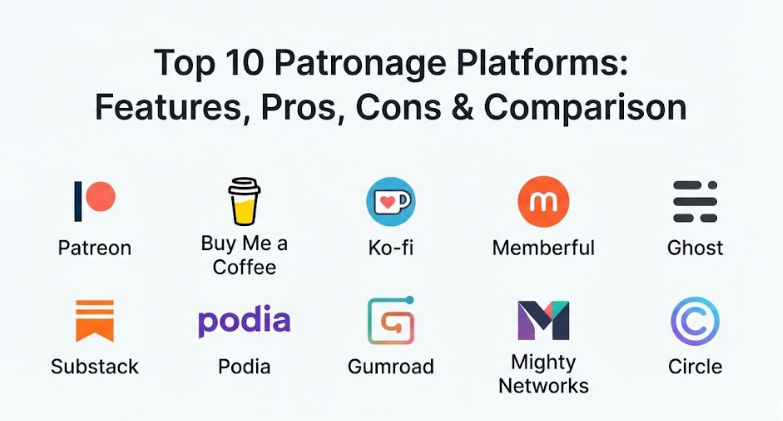
Patreon, Buy Me a Coffee, Ko-fi, Memberful, Ghost, Substack, Podia, Gumroad, Mighty Networks, and Circle are some of the most popular tools that help creators get paid directly by their fans. A patronage platform is a special kind of website that lets you set up a way for your audience to give you money. Instead of waiting for a big company to pay you for ads, you can ask the people who love your work to support you with a small tip or a monthly payment. This creates a bridge between you and your most loyal followers, giving you the freedom to create what you want without worrying about algorithms. These tools are incredibly important because they provide a steady and predictable income, which allows many people to turn their hobbies into full-time jobs.
When you use these platforms, you are building a community where your fans feel like they are part of your journey. Key real-world use cases include podcasters offering bonus episodes, artists selling digital brushes, or writers sending exclusive newsletters to their subscribers. When choosing the right tool, you should look for things like how much they charge you in fees, how easy the website is for your fans to use, and whether the tool can grow as your audience gets bigger. You also want to make sure the platform connects well with the other tools you already use, like your email list or your Discord server.
Best for:
Patronage platforms are best for independent creators like YouTubers, podcasters, musicians, and writers who already have a small but loyal group of fans. They are also perfect for community leaders and educators who want to sell access to private groups or specialized courses. Small businesses that want to build a “membership club” for their customers will find these tools very helpful for staying connected and earning extra revenue.
Not ideal for:
These tools are not ideal for people who do not have an audience yet or for those who only want to sell physical products like t-shirts occasionally. If you are a large corporation looking for a complex customer management system, these platforms might feel too simple for you. They are also not a great fit if you prefer to keep your content completely free and only want to make money through traditional sponsorships.
Top 10 Patronage Platforms Tools
1 — Patreon
Patreon is the biggest name in the world of fan support and has helped thousands of creators build a business. It is a system that allows you to set up different “tiers” where fans pay a monthly fee in exchange for special rewards like early access or shout-outs. Patreon is designed for creators who want a stable monthly paycheck and a central place to post exclusive content for their most loyal fans. It is very well-known, which means your fans likely already have an account and feel safe putting their credit card information into the site.
- Key features:
- Tiered membership levels with different prices and rewards.
- A private community feed where you can post videos, audio, and text.
- Direct messaging and group chats to talk with your supporters.
- Integration with tools like Discord and Spotify for extra perks.
- Detailed analytics to see who is joining and who is leaving.
- A mobile app so your fans can see your posts on their phones.
- Automated email updates to keep your supporters in the loop.
- Pros:
- It has a very high level of trust because it is the most famous platform.
- The tiered system makes it easy to offer something for every budget.
- Cons:
- The platform fees are a bit high, taking 8% to 12% of your earnings.
- You don’t have total control over how your page looks.
- Security & compliance: Uses high-level encryption for all data; PCI compliant for secure payments; follows GDPR rules to protect user privacy.
- Support & community: Offers a very deep help center, a large community forum for creators, and fast email support.
2 — Buy Me a Coffee
Buy Me a Coffee is a simple and friendly way to get support from your fans without the pressure of a full membership site. It is designed to look like a small tip jar where fans can “buy you a coffee” for a few dollars as a one-time gift. This makes it perfect for people who create free content and just want a way for fans to say “thank you.” It also has features for monthly memberships and a small shop, but its main strength is how fast and easy it is to set up.
- Key features:
- A “one-click” support button that makes it very easy for fans to give.
- Options for both one-time tips and recurring monthly memberships.
- A simple “Extras” shop to sell digital downloads or Zoom calls.
- Direct payouts to your bank account or PayPal with no waiting.
- Personal thank-you messages that go out automatically to every donor.
- A clean and modern page that looks great on social media profiles.
- No monthly subscription fee for the creator; they only take a small cut of gifts.
- Pros:
- The low-pressure “coffee” theme makes fans more likely to give a small tip.
- It is incredibly easy for a beginner to set up and start getting paid in minutes.
- Cons:
- The community features are very basic compared to platforms like Patreon.
- It might not be enough for creators who need complex membership management.
- Security & compliance: Secure payment processing via Stripe; 2FA (Two-Factor Authentication) available; strictly follows modern data safety standards.
- Support & community: Provides quick chat support and has a helpful blog with tips for growing your audience.
3 — Ko-fi
Ko-fi is very similar to Buy Me a Coffee but with one major difference: they do not take any platform fees on one-time donations. This means you keep more of the money your fans give you. It is a lightweight tool designed for artists, writers, and hobbyists who want a flexible way to accept tips, sell products, and offer memberships. Ko-fi is famous for being “creator-first” and giving you a lot of freedom in how you talk to your supporters and how you set up your page.
- Key features:
- 0% platform fee on one-time donations for all users.
- A built-in shop to sell physical items or digital downloads easily.
- Commissions feature that lets fans pay you to create custom work.
- Membership tiers with exclusive posts and rewards for monthly fans.
- Goal trackers to show fans what you are saving up for (like new gear).
- Integration with Discord and WordPress for extra functionality.
- Social sharing tools that help you promote your page on Instagram and Twitter.
- Pros:
- Keeping 100% of your tips is a huge advantage over almost every other site.
- The “Commission” tool is perfect for artists who do custom drawings.
- Cons:
- To get the best features, you have to pay for a monthly “Gold” or “Contributor” plan.
- The interface can feel a bit cluttered because it has so many different tools.
- Security & compliance: High-level encryption for transmissions; PCI DSS compliant; GDPR compliant for European users.
- Support & community: Features a very active community of artists and offers a clear help center with video guides.
4 — Memberful
Memberful is a professional tool that is designed to be “invisible” so that you can keep your fans on your own website. Instead of sending people to a separate site like Patreon, you use Memberful to add a “paywall” to your own WordPress blog or website. It is built for creators and small businesses that want total control over their brand and their audience data. Memberful handles all the difficult parts like credit card processing and member logins, while you focus on making the content that people are paying for.
- Key features:
- A seamless integration with WordPress and other popular website builders.
- Total control over your member emails and branding.
- Support for various types of memberships, including annual and monthly.
- A simple checkout process that doesn’t require fans to create a complex account.
- Private RSS feeds for podcasters who want to sell exclusive audio.
- Built-in gift subscription features to let fans buy memberships for others.
- Advanced analytics to track your churn and growth over time.
- Pros:
- You “own” your audience because you keep them on your own website.
- The checkout process is one of the fastest and smoothest in the industry.
- Cons:
- You need to have your own website to get the most out of this tool.
- It can be more expensive if you have a lot of members because they have a monthly fee.
- Security & compliance: Enterprise-grade security; PCI compliant via Stripe; audit logs for admins; SSO (Single Sign-On) options for larger teams.
- Support & community: Offers high-quality email support and a very deep library of technical documentation for developers.
5 — Ghost
Ghost is an open-source platform that is a favorite for professional writers and journalists who want to own their work and their community. It is a complete website builder and newsletter system in one package. Ghost is designed to help you publish beautiful blog posts and send them directly to your subscribers’ email inboxes. It has a built-in membership system that allows you to offer free content to everyone and paid content to your most dedicated fans. It is a powerful and elegant tool that focuses on high-quality writing and clean design.
- Key features:
- A world-class editor for writing long articles and newsletters.
- Built-in membership and subscription tools with no platform fees.
- Customizable website themes that look very professional and modern.
- Deep SEO (Search Engine Optimization) tools to help people find your work.
- Integrated email marketing to send your posts straight to fans.
- Powerful member management tools to see who is reading your work.
- Support for “native” integrations with hundreds of other web apps.
- Pros:
- Since it is open-source, you have total freedom and will never be “locked in.”
- The “zero platform fee” model means you keep all your subscription revenue.
- Cons:
- It requires a bit more technical knowledge to set up compared to simple tip jars.
- The monthly cost for the hosted version can be high for brand-new creators.
- Security & compliance: Secure cloud hosting with 2FA; GDPR compliant; SSL encryption standard on all sites; SOC 2 (on high-tier plans).
- Support & community: Excellent documentation and a very helpful user forum for people building custom sites.
6 — Substack
Substack is the go-to tool for writers who want to start a newsletter and get paid without any technical headache. It is a very simple platform where you write an email, hit send, and your fans get it in their inbox. If they want to support you, they can choose to pay a monthly fee to see your “private” posts. Substack has a built-in “recommendation” system that helps new people find your work, which is a huge advantage for creators who are just starting out. It is very easy to use, but it doesn’t give you as much control over your branding as Ghost does.
- Key features:
- An incredibly simple writing interface that anyone can use.
- Built-in podcasting tools so you can send audio to your subscribers.
- A “recommendation” network that helps other writers promote you.
- Free and paid subscription tiers that are easy to manage.
- Simple community comments so your fans can talk to each other.
- A dedicated mobile app for readers to follow all their favorite newsletters.
- Automatic handling of all payments and tax forms.
- Pros:
- The built-in discovery features can help you grow your audience much faster.
- It is completely free to start; they only take a cut once you start making money.
- Cons:
- They take a 10% platform fee, which can be expensive as you grow.
- You have very limited options for how your website and emails look.
- Security & compliance: Standard data encryption; PCI compliant payment handling; follows international data privacy best practices.
- Support & community: Responsive help center and a growing community of thousands of independent writers.
7 — Podia
Podia is an “all-in-one” tool that is perfect for creators who want to do everything in one place. Instead of using one tool for memberships, another for courses, and another for selling digital downloads, you can use Podia for all of it. It is designed to be very simple and friendly, making it a great choice for educators and experts who want to build a business around their knowledge. Podia handles your website, your email marketing, and your payments, allowing you to focus on teaching and talking to your community.
- Key features:
- A simple website builder that doesn’t require any coding.
- Tools to sell online courses with videos, files, and quizzes.
- Membership features that let fans pay for ongoing access to you.
- Built-in email marketing to send updates and promotions to fans.
- Digital downloads shop to sell things like eBooks or templates.
- Live chat feature to talk directly to your visitors and members.
- Affiliate marketing tools so your fans can help you sell your work.
- Pros:
- Having everything in one tool saves you money and reduces technical stress.
- The customer support is famous for being incredibly kind and helpful.
- Cons:
- Some of the individual features are not as “deep” as specialized tools.
- The membership features are basic compared to community-first sites.
- Security & compliance: 256-bit SSL encryption; PCI compliant payments; 2FA available for account safety; GDPR compliant.
- Support & community: Top-notch chat and email support, plus a very active community of online entrepreneurs.
8 — Gumroad
Gumroad is a very powerful platform that is designed to help you sell almost anything to your fans. While it started as a way to sell simple digital downloads, it has grown into a full system for memberships and subscriptions. It is a favorite for designers, developers, and artists who want a “rugged” and effective way to get paid. Gumroad is very simple to set up, but it has a lot of hidden power for people who want to customize their checkout experience or offer complex discounts. They also have a large “marketplace” where new fans can discover your work.
- Key features:
- Supports selling digital files, physical products, and recurring memberships.
- A very fast and clean checkout process that converts fans into buyers.
- Built-in email tools to talk to your customers after they buy.
- “Pay what you want” pricing that lets fans choose how much to give.
- Support for “license keys” which is great for software developers.
- Detailed sales data and graphs to help you understand your business.
- An affiliate system that lets other people promote your work for a cut.
- Pros:
- It is extremely fast to list a new product and start selling.
- The platform is very reliable and has a long history of supporting creators.
- Cons:
- They recently changed their fees to a flat 10%, which is high for some.
- The membership features are simple and don’t include a community forum.
- Security & compliance: Uses secure tokenization for payments; data encryption standard; strictly follows PCI and GDPR guidelines.
- Support & community: Offers a clear help center and has a very strong presence on social media to help users.
9 — Mighty Networks
Mighty Networks is the best choice for creators who want to build a “home” for their community that isn’t on Facebook or Twitter. It is a tool that allows you to create your own private social network where your fans can talk to each other, take courses, and join live events. It is built to turn an audience into a community that runs itself. This is a very deep and powerful platform that gives you a lot of control over the “vibe” and rules of your space. It is ideal for coaches, authors, and movement leaders who want to build something bigger than just a tip jar.
- Key features:
- A full community feed where members can post, like, and comment.
- Built-in tools for hosting live streams and virtual events.
- Powerful course builder that supports lessons, videos, and quizzes.
- Customizable “Spaces” to organize different topics or groups.
- A mobile app so your community can stay connected on the go.
- Options for paid memberships, bundles, and individual course sales.
- AI-powered tools to help you manage and grow your community.
- Pros:
- It has the best community engagement features of almost any tool.
- You can eventually upgrade to have your own branded app in the app stores.
- Cons:
- The platform has a bit of a learning curve because it has so many features.
- The pricing is on the higher end, making it more of an “investment” tool.
- Security & compliance: SOC 2 compliant; uses high-level data encryption; strictly follows GDPR and privacy laws.
- Support & community: Excellent “Masterclass” training for creators and a very helpful support team.
10 — Circle
Circle is a modern and beautifully designed community platform that focuses on making the experience “simple and clean.” It is often compared to Slack but built specifically for creators and their members. Circle is famous for being very easy to navigate, which helps your fans feel comfortable and stay engaged. It allows you to combine discussions, events, and courses in a way that doesn’t feel overwhelming. Many creators choose Circle because it feels like a “luxury” experience for their members, with high-quality video and a very fast interface.
- Key features:
- Organized “Spaces” for chat, posts, events, and online courses.
- Native live streaming with high-quality video and recording.
- Weekly automated “Digest” emails to keep members coming back.
- A powerful member directory that helps your fans network with each other.
- Beautifully designed mobile apps for both iOS and Android.
- Direct integrations with other creator tools like Memberstack and ConvertKit.
- Advanced automation to handle member onboarding and renewals.
- Pros:
- The design is incredibly polished and makes your brand look very high-end.
- It is very fast and easy to set up, even if you have a lot of content.
- Cons:
- It doesn’t have as many built-in marketing tools as an all-in-one site like Podia.
- To get the best features, you usually need to be on a higher-priced plan.
- Security & compliance: SOC 2 Type II certified; PCI compliant via Stripe; GDPR compliant; features secure SSO for large teams.
- Support & community: Offers a very active “Circle Community” where you can learn from other successful leaders.
Comparison Table
| Tool Name | Best For | Platform(s) Supported | Standout Feature | Rating |
| Patreon | Most Creators | Web / iOS / Android | Tiered Membership | 4.8 / 5 |
| Buy Me a Coffee | Simple Tipping | Web / Mobile | One-Click “Coffee” | 4.6 / 5 |
| Ko-fi | Artists | Web / Mobile | 0% Tip Fees | 4.7 / 5 |
| Memberful | Custom Websites | Web / WordPress | Invisible Checkout | 4.5 / 5 |
| Ghost | Pro Writers | Web / Newsletter | Open Source Freedom | 4.8 / 5 |
| Substack | New Newsletters | Web / Email / App | Built-in Discovery | 4.6 / 5 |
| Podia | Knowledge Sellers | Web / Email | All-in-One Site | 4.7 / 5 |
| Gumroad | Digital Goods | Web / App | Marketplace Access | 4.5 / 5 |
| Mighty Networks | Large Communities | Web / iOS / Android | Custom Social Feed | 4.8 / 5 |
| Circle | Premium Communities | Web / iOS / Android | Simple & Clean UI | 4.9 / 5 |
Evaluation & Scoring of Patronage Platforms
To help you decide which tool is worth your time, we have scored them based on what matters most for someone starting a creator business.
| Criteria | Weight | What We Looked For |
| Core Features | 25% | Can you sell memberships, products, and tips easily? |
| Ease of Use | 15% | Is the website simple for you and your fans to navigate? |
| Integrations | 15% | Does it talk to other tools like Discord, email, or your site? |
| Security & Compliance | 10% | Is the fan’s credit card and data kept safe and private? |
| Performance | 10% | Is the site fast and reliable during busy times? |
| Support & Community | 10% | Can you get help quickly if something goes wrong? |
| Price / Value | 15% | Does the benefit of the tool justify the fees they take? |
Which Patronage Platforms Tool Is Right for You?
Choosing a tool depends on your goals and how much time you want to spend on the “tech” side of things.
- Solo Users & Beginners: If you just want to see if your fans will support you, start with Buy Me a Coffee or Ko-fi. They are free to set up and very friendly, so you don’t have to worry about a monthly bill if you don’t make any sales yet.
- Professional Writers: If you want to focus on writing and newsletters, Substack is the fastest way to start. If you want more control and a professional-looking website that you own, Ghost is the best long-term choice.
- Community Leaders: If you want your fans to talk to each other and build relationships, go with Circle or Mighty Networks. These are built specifically for community building and offer a much deeper experience than a simple newsletter.
- Budget-Conscious vs. Premium: If you want to keep every penny, Ko-fi is great for tips. If you have a budget and want the absolute best experience for your members, Circle is worth the monthly cost for its clean and modern feel.
- Feature Depth vs. Ease of Use: If you need to sell courses and memberships and email your list all in one spot, Podia is the winner. If you just want a reliable system that everyone already knows and trusts, Patreon is still the industry standard.
Frequently Asked Questions (FAQs)
1. What exactly is a patronage platform?
It is a website that lets your fans give you money directly to support your creative work. It usually offers things like memberships, one-time tips, or a shop where you can sell digital goods.
2. Are these tools only for artists?
No, they are for anyone with an audience. Podcasters, teachers, software developers, local clubs, and even non-profits use these tools to connect with their supporters.
3. How much money will these platforms take from me?
Most platforms take between 5% and 12% of your earnings. Some also charge a monthly subscription fee. You should always check the “pricing” page before you sign up.
4. Is it safe for my fans to use their credit cards?
Yes, these sites use very secure systems (like Stripe or PayPal) to handle payments. They never see the full credit card number, and everything is encrypted to keep it safe.
5. Do I need a lot of fans to start?
Not at all. You can start with just 10 or 20 loyal fans. In fact, many creators find that having a small, dedicated group is better than having a large audience that doesn’t engage.
6. Can I switch to a different platform later?
It can be a little difficult because you have to ask your fans to move their payments to a new site. It is best to choose a tool that you can stay with for at least a few years.
7. Do these tools help people find my work?
Some platforms like Substack and Patreon have “discovery” features, but for the most part, you are responsible for bringing your fans to your page from social media.
8. Do I have to pay taxes on the money I earn?
Yes, the money you get from fans is considered income. Most of these platforms will provide you with a tax form at the end of the year to help you report your earnings.
9. Can I sell physical things like t-shirts?
Some tools like Fourthwall and Gumroad are great for this. Others focus only on digital things or memberships, so make sure the tool fits what you want to sell.
10. Do fans have to sign up for a monthly plan?
Most platforms give you the choice. You can offer a one-time “tip” option or a monthly membership plan. Many creators offer both to give their fans more options.
Conclusion
Finding the right patronage platform is a huge step in taking control of your creative future. These tools do more than just process payments; they provide a foundation for a healthy and sustainable business where your most loyal fans can support your vision directly. By moving away from a reliance on unpredictable ad revenue or confusing algorithms, you gain the freedom to focus on what you do best—creating content that matters to people. Whether you need a simple tip jar to get started or a massive community network to house your media empire, there is a solution on this list that fits your mission perfectly.
The best platform is the one that makes the process feel easy and enjoyable for both you and your supporters. Don’t be afraid to start small and grow as your audience grows. Take the time to look at your budget, your goals, and how much time you want to spend on the tech side of your business. Remember that the goal is to spend less time worrying about the paperwork and more time building a deep connection with your fans. A great tool is like a quiet partner that handles the difficult parts of your business, helping you stay inspired and move forward with confidence. By choosing the right home for your community today, you are setting yourself up for long-term success and a truly independent creative life.