Introduction
Merchandise storefront platforms are digital tools that allow individuals, creators, and businesses to design, display, and sell physical products without needing to manage a physical warehouse or shipping department. These platforms usually connect a design interface with a print-on-demand service, meaning a t-shirt or mug is only created after a customer buys it. This setup is incredibly helpful because it removes the risk of buying too much stock that might not sell. For a modern brand, these platforms serve as the bridge between a creative idea and a physical product in a fan’s hands. They handle the hard parts of commerce, such as taking payments, calculating taxes, and organizing international shipping, all through a simple website interface. It is the heart of a “no-inventory” business model that lets anyone become a shop owner in a few minutes.
Using these platforms is important because it allows for rapid testing of ideas and community building with zero upfront cost. If a creator wants to see if their followers like a specific design, they can upload it and have it for sale immediately. Real-world use cases include YouTubers selling branded hoodies, non-profits raising money through charity t-shirts, and small businesses expanding their brand reach. When choosing a tool, users should evaluate the profit margins, the variety of products available, and how well the store connects to their existing social media or website. Quality is also a major factor; a platform is only as good as the physical items it sends to customers. Reliability and speed in shipping are the keys to keeping customers happy and coming back for more.
Best for: These tools benefit independent creators, social media influencers, small business owners, and marketing teams who want to offer branded goods without the hassle of logistics. They are perfect for those who want a side income or a way to reward their community with high-quality physical items.
Not ideal for: They are not the best fit for large-scale manufacturers who want total control over every step of the production line or those looking for the absolute lowest possible unit cost through bulk overseas manufacturing. If you already have a warehouse and a shipping team, a simple payment gateway might be a better choice than a full storefront platform.
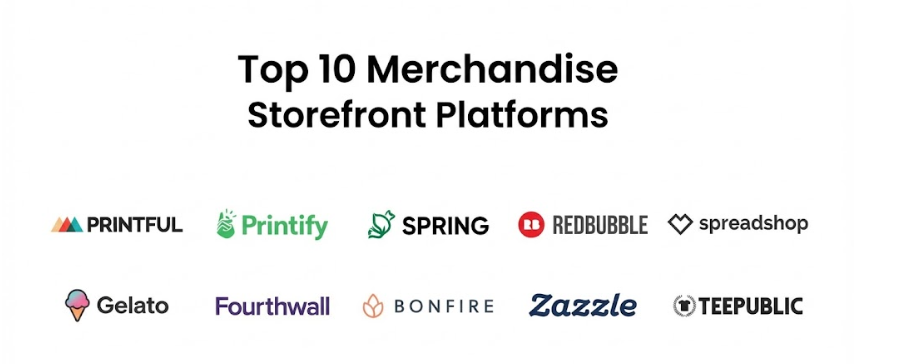
Top 10 Merchandise Storefront Platforms Tools
1 — Printful
Printful is often considered the industry leader for businesses that want high-quality products and deep control over their branding. It is designed for professional sellers who want a “hands-off” experience while maintaining a “premium” feel for their customers. The platform owns its own printing factories across the globe, which allows for consistent quality that is hard to find elsewhere. It is built to grow with you, offering everything from simple t-shirts to complex embroidery and even warehousing services for items you made yourself. This makes it a top choice for serious entrepreneurs who value their brand reputation above all else.
- Key features:
- In-house Manufacturing: They own the machines and the factories, ensuring better quality control.
- Branding Options: Allows you to add custom inside labels, pack-ins, and branded stickers to every box.
- Global Shipping: Warehouses in North America, Europe, and Asia to reach customers faster.
- Large Product Catalog: Includes clothing, home decor, hats, and even lifestyle accessories like phone cases.
- Design Maker: A built-in tool that helps you create and preview designs on 3D models.
- Warehousing & Fulfillment: They can store and ship items you didn’t even make with them.
- Automatic Sync: Connects seamlessly with almost every major e-commerce store like Shopify and Etsy.
- Pros:
- The quality of the printing and the materials is very high and consistent.
- The automated system means you never have to manually order a product for a customer.
- Their customer support is professional and very easy to reach when things go wrong.
- Cons:
- The base prices for products are higher than many other platforms, which means your profit per item might be lower.
- Some of the more advanced branding features come with extra fees that can add up.
- Security & compliance: Uses secure data encryption, follows GDPR rules, and is PCI compliant for all payments.
- Support & community: Offers a very large library of video guides, 24/7 chat support, and a helpful community forum.
2 — Printify
Printify is a unique platform that acts as a giant network connecting you to many different printing companies around the world. It is designed for sellers who want the lowest possible prices and the widest variety of items to choose from. Instead of printing everything themselves, they let you pick which factory you want to work with based on their price, location, and rating. This creates a competitive market that keeps costs down and allows you to switch suppliers if one is out of stock. It is a very flexible system that is perfect for those who want to maximize their profit on every sale.
- Key features:
- Supplier Network: Gives you access to over 90 printing locations worldwide to find the best deal.
- Printify Premium: A paid plan that gives you a significant discount on all products to increase profits.
- Product Variety: Access to unique items like jewelry, shoes, and even pet products.
- Simple Mockup Generator: Quickly create professional images of your products for your store.
- Merchant Support: Tools to help manage orders and track shipments in one dashboard.
- Global Reach: Helps you find printers close to your customers to reduce shipping times and costs.
- API Integration: Powerful tools for developers to build custom store experiences.
- Pros:
- Generally offers the lowest product costs in the print-on-demand industry.
- You have the freedom to choose your provider based on real user reviews and ratings.
- The massive selection of items means you can sell almost anything you can imagine.
- Cons:
- Because you are working with different factories, the quality can vary between different suppliers.
- Managing orders can sometimes be confusing if you use multiple printers for one customer.
- Security & compliance: Standard data encryption and secure payment processing are built into the platform.
- Support & community: Provides 24/7 merchant support and a very active Facebook group for sharing tips.
3 — Spring (formerly Teespring)
Spring is a platform built specifically with social media creators and influencers in mind. It is designed for those who want to start selling immediately without even having their own separate website. It is famous for its “Social Integrations,” allowing you to sell your merchandise directly under your YouTube videos or on your Instagram profile. They handle everything from the storefront to the shipping, making it one of the easiest ways to start a brand. It is an “all-in-one” solution that focuses on speed and simplicity for people who already have a following.
- Key features:
- YouTube Merch Shelf: Allows you to display your products directly on your YouTube channel.
- Instagram & TikTok Integration: Sell items directly through social media posts and bios.
- No Monthly Fees: The platform is free to use, and they only take a portion of each sale.
- Custom Storefronts: Create a simple, branded page to showcase all your designs in one place.
- Creator Pro Tools: Advanced features for high-volume sellers to help with marketing and sales.
- Launch Services: Helps you promote your new items to their existing marketplace of buyers.
- Digital Products: You can also sell digital items like e-books or design files alongside physical gear.
- Pros:
- The easiest platform to connect with your social media fans and start selling today.
- There is no cost to start and no risk of losing money on monthly subscriptions.
- Their marketplace can help new customers find your designs even if they don’t follow you yet.
- Cons:
- You have less control over the branding and the look of the store compared to a custom site.
- Customer service can sometimes be slower to respond during busy holiday seasons.
- Security & compliance: PCI compliant and follows basic data protection standards.
- Support & community: Offers a helpful blog, creator training, and email support for all sellers.
4 — Redbubble
Redbubble is not just a storefront; it is a massive global marketplace where millions of people go to find unique art. It is designed for artists and designers who want to upload their work once and let the platform do all the marketing and selling. You don’t have to build your own website or worry about finding customers; Redbubble already has the traffic. When someone buys a product with your art on it, you get a “royalty” or a commission. It is the perfect choice for those who want to focus 100% on creativity and zero percent on business management.
- Key features:
- Built-in Traffic: Millions of shoppers visit the site every month looking for specific designs.
- Simple Uploads: One design can be placed on over 70 different products instantly.
- Artist Protection: They take copyright seriously and help protect your art from being stolen.
- No Marketing Required: The platform’s search engine helps customers find your work.
- Fan Art Program: Allows you to legally create and sell art for certain famous movies and games.
- Automated Payments: You get paid regularly through PayPal or bank transfer once you hit a small goal.
- Global Shipping: They use a network of printers to ship products from the location closest to the buyer.
- Pros:
- You don’t have to spend a single penny on advertising or building a website.
- It is a truly passive way to make money from your art over a long period.
- The “Fan Art” program is a unique way to work with big brands legally.
- Cons:
- You do not own the customer data, so you cannot send emails to people who bought your art.
- Competition is very high because there are millions of other artists on the site.
- Security & compliance: Secure payment gateways and standard data privacy protocols are followed.
- Support & community: Very active artist blog and help center with many guides on how to sell more.
5 — Spreadshop
Spreadshop is a platform that allows you to create a completely free online shop that looks like a professional brand. It is designed for teams, clubs, and creators who want a dedicated store but don’t want to pay monthly fees for software. You get to customize the look of your shop, set your own prices, and choose which products to show. They handle all the heavy lifting like printing and customer returns, while you focus on sharing the link with your community. It is a very clean and professional solution for those who want their own “brand” feel without the “brand” cost.
- Key features:
- Free White-Label Shop: Your store has no Spreadshop branding, making it look like your own site.
- Easy Customization: Change colors and banners to match your team or brand identity.
- Set Your Own Profit: You decide how much extra to charge on top of the base price.
- Global Reach: They have production sites in both the US and Europe to help with fast shipping.
- Over 200 Products: A large selection of clothing, accessories, and home goods.
- Mobile-First Design: Your shop will look great and work perfectly on smartphones.
- Marketing Graphics: Provides you with professional images to help promote your shop on social media.
- Pros:
- It is completely free to use with no hidden monthly costs or setup fees.
- The “shop” feel is much more professional than a simple marketplace page.
- Very easy to set up, making it perfect for sports teams or small clubs.
- Cons:
- The base prices for products are fixed, so you have to be smart about your profit margins.
- You have fewer advanced features than you would get with a platform like Shopify.
- Security & compliance: Uses SSL encryption and is fully compliant with modern payment safety rules.
- Support & community: Offers a helpful forum and a dedicated support team for shop owners.
6 — Gelato
Gelato is a platform that focuses on “local production” on a global scale. It is designed for businesses that want to be more eco-friendly and fast by printing products in the country where the customer lives. They have a massive network of over 100 printers in 32 different countries. This means a customer in Australia gets their shirt from an Australian printer, which reduces shipping costs and carbon emissions. It is a very smart and modern choice for brands that have a worldwide audience and care about sustainability.
- Key features:
- Local Production: Prints in 32 countries to stay close to your customers.
- Fast Shipping: Because items are made locally, they often arrive in just a few days.
- Eco-Friendly Focus: Reduces the distance products travel, which is better for the planet.
- Reliable Quality: They vet every printer in their network to ensure high standards.
- Simple Integrations: Connects easily with Shopify, Etsy, and WooCommerce.
- Automated Billing: Payments and taxes are handled automatically behind the scenes.
- Personalization Tools: Allows customers to add their own names or text to your designs easily.
- Pros:
- Shipping is often cheaper and faster because it doesn’t have to cross borders.
- Great for brands that want to promote themselves as being “green” or sustainable.
- Very reliable system with high “uptime” and professional order tracking.
- Cons:
- The product selection is slightly smaller than some of the giant marketplaces.
- The pricing can be a bit more complex because it depends on the local printer’s costs.
- Security & compliance: SOC 2 compliant and follows strict global data protection laws.
- Support & community: Offers 24/7 support in many different languages to help global sellers.
7 — Fourthwall
Fourthwall is a premium, all-in-one platform built specifically for the modern creator who wants to build a “home” for their brand. It is designed to combine a high-end merchandise store with a membership site and a way to accept donations. Unlike simple shops, Fourthwall gives you total control over the customer experience and your data. It feels like a boutique agency that helps you create very high-quality items that your fans will actually want to wear. It is the top choice for professional YouTubers and streamers who want a site that feels as high-quality as their content.
- Key features:
- Membership Sites: Build your own private community like Patreon directly on your store.
- Custom Packaging: Send products in branded boxes with personal thank-you notes.
- Live Stream Alerts: Your store can send a notification to your stream when someone buys merch.
- Total Data Ownership: You get the email addresses of all your customers to build a mailing list.
- High-End Sourcing: Access to premium fabrics and unique products that aren’t available elsewhere.
- Digital Downloads: Sell music, art, or digital guides alongside your physical hoodies.
- Gift and Discount Codes: Powerful tools to run sales and reward your most loyal fans.
- Pros:
- The quality of the website and the physical products is very professional and “premium.”
- Having your memberships and your merch in one place makes things very simple for fans.
- Excellent tools for streamers to engage with their audience during a live show.
- Cons:
- It is more complex to set up than a simple marketplace like Redbubble.
- Some of the best features are designed for creators who already have a large audience.
- Security & compliance: Highly secure, PCI compliant, and uses advanced encryption for all data.
- Support & community: Provides a dedicated “success manager” for many creators and excellent chat support.
8 — Bonfire
Bonfire is a unique platform that started with a focus on “campaign-based” selling and fundraising. It is designed for those who want to run a limited-time sale to raise money for a cause or a specific project. You create a design, set a goal, and launch a campaign. If you reach your goal, they print and ship everything at once. This model is perfect for schools, charities, and community events where you want to build excitement around a specific deadline. They also offer permanent shops, but their heart is in helping people raise money through great design.
- Key features:
- Campaign-Based Selling: Launch a sale that lasts for a few days to create a “limited edition” feel.
- Fundraising Tools: Built-in features to show how much money has been raised for a cause.
- Social Sharing: Tools to help your community share the campaign link on Facebook and Twitter.
- No Upfront Costs: You don’t pay anything unless you sell enough to cover the printing costs.
- Clean Design Tools: A very simple and beautiful interface for creating your t-shirts and hoodies.
- Direct Donations: Supporters can choose to give extra money along with their purchase.
- Verified Non-Profit Status: Special badges for charities to show they are legitimate.
- Pros:
- The “deadline” feel of a campaign is a great way to drive a lot of sales in a short time.
- Excellent for charities because the platform makes the donation process very easy.
- The products are high quality and the website is very simple for customers to use.
- Cons:
- If you don’t sell enough items during a campaign, the items might not get printed.
- Not as good for a “permanent” store that you want to leave running for years.
- Security & compliance: Safe payment processing and standard data privacy protections.
- Support & community: Very helpful blog with tips on how to run a successful fundraising campaign.
9 — Zazzle
Zazzle is a massive marketplace that focuses on “extreme customization.” It is designed for customers who want to take a design and change it slightly—like adding their own name, a date, or a personal photo. As a seller, you provide the “template,” and the customers do the final work. This makes it a very popular choice for wedding invitations, office gear, and personalized gifts. It is a very busy marketplace with a huge variety of items, from paper goods to furniture. If your brand is about personalization, Zazzle is the best place to be.
- Key features:
- Customer Customization: Allows buyers to change text and images on your designs easily.
- Massive Catalog: Thousands of different products including office supplies and home decor.
- Designer Stores: Create your own page on the Zazzle site to showcase your collections.
- Referral Program: You can earn extra money by sharing links to other people’s designs too.
- Zazzle LIVE: A service that connects customers with professional designers for custom work.
- Manufacturing Network: They work with many different experts to make everything from stamps to pillows.
- Global Marketplace: Reach millions of customers who are looking for personalized items.
- Pros:
- The ability for customers to “play” with your design is a very strong selling point.
- Very high traffic levels, which is great for people who don’t want to do their own marketing.
- You can earn money from your designs without ever dealing with a single customer.
- Cons:
- The design interface can be a bit complicated to learn because it has so many options.
- You have to compete with a huge number of other designers on the same site.
- Security & compliance: Standard enterprise-level security and secure payment gateways.
- Support & community: Offers an extensive help center and a large community of “Pro” designers.
10 — Teepublic
Teepublic is a marketplace that is very popular with niche communities, particularly fans of pop culture, gaming, and “indie” art. It is designed to be a simpler, faster version of Redbubble. The platform is very easy for artists to use; you just upload your design, and it automatically fits on a variety of items. They often run site-wide sales that drive a lot of traffic and help new artists get their first few sales. It is a friendly, community-focused site that is perfect for those who want a simple way to sell their art to a global audience.
- Key features:
- Artist Shops: A clean and simple page to display all your work under your own name.
- Automated Product Creation: Your art is perfectly placed on t-shirts, mugs, and cases instantly.
- Site-Wide Sales: Frequent promotions that help drive more customers to your work.
- Fan Art Program: Similar to Redbubble, you can legally sell art for many big brands.
- Simple Royalty System: A fixed amount you earn per sale, making it easy to track your income.
- High-Quality Apparel: They are known for using very soft and comfortable t-shirt brands.
- Community Feed: Follow your favorite artists and see their new designs as they are uploaded.
- Pros:
- The platform is incredibly fast and easy to use for both artists and buyers.
- Great for niche art styles that might not fit in a more “corporate” marketplace.
- Frequent sales events mean you can get a lot of orders in a very short time.
- Cons:
- You have less control over your pricing than on other platforms.
- The fixed royalty means you can’t increase your profit per item by charging more.
- Security & compliance: Safe and secure payment processing with standard data privacy rules.
- Support & community: Provides an excellent artist guide and a responsive support team for all creators.
Comparison Table
| Tool Name | Best For | Platform(s) Supported | Standout Feature | Rating |
| Printful | Professional Brands | Web, Shopify, Etsy | In-house Quality Control | N/A |
| Printify | Maximizing Profit | Web, Shopify, eBay | Huge Network of Printers | N/A |
| Spring | Social Media Creators | Web, YouTube, TikTok | Social Media “Merch Shelf” | N/A |
| Redbubble | Passive Artist Income | Web, Marketplace | Massive Built-in Traffic | N/A |
| Spreadshop | Teams & Small Clubs | Web, Standalone Shop | Free White-Label Store | N/A |
| Gelato | Sustainable Global Sales | Web, API, Etsy | Local Production in 32 Countries | N/A |
| Fourthwall | Premium Content Creators | Web, Memberships | Combined Merch & Memberships | N/A |
| Bonfire | Fundraising & Campaigns | Web, Standalone | Goal-based Limited Sales | N/A |
| Zazzle | Personalized Gifts | Web, Marketplace | Customer Customization Tools | N/A |
| Teepublic | Pop Culture Artists | Web, Marketplace | Simple “Upload & Sell” Model | N/A |
Evaluation & Scoring of Merchandise Storefront Platforms
To help you decide, we have evaluated these platforms based on a weighted scoring rubric that reflects what matters most to most sellers.
| Category | Weight | Description |
| Core Features | 25% | Variety of products, printing quality, and design tools. |
| Ease of Use | 15% | How simple it is to set up a shop and upload new designs. |
| Integrations | 15% | Connections to social media, Shopify, and other selling platforms. |
| Security & Compliance | 10% | Data safety, payment security, and following privacy laws. |
| Performance | 10% | Shipping speed, website reliability, and order accuracy. |
| Support & Community | 10% | Quality of help center and helpfulness of the user community. |
| Price / Value | 15% | Base costs of products and the potential for good profit. |
Which Merchandise Storefront Platforms Tool Is Right for You?
Choosing the right platform is a big decision that depends on who you are and what you want to achieve. There is no “one size fits all” answer, but there is usually a perfect fit for every type of seller.
Solo Users vs SMB vs Mid-Market vs Enterprise
If you are a solo artist who just wants to share your art with the world, a marketplace like Redbubble or Teepublic is the best place to start. You don’t have to build anything; you just upload and earn. For small businesses (SMBs) that want to look professional, Spreadshop or Printify connected to a simple website works great. If you are a mid-market creator with a large following, you should look at Fourthwall or Spring to leverage your social media presence. Enterprise-level brands that need deep data and local global production will benefit most from Gelato or Printful because of their reliability and scale.
Budget-Conscious vs Premium Solutions
If you are budget-conscious, Spring and Spreadshop are fantastic because they have no monthly fees and you only pay when you make a sale. For those who want a premium solution and are willing to pay for better quality and more control, Fourthwall and Printful are the winners. They provide the high-end experience that luxury or high-quality brands need to succeed.
Feature Depth vs Ease of Use
If you want ease of use, you can’t beat Spring or Teepublic. You can be selling in under ten minutes. However, if you want feature depth—like custom packaging, membership sites, and complex marketing data—you will need a platform like Fourthwall or Printful. These take a little longer to learn, but they give you much more power to run a real business in the long run.
Frequently Asked Questions (FAQs)
1. Is it truly free to start a merchandise store?
Yes, many platforms like Spring, Redbubble, and Spreadshop have no upfront costs. They make their money by taking a small portion of the final sale price, which means you never have to risk your own money.
2. Who handles the customer service and returns?
Most “all-in-one” storefronts like Printful and Spring handle all the customer service for you. If a shirt arrives damaged, the customer talks to the platform, and they send a replacement at no cost to you.
3. How much money can I actually make per t-shirt?
Typically, most sellers aim for a profit of $5 to $10 per t-shirt. You can usually set your own prices, but you have to balance your profit with what your customers are willing to pay.
4. Can I sell my own products alongside the merch?
Platforms like Printful and Fourthwall offer “warehousing” services. This means you can ship your own items to their warehouse, and they will pack and ship them whenever someone buys one on your store.
5. Do I need to be a professional designer?
No. Many platforms have very simple tools that allow you to add text or basic icons to a product. You can also use free design tools online to create something simple and upload it.
6. How long does shipping usually take?
Standard shipping usually takes about one to two weeks. Some platforms like Gelato and Printful are faster because they print the item in a location close to where the customer lives.
7. Can I sell merchandise internationally?
Yes, almost all of these platforms ship worldwide. Some even have local production in different countries to make international shipping cheaper and faster for your fans.
8. What happens if I want to switch platforms later?
You always own your designs, so you can take your art and move it to a different platform at any time. However, moving your customer list is only possible if you use a platform like Fourthwall that gives you that data.
9. Do I have to pay taxes on my sales?
Yes, you are responsible for paying income tax on your profits. Many platforms help by collecting sales tax from the customer automatically, but you should always talk to a local professional about your own taxes.
10. What is the biggest mistake new sellers make?
The biggest mistake is not promoting the store. Even with a great design, you need to tell people about it! Share the link on your social media and talk to your community to get those first few sales.
Conclusion
Choosing the right merchandise storefront platform is the first step in turning your creative ideas into a successful business. Whether you want a passive income from a marketplace like Redbubble or a high-end, branded experience with Fourthwall, the most important thing is to just get started. These tools have made it easier than ever before to share your brand with the world without any financial risk. Remember that the “best” tool is the one that fits your current goals and makes you feel confident in the products you are sending to your supporters.
When you are making your final choice, think about where your audience lives and how you want them to feel when they open their package. A great piece of merchandise is more than just a product; it is a way for your fans to show their support and be a part of your journey. Take your time to explore the features, look at the product samples, and pick a partner that will help you grow. With the right platform, your brand can reach people all over the world, one high-quality product at a time.