Introduction
What is Certified DevOps Engineer (CDE)?
The Certified DevOps Engineer (CDE) is an advanced professional track that validates an engineer’s ability to design and manage the Software Delivery Ecosystem. It is the bridge that connects the “What” (the code developers write) with the “How” (the way that code actually lives in the cloud). A CDE professional is an expert in removing the friction between an idea and a live, working feature.
Why it Matters for Global Business Continuity
In a world that never sleeps, downtime is the ultimate enemy. If a global platform goes offline for even ten minutes, the financial and reputational damage can be catastrophic. The CDE skillset is the solution to this problem. By implementing High-Availability (HA) and Self-Healing architectures, a Certified DevOps Engineer ensures that the platform stays online even when individual components fail.
Why Certifications are the “Standard of Excellence”
For the individual, the CDE is a verified proof of competence. It tells the market that you don’t just “know tools,” but you understand the Standard Operating Procedures (SOPs) of the world’s best engineering teams. For leadership, it is a way to standardize the team’s output. When every engineer follows the CDE methodology, the entire department moves faster and with fewer errors.
2. Professional Capability Mapping
| Domain | Traditional Operations | CDE (Modern Architecture) |
| Server Management | Individual Manual Config | Templated “Coded” Infrastructure |
| Code Testing | Manual QA Gatekeepers | Automated “Shift-Left” Testing |
| Deployment | “Big Bang” (High Risk) | “Continuous” (Low Risk) |
| Visibility | Log Files (Reactive) | Real-time Observability (Proactive) |
| Official Resource | — | CDE Certification Details |
Provider: devopsschool.com
3. Deep-Dive: The Mechanics of a CDE Professional
Building the Automated Pipeline
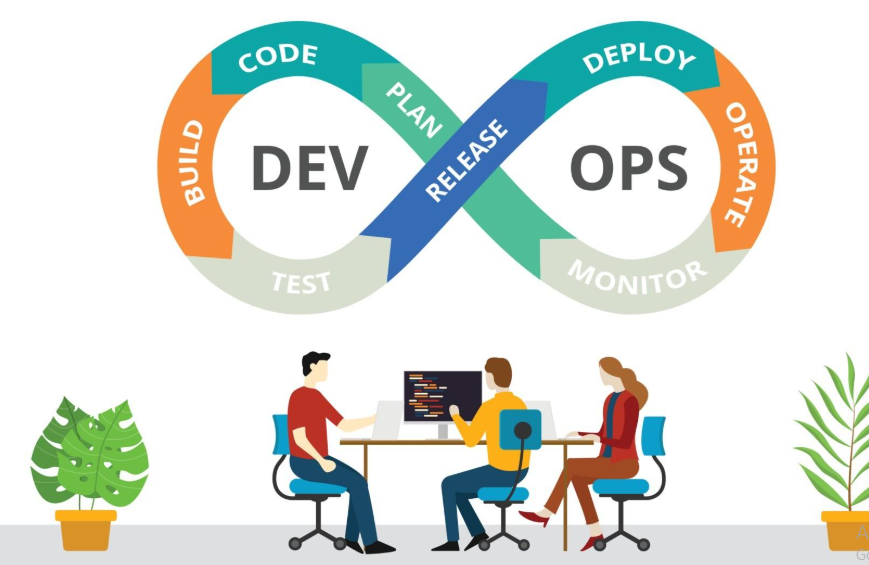
The core of the CDE program is the creation of a seamless Automation Pipeline. It begins with Advanced Git Operations, ensuring that code from hundreds of developers can merge into a single stream without conflict. From there, it moves into Immutable Packaging with Docker. This ensures that the code that worked on a developer’s laptop will work exactly the same way on a massive cloud server.
Orchestrating at Scale with Kubernetes
The true power of a CDE professional is revealed in Orchestration. You will master Kubernetes, which allows you to manage thousands of “containers” as a single unit. You will learn to write Infrastructure as Code (IaC) using Terraform, allowing you to build or tear down an entire global data center with a single command. This level of control is what makes CDE-certified engineers the most sought-after architects in 2026.
Strategic Execution: Preparation Paths
Approaching this certification requires a tactical plan:
- The 14-Day “Architect” Path: A high-speed review for those already working in SRE or Cloud roles who need to validate their skills.
- The 30-Day “Professional” Path: The most popular route, dedicating a week to each major pillar: Linux, Docker, Kubernetes, and CI/CD Automation.
- The 60-Day “Foundation” Path: For those moving from QA or traditional IT roles, including a deep-dive into networking and system logic.
4. Specialization: Defining Your Career Niche
After the CDE, the industry offers several high-value “Growth Paths”:
- SRE (Site Reliability Engineering): Focuses on performance and “Five Nines” uptime.
- DevSecOps: The intersection of automation and security—the fastest-growing niche in tech.
- AIOps: Using Machine Learning to predict and fix infrastructure issues before they happen.
- DataOps: Automating the complex pipelines used in Big Data and AI analysis.
5. Training & Certification Support Institutions
Mastering these complex domains requires a specialized support ecosystem:
- DevOpsSchool: The primary hub for the CDE foundation and hands-on corporate engineering.
- ScmGalaxy: The ultimate community platform for free technical resources and troubleshooting guides.
- DevSecOpsSchool.com: Specialized training for those who want to integrate security into the heart of the pipeline.
- SRESchool.com: Focused on building unbreakable platforms and high-availability systems.
- AIOpsSchool.com: For the future-focused engineer using AI to manage IT operations.
- DataOpsSchool.com: Bridging the gap between data science and automated delivery.
- FinOpsSchool.com: Focusing on cloud cost optimization and financial management of tech stacks.
6. Why Choose DevOpsSchool for Your CDE?
In a high-stakes environment, Applied Experience is the only thing that matters. DevOpsSchool stands out because they move beyond theory. Their training is 100% lab-based, meaning you learn by building real pipelines and managing real Kubernetes clusters. Their instructors are active practitioners who understand the nuances of production environments. With lifelong community support and a curriculum that is constantly updated for 2026 standards, it is the safest and most profitable investment for your career.
7. Deep-Dive: The Financial Impact of CDE
Becoming a CDE-certified engineer is a significant “Asset Class” for your career. In India, certified professionals often command salaries between ₹12L and ₹30L+. Globally, the range is typically between $120k and $185k+. This premium exists because a CDE pro is a “Force Multiplier”—they don’t just do work; they build the systems that do the work for everyone else.
The program is specifically designed to be Tool-Agnostic. While you learn the industry leaders like Jenkins and Terraform, you are actually learning the Philosophy of Automation. This means you can adapt to any toolset a company uses. It is the definitive bridge for those from manual backgrounds to move into high-paying, remote-friendly architectural roles that are in high demand across the globe.
8. FAQs: Direct Career Insights
- Is Linux mandatory?
Yes. It is the fundamental operating system for nearly all cloud automation. - How much coding is required?
You must be comfortable with logic and scripting (Python/Bash/YAML), but you don’t need to be a software developer. - How long is the study period?
Most professionals complete the transition in 3 to 6 months. - Is the CDE exam hard?
It is practical. If you have done the hands-on lab practice, you will pass. - Is Jenkins still used?
Yes, it remains the standard for large-scale enterprise automation. - What comes after CDE?
Usually the Certified Kubernetes Administrator (CKA) or DevSecOps Professional.
9. Testimonial
“I spent years manually updating servers. After my CDE, I wrote a script that does it for me. Now I spend my time designing new features instead of fixing old ones.”
— Rahul Sharma
“The difference in my salary was immediate, but the difference in my job security was even better. I am no longer a ‘cost’ to the company; I am a ‘value-add’.”
— Priya Iyer
“As a manager, I only hire CDE-certified pros. It is the only way to ensure our platform is built on a foundation of reliability and global standards.”
— Amit Verma
Conclusion: Engineering Your Legacy
The Certified DevOps Engineer (CDE) is a total mindset shift. In an industry moving this fast, staying still is moving backward. I’ve seen hundreds of engineers transform their careers by simply committing to this path. Mastering these methodologies is the best investment you can make—providing long-term stability, higher pay, and the satisfaction of building systems that actually work at scale.